How Mbappé’s Meme Magic is Winning Over Chinese Fans
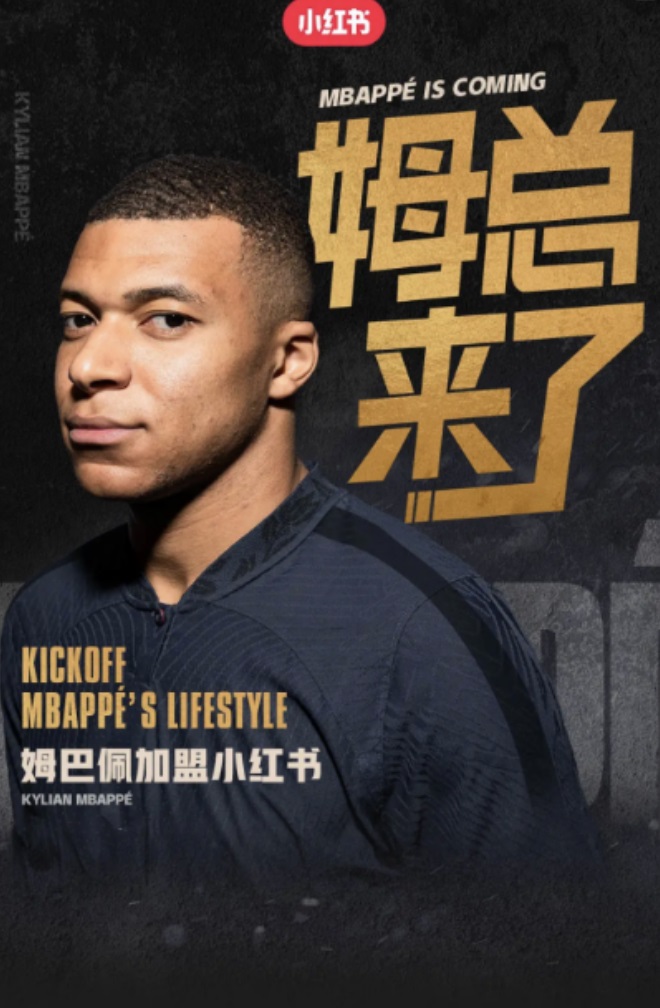
Kylian Mbappé’s Entry into Xiaohongshu: French football star Kylian Mbappé, currently with Paris Saint-Germain F.C. (PSG), has successfully joined the Chinese social media platform Xiaohongshu, also known as RED. In just four days, he gained 192,000 followers and made three bilingual posts.

His introductory video alone attracted 88.2K views and 11K comments.
Cost-Effective Agency
KPI and Results focused. We are the most visible Marketing Agency for China. Not because of huge spending but because of our SMART Strategies. Let us help you with: E-Commerce, Search Engine Optimization, Advertising, Weibo, WeChat, WeChat Store & PR.
Active Engagement and Learning Cultural Cues:
Unlike Lionel Messi, who faced criticism for neglecting his Chinese followers during a trip to Hong Kong, Mbappé is actively embracing Chinese internet culture. This includes learning to use local memes like “Mbappé listens to users’ persuasion” (姆巴佩听劝), highlighting his team’s commitment to the Chinese market.

Fan Interaction on Red-Xiaohongshu
Since his debut on the platform, there has been enthusiastic fan engagement with posts like “My story with Boss Mbappéde.” This interaction is promoted by Xiaohongshu officials and through fans’ spontaneous contributions.
Content Diversity and User Love: It remains unclear whether the diverse content on Mbappé’s Xiaohongshu account, which includes posts about PSG, pandas, travel tips for places like Sanya and Shanghai, and food recommendations such as Tianshui Malatang, is curated by his team or personally by Mbappé. This variety has endeared him to many users, evidenced by the trending hashtag “who can teach Mbappé off the collections” (#谁能教姆巴佩关下收藏夹#), which topped Xiaohongshu’s Hot Search List with 11 million views on April 28.
Wider Platform Impact: Mbappé’s presence on Xiaohongshu has also sparked discussions on other platforms like Hupu and Weibo. Topics range from his relationship with PSG (fueled by the fact that Mbappé and PSG’s Xiaohongshu accounts do not follow each other) to humorous anecdotes about him learning Chinese, notably deleting comments mentioning Neymar due to their past conflicts.
Weibo Presence and Strategic Choices: Mbappé also maintains a Super Topic on Weibo with 68K followers and over a billion post views. However, his strategic choice to debut on Xiaohongshu, known for its predominantly female demographic, aligns with Xiaohongshu’s push to expand its sports content.
RED Sports Content Expansion
Since the 2022 World Cup, Xiaohongshu has emerged as a vital platform for sports content, attracting football legends like Zidane and Mourinho, and major clubs such as Barcelona and Juventus. This has significantly enhanced Xiaohongshu’s profile as a leading platform for football content, with posts tagged “football” now totaling 2.81 million.
Little Red Book: China’s Emerging Sports Content Powerhouse
Xiaohongshu, also known as Little Red Book, is rapidly transforming into a major sports content platform in China, transcending its original image as a lifestyle and shopping-oriented social network. The platform, renowned for its blend of e-commerce and social networking features, is now a burgeoning hub for sports enthusiasts, athletes, and major clubs seeking to connect with Chinese fans.
Strategic Expansion into Sports
The shift towards sports content on Xiaohongshu began gaining momentum around the 2022 FIFA World Cup. The platform capitalized on the global sports fever by hosting posts from iconic figures like Zinedine Zidane, José Mourinho, and Diego Simeone. These football legends engaged with fans directly, sharing insights and sparking discussions about the matches. This initiative marked Xiaohongshu’s first significant step towards becoming a serious contender in the sports digital media space.
Influx of Major Football Clubs
Following the successful engagement during the World Cup, several prestigious football clubs, including Barcelona, Juventus, and Manchester United, established their presence on Xiaohongshu. Their arrival was not just about sharing updates or player highlights; it was strategically aimed at building a closer relationship with Chinese fans. These clubs now regularly post behind-the-scenes content, player interviews, and even special greetings during Chinese festivals, significantly enhancing fan interaction and loyalty.
A Platform of Choice for Athletes
Xiaohongshu’s appeal to athletes like Kylian Mbappé underscores its unique position in the Chinese market. Unlike platforms that are predominantly male-oriented, Xiaohongshu boasts a significant female user base, offering a fresh demographic for sports figures and teams. This demographic diversification allows athletes to broaden their personal brand appeal and connect with a wider range of fans.
Leveraging Localized Content
What sets Xiaohongshu apart in the sports domain is its emphasis on localized and culturally resonant content. Athletes and teams are not just sharing generic updates; they are actively engaging with cultural trends, memes, and local interests. This approach has proven effective, as seen with Mbappé’s team leveraging popular Chinese memes to engage users, thus deepening his connection with the audience.
Future of Sports Marketing in China
As Xiaohongshu continues to evolve, its potential as a sports marketing platform seems limitless. With its mix of content creation and e-commerce capabilities, it offers a unique model for sports entities to not only engage with fans but also drive merchandise sales directly through the platform. As more global sports figures and teams recognize its value, Xiaohongshu is set to redefine sports fandom and engagement in China.
In conclusion, Xiaohongshu’s rise as a sports content platform is reshaping how sports are marketed and consumed in China. By blending social networking with direct fan engagement, it offers a fresh and dynamic approach to sports marketing in the digital age.
Read more
The 2026 market reality: what the data shows
Chinese football fandom has grown far beyond match viewership. Xiaohongshu now hosts over 100 million football fans on its platform, with football-related interactions doubling year-on-year as of early 2026, according to China Insider. The platform secured exclusive public internet broadcasting rights for the 2026 FIFA World Cup in mainland China, making it the first time a lifestyle-first social network holds sports rights of this scale. Meanwhile, Douyin has streamed over 15,000 sporting events since 2022, generating 2.7 billion views across more than 120 million sports content accounts, according to Campaign US. Football players who understand Chinese digital culture do not just gain fans. They gain meme equity, brand relevance, and a conversion funnel that moves from laughter to purchase.
Why meme culture drives real fan loyalty in China
On Chinese platforms, a meme is not a joke. It is a signal of belonging. When fans on Xiaohongshu and Weibo turn a player into a recurring character, they are investing social capital in that person. The player becomes part of daily conversation, which is exactly the position every brand wants to occupy.
Mbappé’s team understood this early. When he joined Xiaohongshu on April 26, 2024, his account did not post generic training clips. It collected posts about PSG, pandas, China travel, and Chinese food. Fans noticed. The hashtag #谁能教姆巴佩关下收藏夹 (Who can teach Mbappé to close his saved folder) hit 11 million cumulative views within days, according to DAO Insights. The joke was simple: Mbappé saves too many posts. That is a very relatable problem for Chinese internet users who use Xiaohongshu’s bookmark feature obsessively.
This is the core mechanic of Chinese sports meme culture. The humor has to be self-deprecating, culturally literate, and platform-native. A player who posts a formal statement does not go viral. A player who saves a post about hotpot does. The phrase 姆巴佩听劝, which translates roughly to “Mbappé listens to advice,” spread widely because it positions him as someone who responds to Chinese fans rather than broadcasting at them. That framing matters enormously in a market where the memory of Messi’s 2023 Hong Kong no-show still circulates as a cautionary tale for foreign athletes.
Ball sports content on Xiaohongshu grew 74% year-on-year in Q1 2025. Jersey styling posts crossed 220,000 on the platform. Fans are not just watching games. They are building identities around their favourite players, and meme participation is a core part of that identity construction. Brands that enter this space through authentic meme engagement reach audiences in a way that paid advertising simply cannot replicate.
From memes to money: how athletes become brand assets in China
The transition from viral moment to commercial value is fast on Chinese platforms. Mbappé’s Xiaohongshu account reached 192,000 followers in four days. His first greeting video pulled 88.2K likes and 11,000 comments. His Weibo Super Topic held 68K followers with 1.04 billion post views. Those numbers represent an audience that is warm, engaged, and ready to respond to brand integrations if they are done correctly.
The clearest precedent for meme-to-brand conversion in Chinese sports culture is Cristiano Ronaldo’s Douyin presence. His team seeded short-form content across Chinese platforms in a way that mixed football skill clips with lighter, personality-driven posts. Chinese brands including Hisense and Lenovo moved quickly to associate themselves with players who had proven digital traction. The 2025 cycle showed the same pattern playing out around Ma Ning, the Chinese referee who became a viral figure during the 2026 World Cup qualifiers. Lenovo and Hisense signed sponsorship deals with him based on his meme reach, not his traditional sports profile. That is a significant shift. Cultural resonance now precedes commercial deals, not the other way around.
For Mbappé specifically, the meme cycle created a rare situation: a Western athlete with genuine positive sentiment across multiple Chinese platforms simultaneously. Weibo gave him reach. Xiaohongshu gave him a community. The overlap between those audiences, young, urban, digitally active, and interested in international culture, represents exactly the demographic that luxury, sportswear, and lifestyle brands pay a premium to reach in China. Brands that positioned themselves adjacent to his Chinese fan communities in 2024 and 2025 benefited from association without requiring a direct endorsement contract. That is a cost-effective entry point that smaller brands often overlook.
What changed between 2024 and 2026
The biggest shift between 2024 and 2026 is platform consolidation around sports content. Xiaohongshu was primarily a lifestyle and beauty platform in 2024. By mid-2026, it holds World Cup broadcasting rights and hosts over 100 million football fans. That transformation changed how brands approach sports marketing in China. The old playbook was Weibo for reach, Douyin for video. The new playbook adds Xiaohongshu as a must-activate channel for any sports-adjacent campaign.
Fan behavior has also shifted. The Messi Hong Kong incident in January 2023 left a visible scar on how Chinese fans evaluate foreign athletes. Expectations around active platform participation increased sharply. Fans now expect bilingual posts, responses to comments, and demonstrated knowledge of Chinese internet culture. Players who meet that bar, as Mbappé’s team did on Xiaohongshu, receive disproportionate goodwill. Players who ignore it face organized backlash.
On the commercial side, the 2026 World Cup created a formal market for sports meme marketing in China. Brands that previously avoided athlete partnerships due to reputational risk are now building meme-first campaigns because the risk profile has changed. When a player’s cultural acceptance is demonstrated through organic fan content, the brand’s exposure is lower. This dynamic will likely persist through the 2027 and 2028 sports cycles.
Frequently asked questions
Why did Mbappé become so popular on Chinese social media?
Mbappé’s Chinese social media success came from a deliberate strategy of platform-native engagement rather than simple content reposting. His team joined Xiaohongshu in April 2024 and posted bilingual content that referenced Chinese culture directly. The account’s habit of saving posts about pandas, hotpot, and Chinese travel generated organic memes, most notably the hashtag about his saved folder that reached 11 million views. This approach contrasted sharply with athletes who treat Chinese platforms as secondary broadcast channels. Chinese fans respond to players who appear to be genuinely curious about Chinese life, and Mbappé’s account delivered that impression consistently. His Weibo Super Topic had also built over 1 billion post views over time, showing a long-term fan base that the Xiaohongshu strategy could activate.
How do brands use sports memes to market in China?
Brands use sports memes in China through three main approaches. First, they seed content that is already adjacent to viral moments, sponsoring posts or accounts that participate in trending hashtags around an athlete. Second, they co-create with fan accounts, giving those communities branded assets to remix in ways that feel organic rather than paid. Third, they use platform advertising tools on Weibo, Xiaohongshu, and Douyin to amplify fan-generated content once a meme has already proven its traction. The key rule is that brands do not create the meme. They arrive after the meme exists and add fuel. Brands that try to manufacture a viral moment from scratch almost always produce content that Chinese fans recognize as inauthentic. The most effective meme marketing in Chinese sports culture comes from listening to what fans are already saying and building from there.
Is Xiaohongshu a good platform for football marketing in China?
Yes, especially from 2026 onward. Xiaohongshu secured exclusive public internet World Cup broadcasting rights in mainland China for 2026, which accelerated its transformation into a sports content hub. The platform already had over 100 million football fans as of early 2026, with football interaction rates doubling year-on-year. What makes Xiaohongshu particularly effective for football marketing is its community structure. Users do not just watch content; they comment, bookmark, and build discussion threads. Football content on the platform sits alongside fashion, food, and travel, which creates natural crossover opportunities for lifestyle brands that would not normally advertise in a sports context. Brands targeting young urban Chinese women and increasingly male audiences should treat Xiaohongshu as a primary channel, not a secondary one, for any sports marketing campaign running through 2026 and 2027.
What mistakes do foreign brands make with sports marketing in China?
The most common mistake is treating China as a single audience. Football fans on Weibo behave differently from football fans on Xiaohongshu, and both differ from Douyin audiences. Brands that run one campaign across all platforms with the same creative consistently underperform versus brands that adapt tone, format, and timing per channel. The second frequent error is skipping the meme layer entirely and going straight to product placement. Chinese sports fans are sophisticated. They notice when a brand appears suddenly in a fan space without any prior cultural investment. The third mistake is choosing an athlete based on global ranking rather than Chinese platform presence. A player with 500,000 engaged followers on Weibo and a viral hashtag will outperform a higher-ranked player with no Chinese digital footprint. Relevance on the specific platforms where Chinese fans spend time matters more than global name recognition.
How to move forward
If you want to reach Chinese football fans through sports culture and meme engagement, the path is clear. Start by auditing which platforms your target audience uses and what content formats perform there. For most brands, that means Xiaohongshu for community-led campaigns, Douyin for reach, and Weibo for news-driven moments around match days. Build a content calendar around the sports cycle, not just product launches.
Work with KOLs who already participate in football fan communities rather than mass-reach influencers who cover everything. Niche sports accounts with 50,000 to 200,000 followers often deliver stronger engagement rates than top-tier celebrities for this category. Pair that with KOL and PR activation to make sure your brand appears in the right conversations at the right time.
On the search side, Baidu queries around football players spike sharply around tournament events. A well-structured Baidu advertising strategy during the 2026 World Cup window can capture high-intent traffic from fans actively researching players and brands. The window is short, so preparation now matters.
If you want to discuss how your brand can activate around Chinese sports culture, contact the team at seoagencychina.com.
Marcus Zhan is a China marketing specialist based in Shanghai. He covers digital marketing, consumer trends, and brand strategy for the Chinese market. Connect with him on LinkedIn for China sports marketing insights.
Sources: DAO Insights, “Kylian Mbappé joins Chinese social media: How many memes have been generated?” https://daoinsights.com/news/kylian-mbappe-joins-chinese-social-media-how-many-memes-have-been-generated/ | China Insider, “Xiaohongshu Just Scored the 2026 World Cup Broadcasting Rights in China” https://chinainsider.news/news/xiaohongshu-just-scored-the-2026-world-cup-broadcasting-rights-in-china | Campaign US, “How Asia is redefining football fandom for the digital age” https://www.campaignlive.com/article/asia-redefining-football-fandom-digital-age-report/1914803 | Finance BigGo, “Xiaohongshu Bets Big on World Cup Rights” https://finance.biggo.com/news/WYTgcZ4BYH_ypPqOlA1A