
WeChat for Business: How Brands Can Make Money on WeChat?
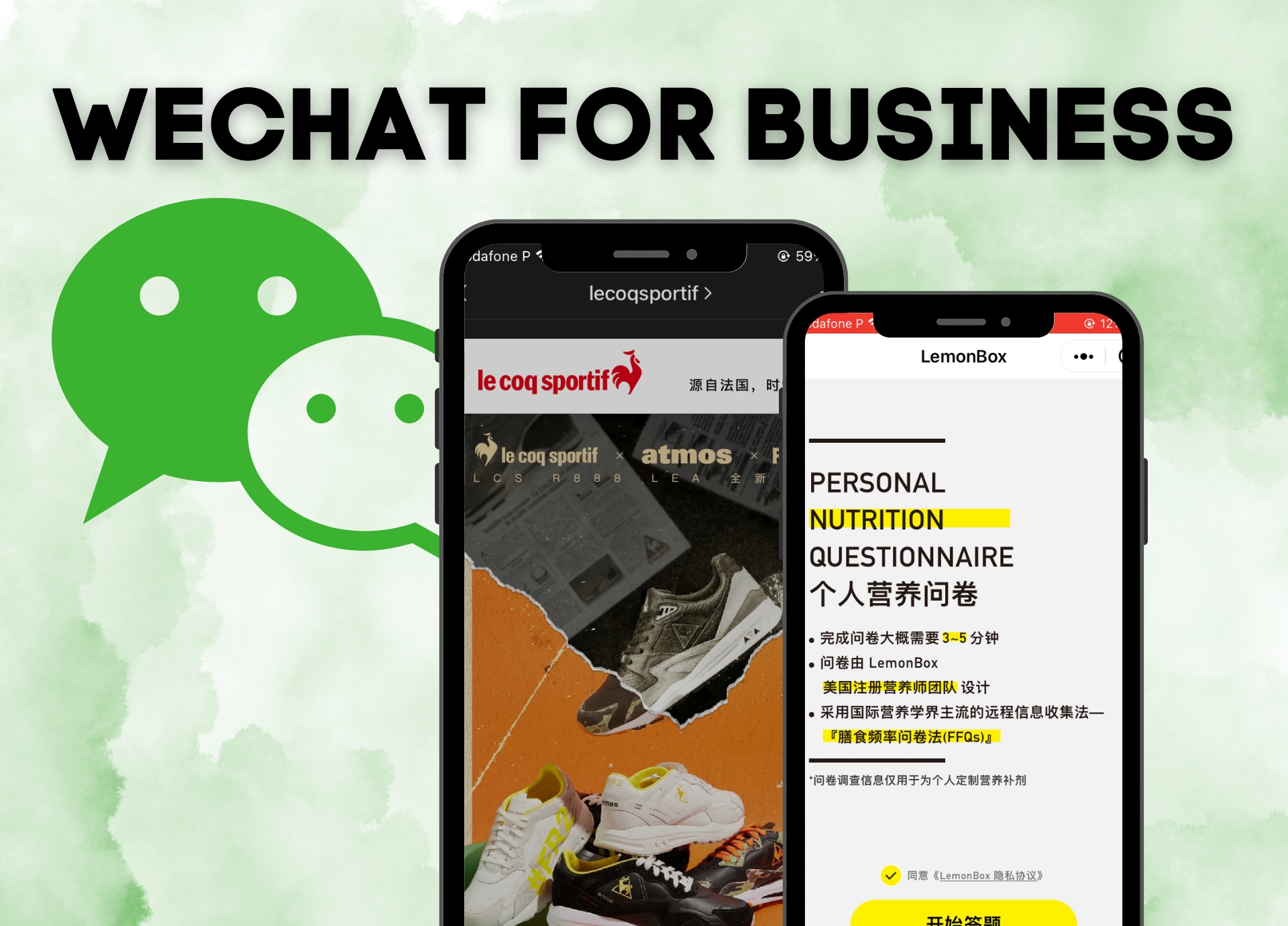
You are a small brand and you want to operate in China in 2024?
Here are best tips for your business
Cost-Effective Agency
KPI and Results focused. We are the most visible Marketing Agency for China. Not because of huge spending but because of our SMART Strategies. Let us help you with: E-Commerce, Search Engine Optimization, Advertising, Weibo, WeChat, WeChat Store & PR.
To effectively leverage WeChat for business in 2024, brands can adopt several strategies:
- WeChat H5 Brochures: Utilize interactive H5 pages within WeChat mini-programs to showcase products and services in an engaging way. This not only presents the brand effectively but also allows for lead capture and data collection from interactive features like forums and surveys.
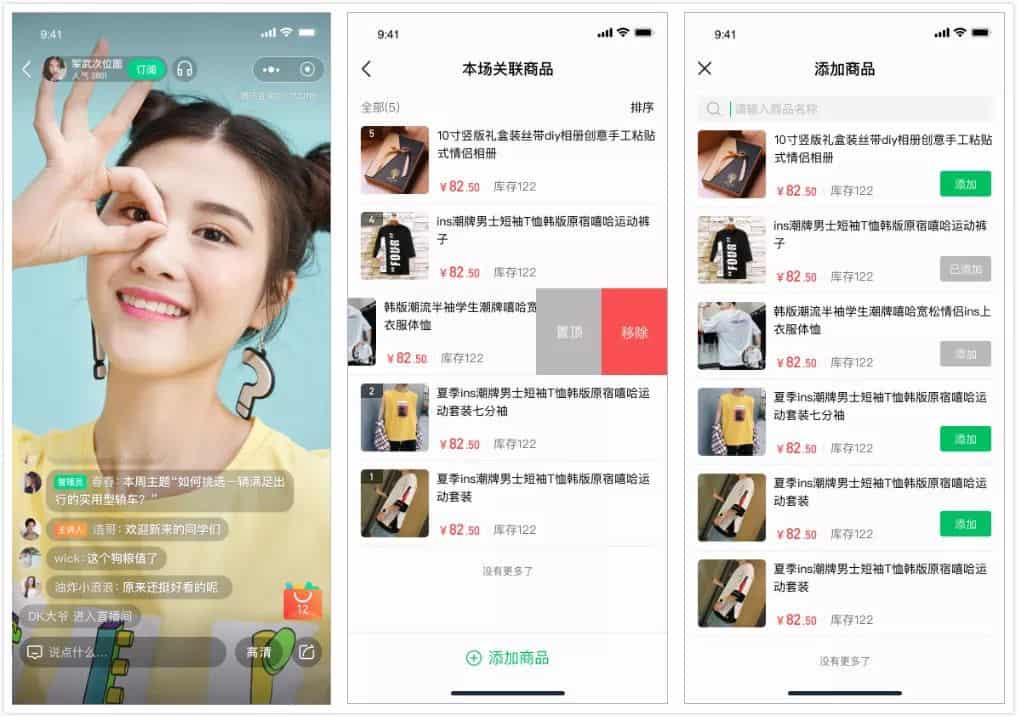
- WeChat Stores: Set up a WeChat store linked to an official account to enable direct shopping within the app. This is particularly advantageous for smaller brands that may not have the resources to enter larger marketplaces. The integration of stores with other WeChat functions like live-streaming and official accounts enhances user experience.
- WeChat Channels: Leverage this feature for short video content super hot in 2024, which can attract new potential clients and is especially popular among younger consumers. It’s an effective way to reach new followers and showcase products.
- Quality Content Creation: Brands should focus on creating high-quality, creative content on their WeChat accounts. This includes a mix of media like audio messages, videos, photos, and text to engage with fans and followers.
- Loyalty Programs : Develop loyalty programs using geo-location services to offer promotions to consumers nearby. This can include VIP cards, promotions, and e-coupons exchangeable in stores.
- Use of QR Codes for O2O Strategies: Embedding QR codes in physical stores, restaurant etc and promotional materials to link your target audience directly to your WeChat account, and offers
- Incentives for Users: Attract consumers with various incentives like prizes, promotions, and discounts, directly communicated through WeChat, it was popular before not recently nop.
- Creating WeChat Websites: Develop small websites within WeChat to give followers a more immersive brand experience. This includes interactive menus for better fan engagement.
- Engaging Ads Campaigns: Launch creative marketing campaigns, including contests and collaborations with Key Opinion Leaders (KOLs) to promote products and services and engage the community. It is costly in WeChat and not ROIst
- WeChat Mini Program Functionalities: Implement mini App with loyalty programs, helping in data collection and improving customer relationships,and lot of options to make clients life easiers .
These WeChat strategies can help brands effectively navigate the vast user base of WeChat and capitalize on its various functionalities to boost brand presence and sales in the Chinese market.
You have to know Wechat and its functionalities to get the most out of the number one social platform in China. WeChat is the most popular Chinese messaging app, that nowadays serves as a whole ecosystem of features and functions. WeChat has over 1.26 billion monthly active users and is one of the biggest apps in the world.
When it comes to using Wechat for business, the app has many functions that can help you with branding, e-reputation, customer management, and even e-commerce. All of these can be done in one app. Do you want to learn more? Keep reading to learn the best ways to use WeChat for business.
Why is it important to have a WeChat account?
In 2024 WeChat (china. 微 信 Weixin) reached the threshold of 1,26 billion monthly active users on its platform and nearly 900 million users on a daily basis. This represents a huge opportunity for any brand that wants to gain awareness in the most competitive market in the world.
WeChat was created in 2011 as a social media app that was supposed to be used mainly for messaging, but nowadays it’s one of the biggest super-apps in the world.
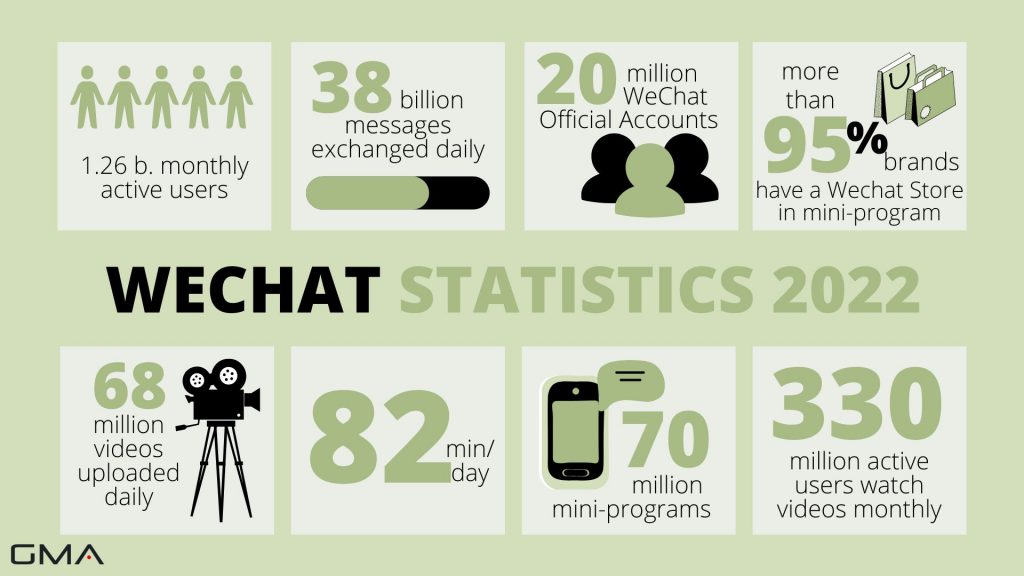
As you can see above, WeChat is one of the biggest phenomenons when it comes to applications and many other apps around the world take it as an example and implement some of Tencent’s strategies in their own apps.
What can WeChat do for users?
Even though WeChat started as a very basic messaging service, now their range of services expanded so much, that they have become a need in Chinese people’s life. Here is some example of what you can do with WeChat:
- send messages and call or video call friends
- scroll on WeChat Moments, which works like a Facebook or Instagram feed
- watch videos on WeChat Channels
- check favorite brands/accounts’ official pages
- search Internet content through a built-in search engine (Sogou)
- pay using WeChat Pay within the WeChat app
- buy train, and plane tickets
- Order food, taxi, rent a bike
- buy products in WeChat Stores
- check brand zones of favorite brands
And many more! As you can see, having a WeChat business account allows you to leverage the app so that you can attract your customers to your brand and stay in touch with them.
Wechat Features for Companies

Verified WeChat Official Account is your first step
The first thing that you need to do as a brand is to register a verified Wechat Official account. You basically have 2 options: you can either sign up for a subscription account or a service account. They both have their advantages and disadvantages regarding what your objectives are (be careful, you will need a business license « 营业执照 » as well as a WeChat Pay account). If you want we can help you.
Subscription Accounts
With a subscription account, your company is more focused on its content. Your content is accessible in the SERP of the search engine embedded in the WeChat ecosystem. Subscription accounts give users the possibility to send one push notification to engage their audience per day. However, this notification is « hidden » in the folder where all the subscription accounts’ notifications go.
Service Accounts
With service accounts, the focus of the company is on the user. Your maximum amount of push notifications is 4 per month but the notification is more visible than the subscription account’s because they appear as a personal conversation in the message feed of the user. With service accounts, companies can create a closer relationship with the user through chats, loyalty programs, etc.
Of course, there are other types of WeChat accounts, like enterprise accounts or WeChat work, but they are not useful for brands’ promotion.
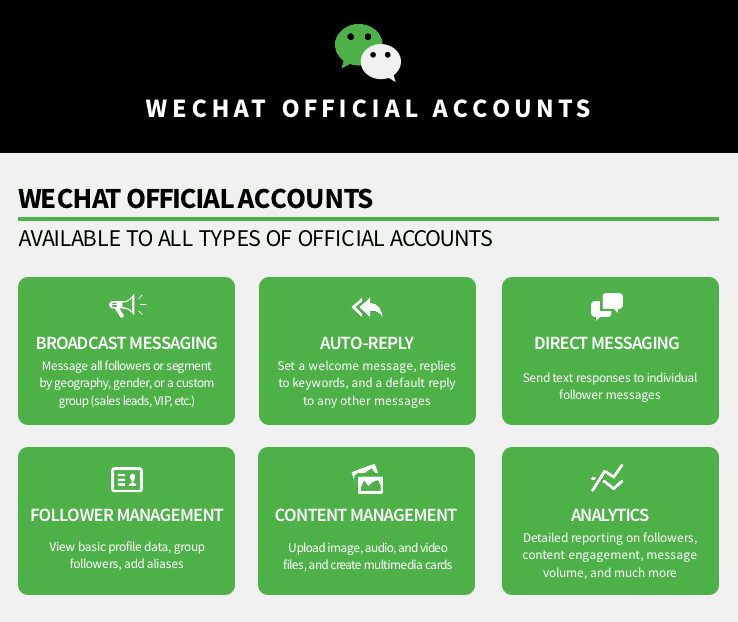
We recommend using a WeChat Service Account
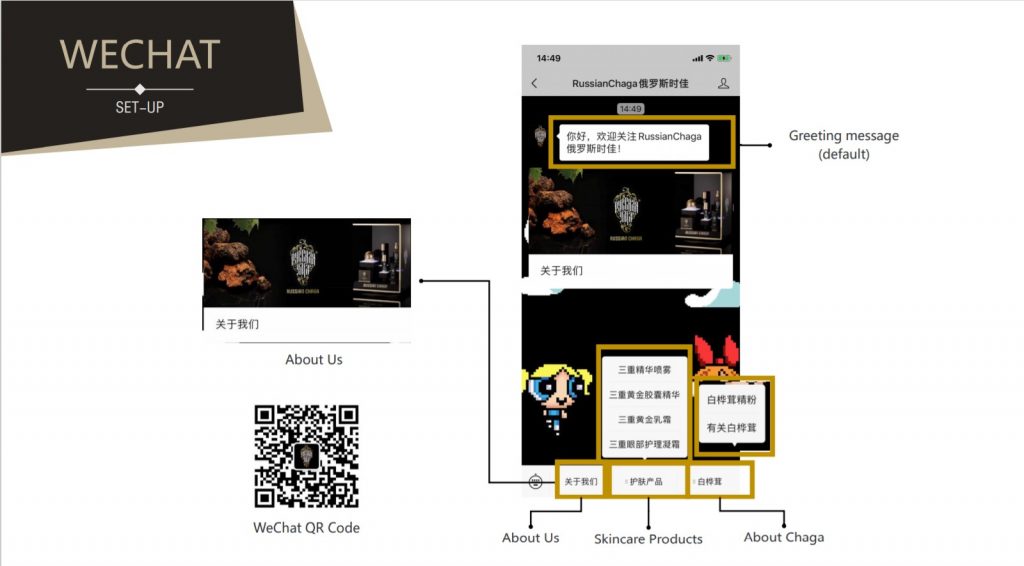
Your WeChat business account is live, you can start using all the options on the WeChat website. This includes modifying the toolbar at the bottom of the discussion window with the user, setting up a menu, set-up automatic messages, and so on. All of these are available with WeChat Official Accounts, but what is important to know is that service accounts can be owned by foreign companies without a Chinese entity, and it’s not the case with other WeChat business accounts.

Having a WeChat Official Account allows you to communicate with your audience in a way similar to our newsletters. You can create valuable and emotionally appealing content, engaging your followers in well-prepared storytelling. WeChat Official Accounts allow for many interesting posts, with interactive features and appealing graphics, so your readers will feel engaged in the story.
WeChat business accounts allow for one-to-one communication, so you can manage your customers by providing good customer service within the app. You can also send them special coupons and discounts, like issuing virtual VIP cards, etc. And on top of that, your WeChat Official Account will have a special QR code, which you can on other social media platforms, websites, or offline communication channels, to reach your target audience.
WeChat H5 Brochures
WeChat H5 brochures are one of the latest features introduced by WeChat for business so that companies can present their services and products better. WeChat brochures are basically interactive H5 pages developed in HTML5 for mobile devices in WeChat mini-programs (small programs within the app).
Wechat Brochures can be used instead of simple PDFs, and they are definitely more convenient and useful. Those brochures usually have a few pages, presenting the brand and products in a simple but engaging way. One of the main advantages of this feature is the fact that WeChat brochures are easy to share across different app features.

What is more, H5 pages often rely heavily on users’ input, which can be a good way to capture leads. In fact, H5 also allows you to collect data on people viewing your campaign. The data can be collected from a variety of channels, such as interactive forums, comments, and surveys.
WeChat Shops
When you’re done with your WeChat Official Account registration, you can move on to working on a WeChat store set-up. Having a WeChat Store (that needs to be linked to your own WeChat Official Account), allows WeChat users to shop directly in the app, using the WeChat payment method. This is a great feature, especially for small brands that don’t have a reputation or budget to enter big online marketplaces like Tmall or JD.
A WeChat store can be created in the same mini-program where you have, or are planning to have a WeChat brochure. This means, that you can build a whole mini-app and use WeChat for business there, offering announcements, discounts, introductions of products, contact forms, and products in your own shop.
WeChat shops are very user-friendly, as they don’t force customers to search for your native website or application. They are also easy to be shared in other WeChat functions, like live-streaming, an official WeChat business account, WeChat Moments, Channels, and so on.

To create a mini-program for your brand, you have many choices, among others: Youzan (有赞) which is the number one player on the WeChat ecosystem (fees are around 4800 yuan per year). If you search for a free service you may look at Weidian (微店) which is quiet-looking like Youzan, however, traffic is less important on this platform.
WeChat Channels (Video) Hot in 2024
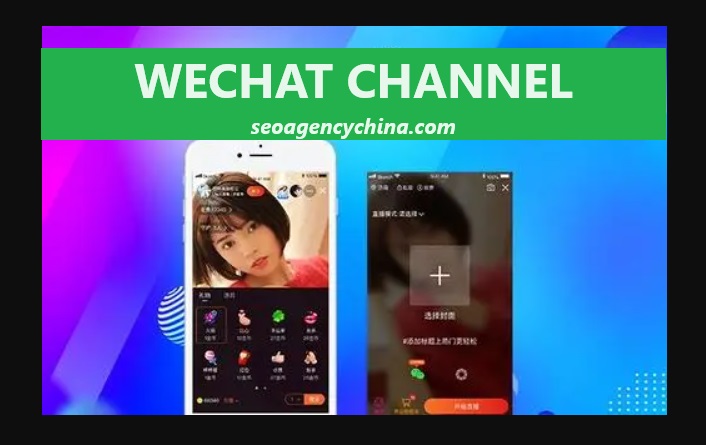
WeChat Channels are also fairly new and they were launched as a response to the growing popularity of short-video apps like Douyin (Tik-Tok), Kuaishou, and so on. It’s a platform within WeChat, where WeChat users can check short videos posted by their friends, and people they follow, but also some that the algorithm offers them.
WeChat Channels are also a WeChat idea to ‘open’ the app more. WeChat is considered more of a closed ecosystem and it’s hard to reach out to new followers, but thanks to the ‘discovery’ option, you can display your video content to people with matching interests, reaching out to new potential clients.
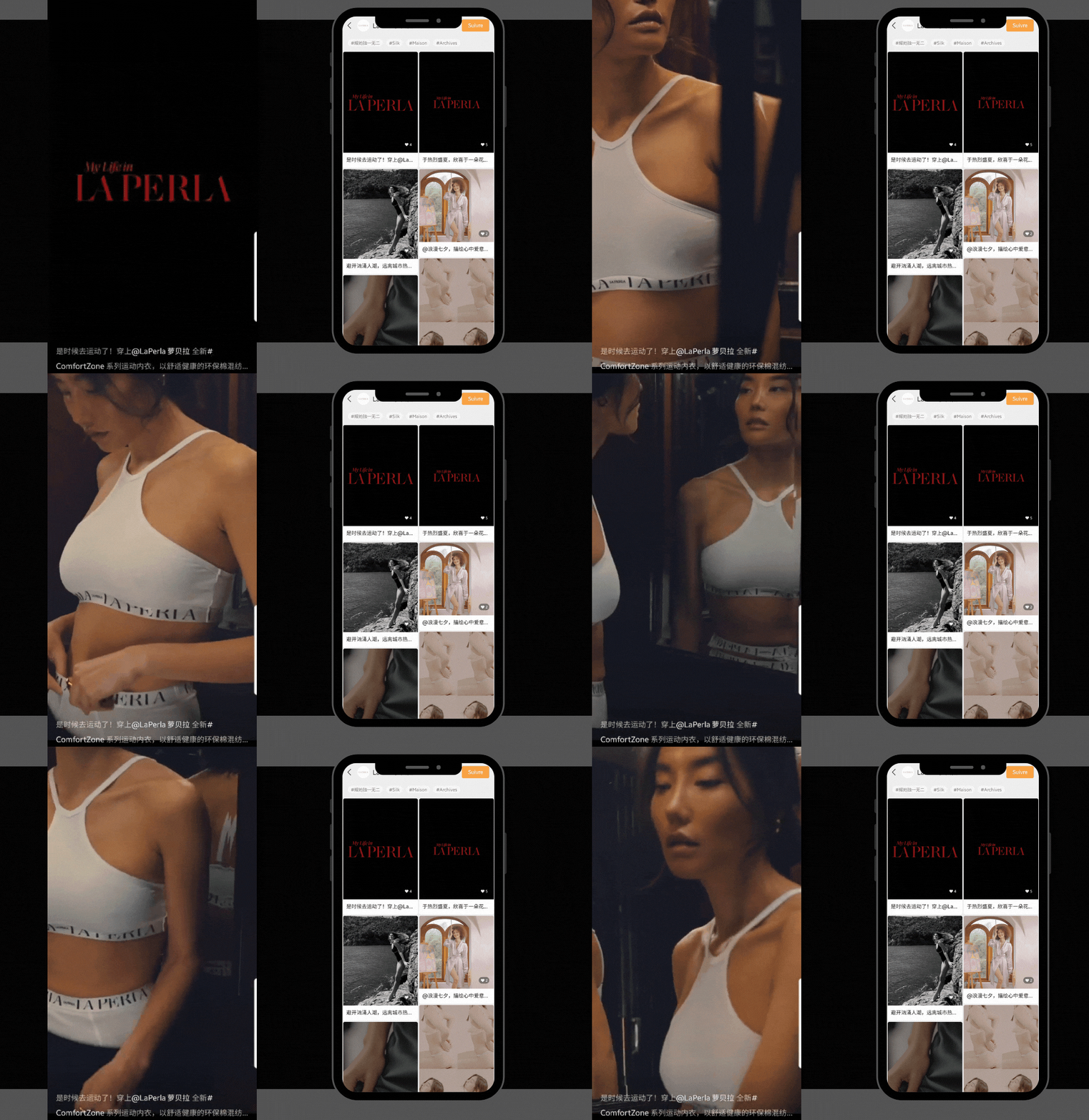
To be able to publish content on WeChat Channels, you need to start an account that will be linked to your WeChat Official account. WeChat Channels are useful especially for brands that want to target young consumers, as they use this feature way more there is also an option of KOL live-streaming, which is one of the greatest ways of promoting your products.
WeCom
WeCom, previously known as WeChat Work, is a business communication and office collaboration tool developed by Tencent. It’s part of the WeChat ecosystem and is designed to facilitate efficient and secure communication and management within companies. Here’s a brief introduction to WeCom and five ways brands can use it:
- Internal Communication: WeCom provides a platform for seamless internal communication among team members. It supports text messaging, voice and video calls, and the creation of group chats, enhancing collaboration and quick decision-making.
- Project Management: The platform can be used for project management, with features like task assignment, progress tracking, and deadline reminders. This helps in maintaining productivity and ensuring project timelines are met.
- Integration with WeChat: WeCom allows for integration with WeChat, enabling businesses to manage their WeChat official accounts, customer messages, and marketing campaigns from a single platform. This integration bridges internal and external communication efficiently.
- Document Sharing and Collaboration: The platform supports file and document sharing, with options for cloud storage. This makes it easier for teams to collaborate on documents, share feedback, and make edits in real time.
- Corporate Administration Functions: WeCom offers tools for administrative tasks like attendance tracking, leave applications, and expense claims. These features help streamline HR and administrative processes within the organization.
By leveraging these functionalities, brands can enhance their internal communication, improve project management, integrate marketing efforts, collaborate on documents more effectively, and streamline administrative tasks, all of which contribute to increased efficiency and productivity.
Leverage these opportunities to generate sales!
WeChat provides some very useful tools, that can make your first exchange with users very informative and useful for you.
Auto Reply Tool
This tool allows you to create a special auto-reply message depending on the situation because when someone subscribes to your Wechat account you have this small window of only 5 messages to get to know them better. So firstly you can create a welcome message, then you can establish auto-reply messages based on the keyword found on the message sent by the user.
Finally, you have automatic message answers which correspond to a message sent to the user to tell him/her that they will be recontacted shortly (because none of the keywords have been recognized by the auto-reply keyword tool.
This is an included tool in the WeChat platform but you can also call third parties to give you other really smart tools to help you improve your customer service and leverage the WeChat platform.
Grouping and Tagging feature
This tool is provided by third parties and allows you to automatically categorize your followers into groups of specific criteria (genre, city, age, etc). Which is practical for segmentation marketing.
Third-party tool for push messages
When someone follows the WeChat official account of your company you can send them push notifications to share your content (4 times a month for a service account and once a day for a subscription account). With 3rd party programs you can make the content you send adapted to your target (instead of sending the same content to all your customer base).
QR codes
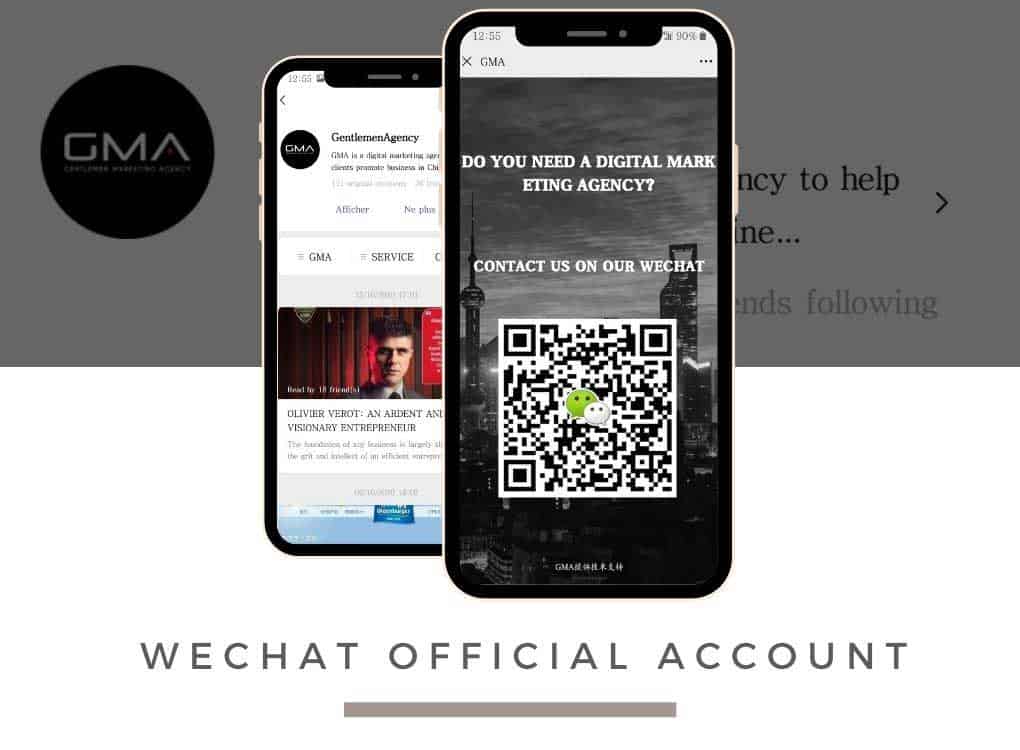
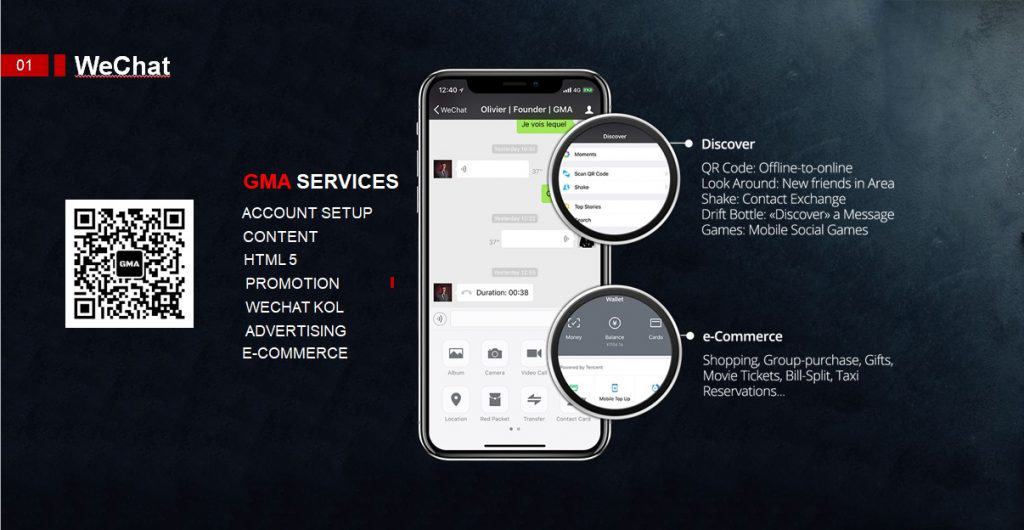
One of the aspects you should definitely leverage from WeChat features is QR codes, even though QR codes never really made their way into western countries’ businesses they boomed in China and have become essential for any marketer trying to gain raise awareness for its brand.
The first thing for your brand is to create a QR code for the Chinese to have easy access to all your content, you can obviously put it in all your marketing support/campaign (flyers/ infographics/brochures/…).
CRM functionalities
Meaning that if your business has a loyalty program on its website, you better ask your consumers to link their WeChat account to their loyalty program. This can help you to collect useful data to improve your relationship with them.
WeChat Wallet
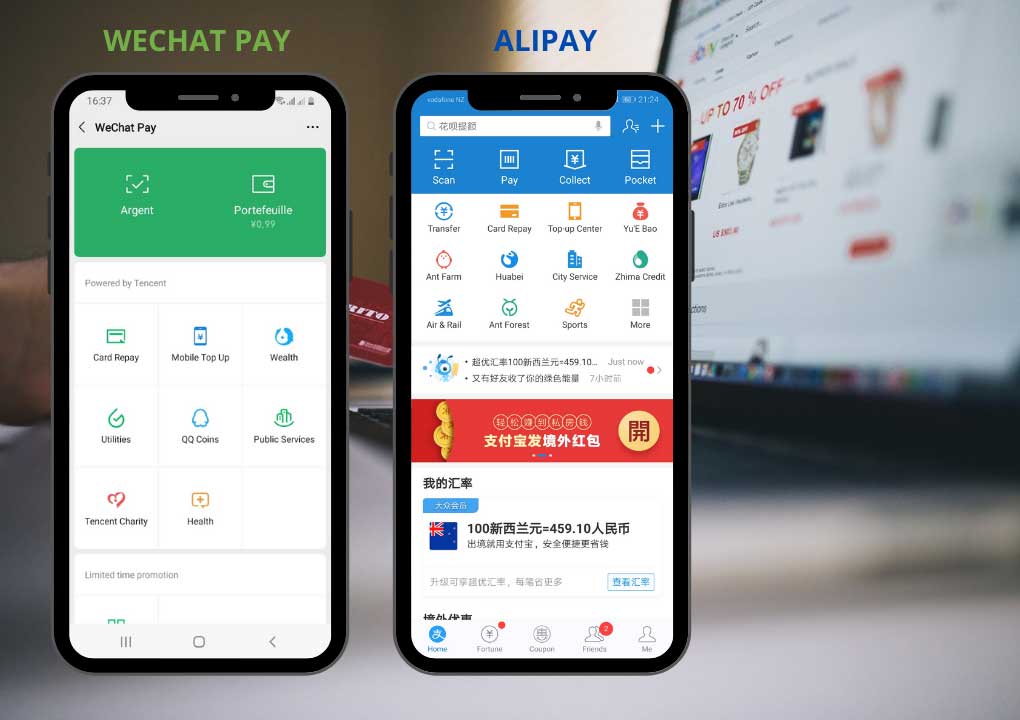
One of the most well-known and useful features of WeChat is its wallet which allows for online payments within the app. The best way to leverage this feature is to use some coupons for special offers. You have many different ways to make users win coupons, this can be super basic: just scanning a QR code, or using other WeChat features like phone shaking, link shared via Moments, or WeChat ads (we won’t talk about WeChat ads here, cause we are presenting cost-effective solutions, and ads are in general pricey in China, but if you are interested, contact us).
WeChat Moments
WeChat Moments is the Chinese version of a Facebook feed, users can share photos, videos, text and articles, links, and mini-programs that can only be seen by the user’s friend. A moment is a good tool not only for social networking, but it is also a great way to promote your business, especially with Moment ads which are one of the first marketing strategy tools that businesses use while implementing their brand in China.
Marketing strategy: raise brand awareness!
So what works best when it comes to WeChat marketing?
Publish content regularly!
One of the best ways to improve your visibility is to write meaningful and useful content. Write articles about your business to show your expertise. You can also display your products and services and talk about them: take the angle that suits your business the most, if your business is in technologies, you can talk about features, functionalities, design, etc…
Launch Marketing Campaigns
Brands can launch marketing campaigns to engage customers. It can be reposting an article that limits being published for gaining a prize. Or organizing a special contest that involves customers.
Key Opinion Leaders Promotion
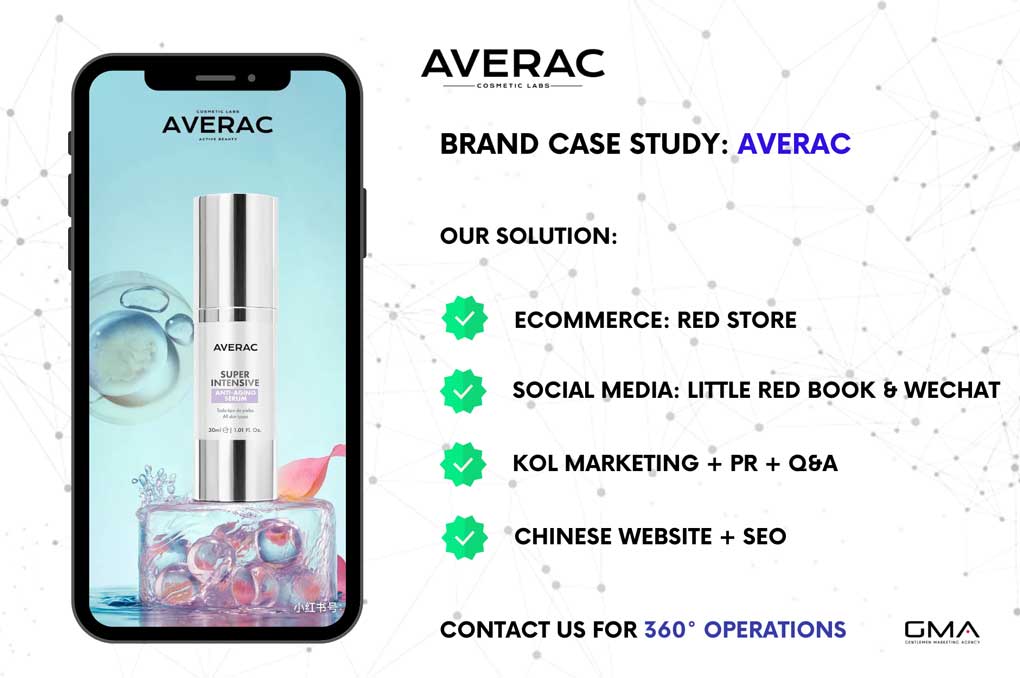
Key Opinion Leaders are very helpful players in any business. They are influential personalities operating mainly on social networks (they can also be celebrities), and they are one of the most efficient ways to promote your brand.
They can be part of your marketing campaigns by creating content around your guidelines, or they can BE the marketing campaign by offering possibilities of promoting your services/ products (by reviewing them during a live stream, sponsored posts, doing giveaways, creating contests engaging their community, etc).
They are effective because they have strong relations with the community they built, a community that trusts them and often identifies with them. That’s why they are so influential and must be considered a must.
However, KOLs campaigns on WeChat and other social media channels can be very pricy, so if you go for this type of promotion choose wisely the KOL you want to work with, and make sure that he/she is targeting the right consumers for you. Also if you want a less pricy personality, choose the less popular one, they are still ways because their community is smaller they’re considered as more authentic.
In all previous cases, please share the content you created and the QR code to access your account on other social networks (Weibo, Toutiao,… ), on websites, and so on.
All foreign brands, heads up!
WeChat is the most spread and used social network in China, you should elaborate your strategy for the Chinese market by allocating a part of your budget and time to WeChat. As said above, you have many different ways to leverage this platform, for all types of budgets. And as you grow you can integrate some new and cost-effective strategies!

Contact us for more information on our Wechat solutions and learn more about SEO Agency China.
We have hundreds of Wechat case studies, which we will be glad to share with you if you have a project.




Hi, I have strong interested in White Book. Could you please send me a copy of it?
Thanks,
Joan
Yes we will send you today. 😉
Trying to connect with Chinese merchants.
What do you Mean Dakiri ?
Do you have any Wechat Marketing Case studies?
Yes we have. 😉 and I will send you , even I know that you are a Potential Competitor (I am not stupid)
Hi, I have strong interested in White Book. Could you please send me a copy of it?
Do you have any Wechat Marketing Case studies?
Yes sure. We will send you
I am interested to receive this White book about WeChat too. 😉
sure. I will send to you 😉
Hi, I’d be interested in reading the White Book, can I please have it sent?
will be send today. 😉
Hi, thank you! I’m waiting 🙂
Hi, will you send it? Still haven’t received it. Thank you
Why haven’t I received it? Is it some kind of trick to extract e-mail addresses from people?
Hi, I think my previous comment didn’t publish. I’d be interested in the White Book and WeChat case studies, could I please have them sent?
Hi, I still haven’t received anything. Can you please confirm it will be sent?
Thank you
hi am local tour operator here in the beautiful island of Bohol Philippines.. I hope you are open for collaboration on WeChat, for Marketing
How can businesses use WeChat to reach consumers?
WeChat offers three main functions dedicated to companies:
Brand communication: To begin with, companies can create a more or less extensive official WeChat account (“service” or “subscription”) allowing them to communicate directly with their followers and share promotional content associated with their brands. WeChat also provides companies with a platform that allows them to add their own applications to WeChat. This “in-app” model is much less expensive and complex than developing native applications. Above all, it makes it easier for businesses to access and interact with the huge community of WeChat users.
It is not wrong to say that most Chinese companies, with SMEs in mind, pay more attention to their official WeChat accounts than to their own websites. Many small businesses are even prone to do without a website since many Chinese users have discarded their PCs and are more comfortable with the more familiar mobile platforms, including WeChat.
Electronic commerce: WeChat is an ideal platform for reaching Chinese customers and a powerful tool for C2C, B2C and cross-border electronic commerce. Companies can easily integrate their WeChat stores into their official accounts and promotional content. As for the WeChat payment system, it facilitates merchant transactions, whether they sell their products online or in real shops. The store location function and WeChat QR codes also form a user-friendly bridge between the digital and physical worlds.
Customer Service: A WeChat user adds an official account the same way they add a friend. Also, sending messages to official accounts is an experience similar to an instant conversation with personal contacts. This disappearance of the private-professional border offers interesting opportunities for companies wishing to provide their customer service on the WeChat platform. They can speak directly to their customers, geolocate potential customers, personalize their products, contextualize their sales, involve their subscribers more, organize social campaigns and individualize the purchasing experience of their customers.
Practical advice
Wechat, you’ve probably heard of it, but you’re not sure how it works.
More than just a social network, Wechat is now one of the applications most used by the Chinese for many reasons. You can now sell a handbag for 10,000 Euros and more. This trend reflects the huge potential for WeChat as a transaction and service app. WeChat is finally becoming what it is supposed to be for luxury brands, it’s not just a social media app. “One function could be for customers to buy the product. Another could be for brands to build a loyalty program. Customers can pre-order a product or make an appointment with the store.”
Wechat, an all-in-one application
WeChat is a major player in the Chinese social digital space, partly comparable to Facebook. So it’s a direct competitor to Weibo, Chinese Twitter. It offers instant messaging similar to WhatsApp. It has an App Store, so it has similarities to Apple and Google.
However, these comparisons are not enough to define what Wechat is.
The “App-in-app” in Wechat
WeChat can be used for anything that can be done online. Wechat will indeed facilitate the integration of the most popular applications from China into its ecosystem so that its users no longer have to get out.
Within WeChat itself, there are the equivalents of Western apps like Tinder, Uber, or even Slack, as well as hundreds of other popular services. One of the most popular is Didi Chuxing, the equivalent of Uber in China, for example.
Amazing article, congrats.
So good, so interesting.
WeChat is a matter of efficiency, not budget