
Top of the line Baijiu to Drive Chinese Alcohol Market Growth?
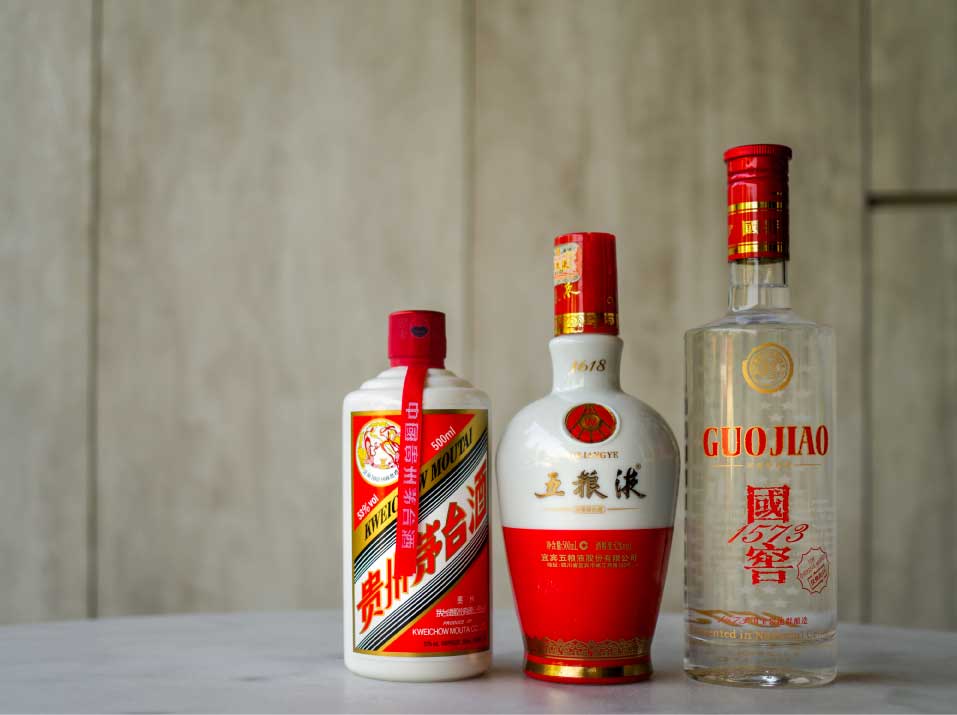
The world’s most well-known spirit, baijiu, is flushed only in one nation—China. While it is accessible for as meager as $1 per bottle from accommodation stores the country over, It is the superior finish of the market that sets to drive future development in Chinese liquor spending.
Greater Than the Absinthe Fairy
Flying Fairy Maotai (飞天茅台), created by Guizhou Maotai (贵州茅台), costs an eye-watering 1,499 RMB ($237) per bottle, yet a lack of supply implies purchasers are eager to pay substantially more. During January, the authority Maotai store on JD.com got more than 380,000 requests for Flying Fairy Maotai at the proposed retail cost, and buys must be confined to two jugs for each request.
Cost-Effective Agency
KPI and Results focused. We are the most visible Marketing Agency for China. Not because of huge spending but because of our SMART Strategies. Let us help you with: E-Commerce, Search Engine Optimization, Advertising, Weibo, WeChat, WeChat Store & PR.
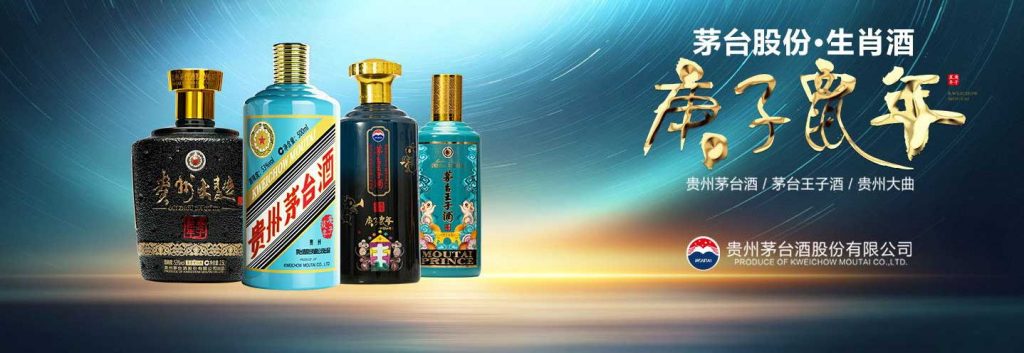
A few tops of the line baijiu brands have just raised their costs this year. Kweichow Maotai saw an 18 percent regular cost ascend, with Flying Fairy’s prescribed retail price expanding from 1,299 RMB ($206) to 1,499 RMB ($237). In stores, costs are as high as 2,000 RMB ($316). Flying Fairy’s exciting achievement is not one of a kind case in the baijiu advertisement. An ongoing Chinese language report predicts that baijiu items more than 1,000 RMB ($158.3) will turn into the principle power driving deals development in the Chinese liquor showcase in 2018.
In 2018, the entire extravagance baijiu advertised anticipated to arrive at 1 trillion RMB ($158.3 billion). Fueled by its top of the line baijiu’s, which retail for more than 2,000 RMB ($316.6), industry pioneer Kweichow Maotai (贵州茅台) is required to arrive at incomes of 221.6 billion RMB ($35 billion) in 2018.
“China is the main nation on the planet where drinking gets progressively predominant when you get more established,” said Derek Sandhaus, the creator of Baijiu: The Essential Guide to Chinese Spirits (Penguin), on the expanding request of top of the line baijiu. “The interest for baijiu is the equivalent for excellent quality items all through China. It needs to do to a great extent with the buying intensity of clients. As the obtaining intensity of the normal customer has expanded, so has the interest for increasingly costly baijiu.”
The Only World-class “Red” Luxury Brand
Kweichow Moutai was positioned first among the best 10 Chinese local extravagance marks in 2017. While baijiu rivals 五粮液 (Wuliangye) and 水井坊 (Shuijingfang) are positioned second and 6th, the recorded and social estimation of Maotai verified its notoriety for being the top Chinese extravagance brand both locally and globally.
The cost of Maotai relies upon the liquor content and the time of creation and regularly begins from 900 RMB ($138.3). The most sought after item is a 500ml container of 53 percent liquor Kweichow Moutai and costs 1,899 RMB ($292), however the value floods as high as 218,888 RMB ($3,3619) for an 80-year-old jug. A year ago, the brand’s market top hit $71.5 billion, making the organization the world’s most important alcohol refinery.
The cachet of Maotai makes even its old jugs important. The cost of vintage Maotai bottles has flooded 1,000 percent. Vintage Maotai alcohol authority Xiao Qiang disclosed to Newsweek that, “Regardless of whether you have the cash to get it, you cannot generally discover it.” In 2012, a jug of 1980 Maotai sold for $1.3 million at closeout.
Maotai has unprecedented notoriety as China’s national alcohol because of its social and political significance. It is seen as the beverage of strategy used to toast significant political figures, including President Richard Nixon, on his milestone outing to China in 1972.
Previous US National Security Advisor Henry Kissinger remarked during Deng Xiaoping’s US visit in 1979: “I think on the off chance that we drink enough Moutai we can understand anything.” It is additionally a staple at sumptuous feasts, and for this very explanation, its buy by government authorities was disheartening during President Xi Jinping’s enemy of debasement battle in 2012. That has scarcely eased back Maotai’s deals as China’s private class of well off elites develops in size and spending power.
Could Baijiu Go Global?
Baijiu represents 99 percent of alcohol deals in China; however, it is scarcely known in different nations. Indeed, even the most well-known baijiu brand, Kweichow Moutai, makes 95 percent of its deals in China, with a significant part of the rest of up by Chinese living or voyaging abroad.
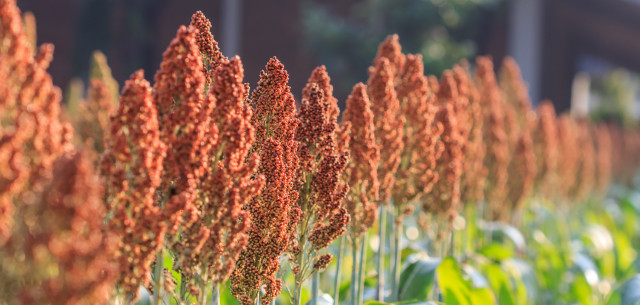
Truly “white liquor,” baijiu is a robust seasoned clear alcohol refined from matured sorghum. Expending baijiu was once viewed as an extravagance just open to literati and social elites. These days, baijiu is utilized to grease up contract arrangements and festivities, professional interactions, and weddings.
However, the market is presently moving in light of the new social and social structure. “Presently, the refineries have adopted a more buyer arranged strategy,” Sandhaus said. “The administration has quit being the significant buyer and customer of outstanding quality baijiu, following the direction of President Xi Jinping. There are additionally significantly progressively confided in online sellers, which has among plenty of shoppers re-established certainty that they can purchase top of the line baijiu and not get fakes.”
Baijiu creators are likewise focusing on new markets in Europe and the United States. Maotai spent a revealed $11.76 million to set up its Paris store, and progressively universal areas arranged. “That is a truly energizing new advancement of very good quality baijiu—the entrenched baijiu refineries are getting into the worldwide market,” said Sandhaus. “While some remote exchanging organizations, for example, Byejoe and HKB, put forth the attempt to bring baijiu abroad by repackaging it, the significant refineries have their one of a kind quality in the more extensive market.”
“They can deliver great baijiu in noteworthy volumes; however, they additionally have the brand legacy and notoriety, which another outside baijiu organization does not have,” Sandhaus said. David Putney, an expert at baijiu bar Capital Spirits, is idealistic about the potential worldwide market for baijiu. “Baijiu is starting to internationalize and is utilized increasingly more as either a backup to Chinese nourishment or fixing in mixed drinks. The center is quickly moving from baijiu to being a pricey blessing and money for indicating face. It is gradually moving towards turning out to be something keeping pace with most global spirits,” he said.
Custom Versus Innovation
Then again, drinking baijiu is progressively observed as dated conduct by more youthful Chinese uninterested in feasts and swagger. The dismissal of conventional drinking society has opened space for new baijiu brands focusing mainly on the post-80s and post-90s ages.
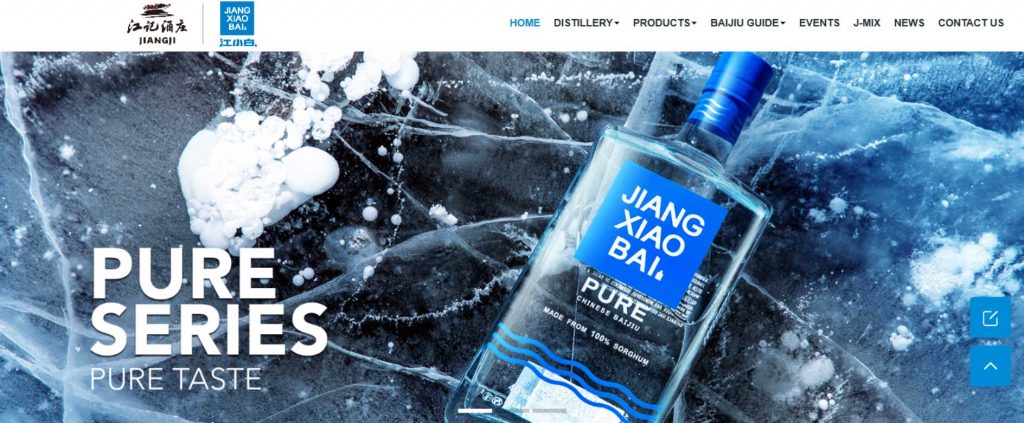
One of the most inventive baijiu brands is Jiangxiaobai (江小白). Situated in Chongqing, the brand set up through a crowdfunding effort. Its “straightforward” reasoning is showed in both a lighter taste and a more moderate bundling plan. Containers additionally include statements, for example, “I am Jiangxiaobai, life is extremely straightforward!” and “About things tomorrow, we will make sense of them the day after tomorrow!”. Sharp web-based advertising and an energetic network via web-based networking media webpage Weibo additionally recognize Jiangxiaobai from its forerunners.
Another region of advancement is innovations to alter the preparation procedure. Guanyun (观云) made a one of a kind flavor that is milder, better, and fruitier than customary flavors. Along these lines, the sharpness of baijiu is diminished and turns out to be progressively congenial to more youthful shoppers and the worldwide market.

This is a good example of why branding is important (and maybe the most important thing) in any marketing campaign in China. Selling the same type of product, but with a singular difference which propulses it as a premium and even as a luxury drink, this is what I call a masterstroke.
But if this strategy works in China, it will be a big challenge for the brand to get on the international stage.