Tmall vs TaoBao: What’s The Difference?
Taobao and Tmall are two popular online shopping platforms in China. Both of them are managed by Alibaba, but they are different in many aspects. Despite operating under the same parent company and serving as online retail markets, they have grown differently due to factors including their capabilities, target customer groups, logistics processing, and more.
As a marketer, it is essential to know the differences between Taobao and Tmall. The competition is fierce as there are over plenty of other players around. So how do you make a decision that is right for your company? Keep reading to figure out which platform better fits your needs and goals.
Cost-Effective Agency
KPI and Results focused. We are the most visible Marketing Agency for China. Not because of huge spending but because of our SMART Strategies. Let us help you with: E-Commerce, Search Engine Optimization, Advertising, Weibo, WeChat, WeChat Store & PR.
Introduction to Tmall vs Taobao
Taobao and Tmall both provide millions of customers with a great online shopping experience by offering a wide range of products, competitive prices, and convenient payment methods.
Taobao was launched by Alibaba Group on May 10, 2003, and Tmall was launched by the same group in 2008. Both Taobao and Tmall are marketplaces for buyers and sellers to connect and conduct e-commerce transactions. To find specific products on these sites one can use search engines such as Baidu (which is only allowed inside of mainland China) or Google (which does not show content inside of mainland China).
Taobao is the C2C Leader
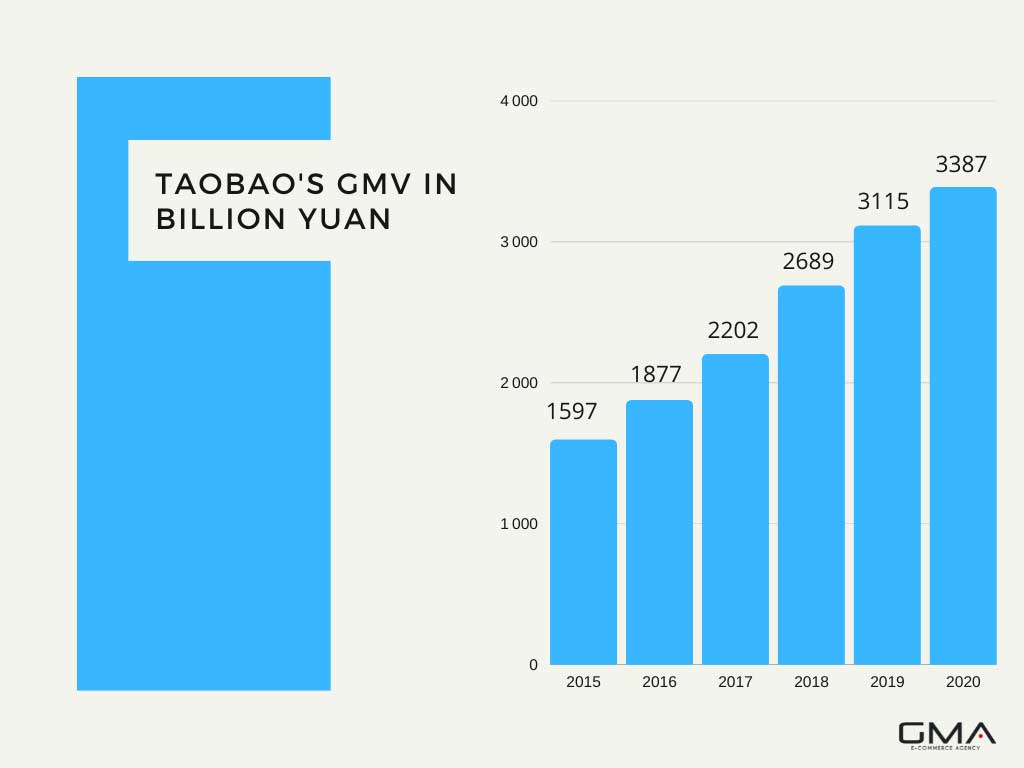
Taobao is the largest consumer-to-consumer (C2C) online shopping website in China. With 846 million active monthly users, Taobao offers hundreds of millions of users unparalleled convenience.
Taobao marketplace connects sellers and buyers, helping customers find what they want while keeping sellers up to date with trends and sales. It offers a platform for individuals to open an online shop, as long as they meet certain requirements.
Furthermore, Taobao is gaining popularity among merchants overseas. While this has led to a rise in the number of Chinese-language transactions on the platform, it has also presented a challenge for international customers who wish to buy from Taobao but don’t read or speak Chinese.
Benefits of Selling on Taobao
Taobao is absolutely a large Chinese market. It has been claimed that consumers spent a whopping $213 billion on the site, making it a good platform to sell various products or services.
The platform is also a low-risk way to list your products as it has no expensive fees attached to it when listing. Anyone can sell on Taobao as long as they have a local presence. This can be easily done by collaborating with an agency like ours. We offer full solutions to help assist brands and individuals to start their Taobao journey.
In addition, it has a built-in secured payment system that ensures both parties a payment and a good product, thanks to Alipay.
NB: Just like it requires a Chinese business license and a local address to open a Taobao store, you’ll also need a Chinese bank account.
Tmall is the B2C Leader
Tmall is a business-to-consumer platform owned by Alibaba and run by Taobao, providing brand and retail management online.
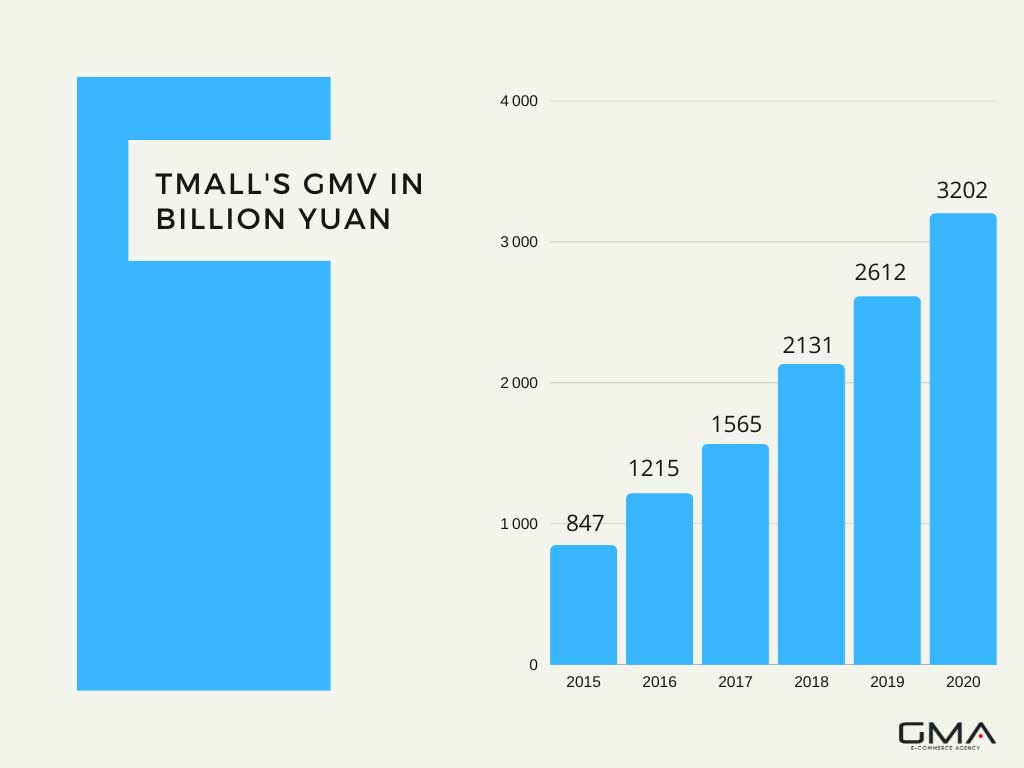
It has achieved 500 million monthly active users as of 2021. With a high and growing number of users, the ability to manage to ship effectively, and new features such as the recently announced Tmall Luxury Pavilion dedicated to top luxury brands in China, Tmall has an excellent reputation as a trusted online shopping platform.
Benefits of Selling on Tmall
Tmall is a platform that hundreds of millions of Chinese consumers use every day to find and buy products. Using Tmall to sell your items is a smart way to instantly build credibility for your brand.
Selling on Tmall can be quick and easy once you have a plan in place. The biggest decision you’ll have to make is whether to go with your store or to open a storefront as part of a Tmall brand shop.
If you choose to go with the Tmall platform, you’ll also be able to trade as a wholesaler and sell goods under your brand name. In addition, you’ll have control over pricing and product descriptions. However, you won’t have any responsibility for logistics or customer service.
Opening a Tmall store can be complicated, especially if it’s your first time. The trade rules, tax requirements, and logistics can be overwhelming. But if you find a partner with experience in the industry, they can be invaluable in helping you establish your online shop.
Lastly, Tmall is a Chinese shopping destination offering a watch list, live streaming, brand pages, and more. Customers can discover new brands, upcoming trends, and interact with brands daily on Tmall’s news feed.
What are the Differences Between Taobao and Tmall?
When looking at Tmall vs Taobao, we clearly see that both have unique business models and approaches when it comes to marketing products. However, it is important to understand which one might work better for your business.
As the two apps are linked to each other it can be very confusing to distinguish between them at first. When shopping on Taobao, you’re likely going straight for Tmall but never vice versa.
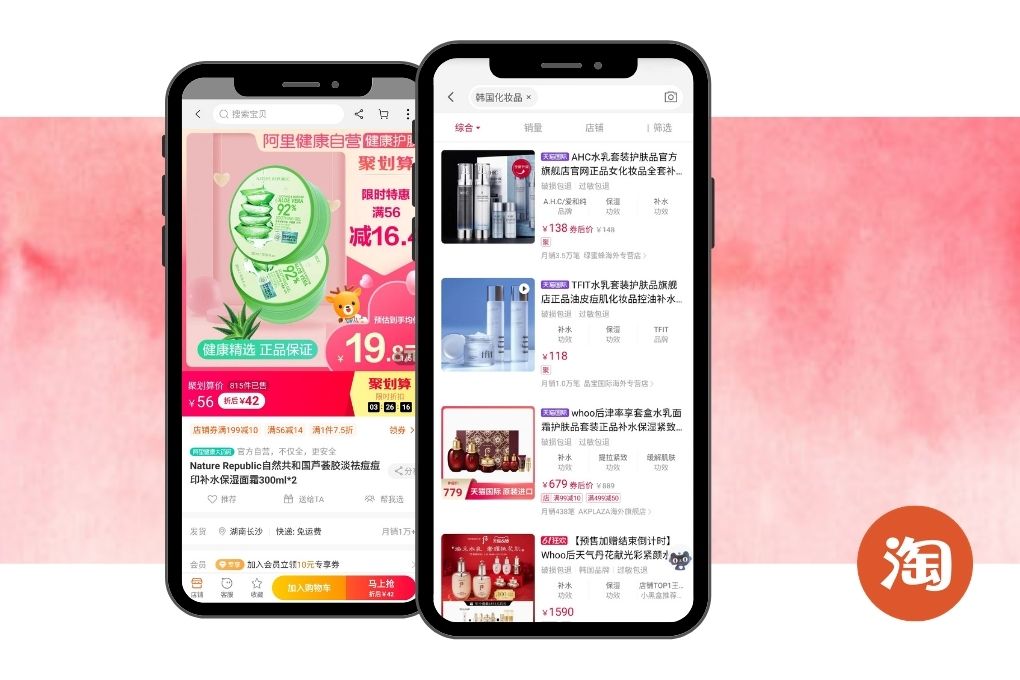
Aside from being the C2C or B2C leader in China, these two platforms have other significant differences.
Taobao vs Tmall: Products and Services
Shopping intent: Taobao is for buyers looking to buy the best deals, while Tmall gives you peace of mind that your purchase will be from an established brand.
- Taobao is a treasure-trove for consumers looking for the latest and hottest products. From the latest fashions to the most popular gadgets, customers are sure to find what they are looking for if it’s on Taobao. Customers can find the cheapest products that are mostly from Chinese brands made for the domestic market.
- Tmall on the other hand is the one-stop destination for China’s most trusted brands. It is different from Taobao because it only offers quality goods and services by brands that have been vetted for quality and authenticity. You can just think of Tmall as the branded, more luxurious sister site of Taobao. Generally, Taobao is consumer-driven while Tmall is brand-driven.
Bonus: Shopping fanatics can get real brands and products on Tmall shipped directly from locations such as Hong Kong, Europe, Australia, or the United States through Tmall Cross border eCommerce.
Merchants Profile on Tmall vs Taobao
Dealers on Taobao are mostly individuals or small businesses. There are more or less 10 million of them who have at least listed their products on the platform.
You can absolutely open a Taobao store for your business. But it is worth mentioning again that competition here is fierce.
In contrast to Taobao, only local businesses with a city-issued business license or a registered brand owner are allowed to sell their products on Tmall. This ensures that the products customers buy are top-quality.
To sell on Tmall, you will need a domestic company that can work with Tmall. There are two ways of doing this: you can either set up your own company or you can sell via a third party.
Moreover, you’ll need to show that you have proprietary rights to sell the products.
Price Tags
Taobao is all about price. It’s a platform for local small merchants and consumers to buy and sell products at a low cost. With millions of small businesses competing for you on price, it can be difficult to stand out and leverage product pricing.
Fortunately, if you have a brand to promote, Tmall will give you that opportunity. Typically, the shoppers there are willing to spend more on quality products and the average basket sits around $39. This is why Tmall is an increasingly popular gateway for foreign businesses that want to enter the Chinese market.
Logistics
Shipping for products bought on Taobao is usually quick as most products and merchants are based in China. Shoppers are willing to wait when their items are shipped overseas but the wait should be reasonable.
When you decide to list your products on Tmall, one requirement is that your inventory should already be in China. This will allow for faster delivery when your product is placed.
However, with the new Tmall Global, it will be easier for foreign companies to enter the Chinese mainstream market. It will be easier to advertise and sell to Chinese consumers while abroad.
Tmall vs Taobao: Set up Cost
Taobao requires a low-cost initial investment compared to Tmall.
Starting a business on Tmall needs a bigger investment because you have to set up a local company that carries your brand. And, you’ll need to buy or lease a warehouse for your products.
When dealing with such an important decision, it is crucial to clearly define what your business will be all about, whom it will cater to, and who your ideal customer is.
Taobao and Tmall Complement Each Other
Taobao and Tmall appeal to different demographics and fill separate needs. Taobao caters to small businesses and individual buyers. Tmall, by comparison, attracts larger businesses that have a much greater need for professionalism. With this in mind, we believe that Taobao and Tmall will complement each other rather than compete against one another. A strong showing on both sites can certainly yield better results for retailers than being on just one.
Despite their differences, they are complementary since they have separate functions. They are complementing each other’s strengths in the e-commerce market by serving different consumers.
In the future, both platforms will continue to forge ahead as the e-commerce leader in the Chinese market.
Taobao vs Tmall: Take away
Tmall is a preferable choice for large brands that seek to create an identity on the platform, without exposing themselves to the risks inherent in consumer interaction. While Taobao may provide more exposure to less-reputable companies, it also has more consumers and consequently more growth potential than Tmall. If your company believes it can best position itself on a platform known for its impulsive and spontaneous buying habits, then Taobao may be right for you.
Want to start selling on Taobao or Tmall?

Contact-us! we have eCommerce solutions tailored to the Chinese market and more specifically to Alibaba’s top online marketplace Taobao & Tmall! Our agency also happened to be a Tmall Certified Partner.