
Little Red Book is the Instagram of China, The Perfect Match for Fashion Brands
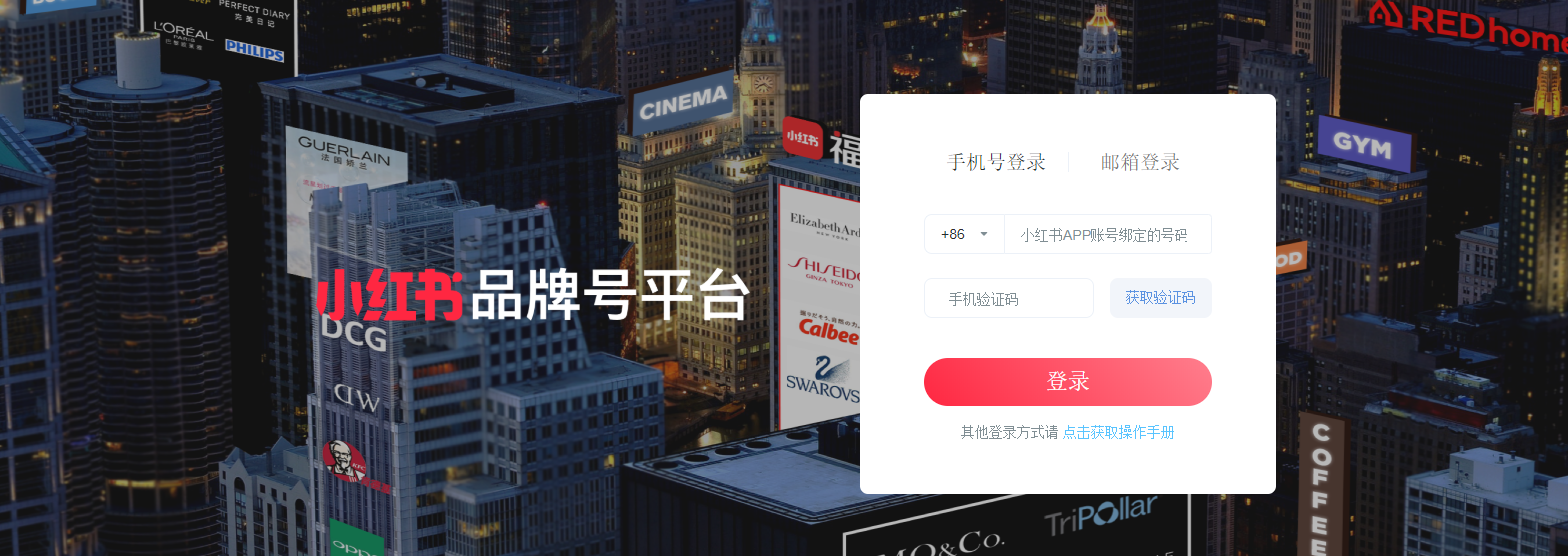
Little Red Book (xiaohongshu) is the Instagram of China, perfect for Fashion Brands for Brand Awareness and for e-Commerce. It is one of china’s most popular social media with wealthy women in Chinese first tiers cities
- Have you heard of Fan Bingbing, that famous Chinese actress known in Hollywood as Blink in X-Men?
- Do you know which shampoo she uses to tame her hair? Have you ever heard of a supermodel Angelababy, called Kim Kardashian of China? She recently made headlines for throwing a USD$ 30 million wedding extravaganza more lavish than the real Kim threw herself.
- Do you know how a Taiwanese TV host Xiao S, more known as Little S achieved the look of a V-shaped face?
- You must have seen Chinese actor Hu Ge on those Emporio Armani billboards around the city, looking all styled up and retouched. But do you know which espresso bar he frequents for his morning cup of joe?
There is one digital space where you can find the answers to all the questions above, the Little Red Book (Xiaohongshu). It is also the number 1 ranking cross-border e-commerce app in China.
Cost-Effective Agency
KPI and Results focused. We are the most visible Marketing Agency for China. Not because of huge spending but because of our SMART Strategies. Let us help you with: E-Commerce, Search Engine Optimization, Advertising, Weibo, WeChat, WeChat Store & PR.
What is Little Red Book?
Xiaohongshu (小红书), which literally translates as “Little Red Book” is a billion-dollar startup booming Chinese social media apps. Little Red Book targets 18-to-35-year-old Chinese women to help them to discover, learn about, and purchase brand-name products (primarily beauty and health products) overseas that normally are difficult to find in China.

Xiaohongshu was ranked as the #1 App in the cross-border e-commerce app category with 15.4 million MAUs during Black Friday 2017 according to Analysys.
Co-founded in 2013 by Charlwin Mao and Miranda Qu now it’s valued at USD$ 3 billion. The app started as a social platform for travelers to share recommendations about products they bought abroad. However, it turned out that there was a need in the market for a reliable way to purchase foreign goods. The platform signed partnerships with several prominent foreign brands to satisfy consumers’ needs.
A Worthy Social Media Channel for Fashion Brands

Little Red Book is a 60 million users database growing every day. The platform enables to create of a new consumers community with a crucial role of influencers in that. No doubt, it’s a terrific option for companies in the health, beauty, fashion, and luxury industries to promote their goods.
A recent report by digital intelligence firm L2 also revealed that the number of mentions of luxury labels such as Hugo Boss and Max Mara by users has increased quickly on the platform. Over the past year, French luxury powerhouse Chanel was mentioned 2.24 million times, with Dior following after at 2.14 million mentions. Meanwhile, Hugo Boss recorded a 271 percent jump in mentions, with Bally and Max Mara both achieving growth of 133 percent.
Head of Asia Pacific Research at L2, Danielle Bailey, said one reason for the growth in mentions might partly be a consequence of the price gap between China and retailers abroad. “What we’re seeing is that specifically with brands based out of the States, the difference in pricing between a lot of accessible luxury brands, like Alexander Wang or even Michael Kors is significant,” she said. “The price differential on a percentage basis is much higher on accessible luxury than it is on your pure luxury brands. It means that when you travel, it makes much more sense to buy it overseas.”
L2’s report highlights that it’s highly important for brands to understand the shopping experience peculiarities of Chinese consumers and adhere to an omnichannel strategy in digital travel retail spaces. So, they reach consumers planning out their shopping route online for their next vacation abroad.
The Concept
The interface of the app is uniquely Chinese, and it might be difficult for people unfamiliar with Chinese society and culture to understand.
Instead of choosing a marketplace model as most Chinese e-commerce sites do, Xiaohongshu maintains partnerships with foreign brands remaining the best space for shoppers.

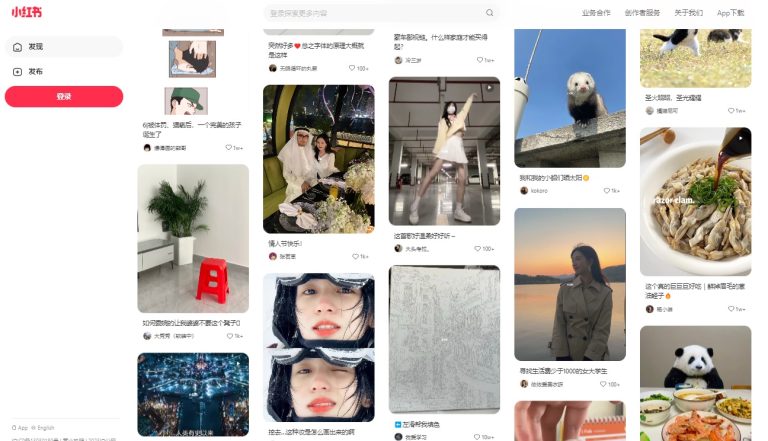
The app contains an “Explore” section enabling to explore user’s content on topics such as fashion, food, and travel. Obviously, the most popular category is beauty and cosmetics. Users are curious about the experience of other customers registered on the platform.
There is also a “Nearby” section, integrated into the app, that allows users to find venues nearby to have food or shopping experiences while on a business trip to Hong Kong.
From a Social Platform to an E-commerce Platform
The Little Red Book reflects a unique combination of similar tools to Tmall and Weibo platforms, which makes this app a social media and e-commerce hybrid. The whole content is generated by users offering them to share their reviews for foreign products, traveling routes, shopping tips, and fashion ideas.
Users who frequently post good quality content become “followable” and start to grow a large trusting audience who see them as shopping experts and turn to them for advice. This is the way to set up as an influencer on the site and earn a commission from helping Redbook sell products.

Little Red Book is the Instagram of China, the perfect match for Fashion Brands
Influencers Favorite Platform to Share
Xiaohongshu is one of celebrities’ favorite social media platforms in China. Many stars are following digital trends sharing their latest shopping picks and mixing snaps of their not-so-glamorous side of life there every day. Consumers generate a unique UGC (user-generated content) circle made up of well-known influencers with a massive following.
A Chinese actress and model Fan BingBing is dubbed “queen of sales” on Chinese social media. She actually temporarily brought down the Red Little Book server once due to a shopping note endorsing the latest beauty finds she just published. Currently, with 9.9 million followers on the platform, every face mask she ever endorsed on the platform is reported as sold out.
And here we go with a list of the top The Little Red Book fashion and fashion KOLs based on the ranking of an Influencer search engine.
Sun Shanshan, is ranked ninth on the list, which reviews mainly health and beauty products. She creates very detailed product descriptions with a variety of photos featuring her demonstrating or testing out the product.
Louis Vuitton debuted on Little Red Book (a.k.a. Red) earlier this month, becoming the first luxury brand to launch a page on this popular social shopping platform. This begs the question: Will Red — newly legitimized by this huge international brand — continue to reel in more big luxury brands?
Zhizhi cm is one more blogger to be mentioned. Her account is also dedicated to beauty and skincare, but unlike Sun Shanshan’s reviews, her writing style is also more polished and professional with product photos more instead of selfies.
The Little Red Book Marketing
Unlike other platforms, Xiaohongshu does not provide display ads services and relies on interactions with KOLs to promote brands. For the brands presented on the platform, there are different sales campaigns to generate sales. The platform also runs 4-hour countdown sales events 3 times per day focused mostly on cosmetic products, food, household items.
The Little Red book charges 15-20 percent to brands. However, it’s a great and reliable option to run campaigns and operate directly from the Official Brand online store on the platform. It is a sales platform with authentic information content. Customers who are exploring products on Xiaohongshu might very well end up buying them.
As part of the e-commerce revolution for purchasing better products, the Little Red Book is a unique trustworthy celebrity-approved distributor of overseas products. It is considered to be a great channel for Fashion Brands to promote their trends, driving brand recognition and sales aside. source

Do you want to get our last report about Little Red Book / Xiaohongshu?
- Contact us

Do you want to develop your Fashion Brand on Xiaohongshu / Little Red Book?
- We have cost-effective solutions
- We can open your account
- We can develop your e-Commerce




Hello
How much cost a KOL on RED?
Any idea of price?