How Elon Musk cracks the Chinese market ?
Elon Musk’s Strategic on China’s Electric Vehicle Market is a real case studies for any firms…
How did he do it ?
Respect
Adaptation
Digital Communication
Cost-Effective Agency
KPI and Results focused. We are the most visible Marketing Agency for China. Not because of huge spending but because of our SMART Strategies. Let us help you with: E-Commerce, Search Engine Optimization, Advertising, Weibo, WeChat, WeChat Store & PR.
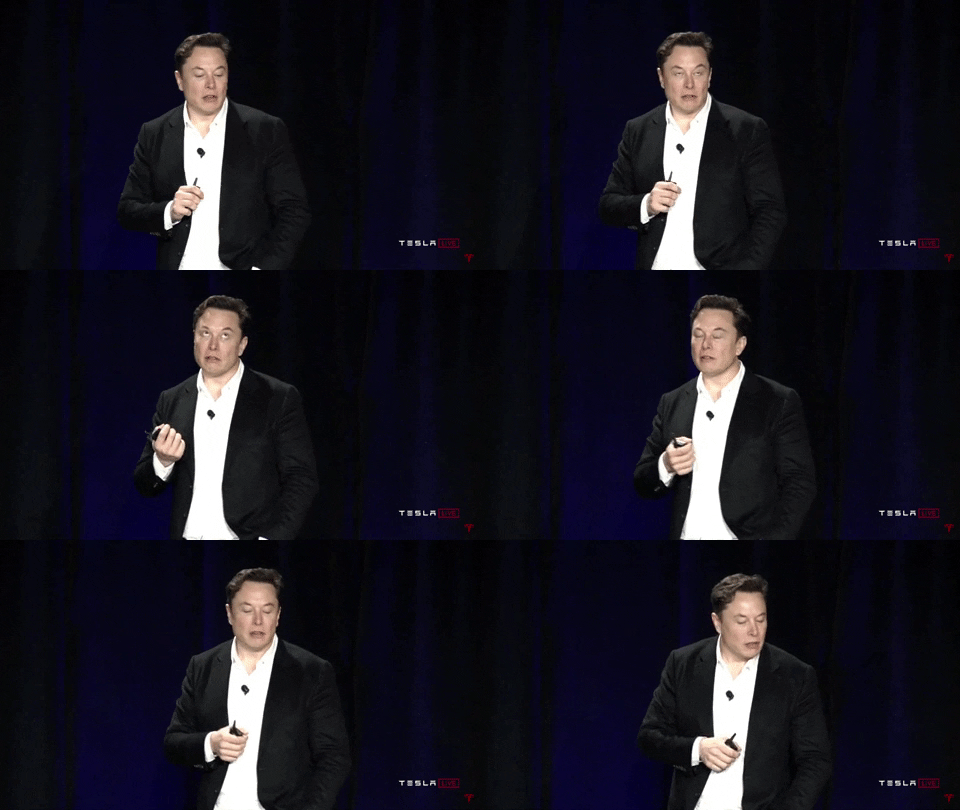
Elon Musk, the crazy businessman known for his ventures like Tesla and SpaceX, recently found himself facing a barrage of questions from journalists about his keen interest in the Chinese market. With a characteristic touch of humor, Musk quipped, “Do you want a politically correct answer or a deeper explanation?”
Of course, in the end, he provided the politically correct response for public consumption, citing China’s strong commitment to electric vehicles as a means to reduce pollution, with government support in the form of subsidies for manufacturers and customers, along with the development of a robust charging infrastructure.
However, what Elon hesitated to share openly with the journalists was his deeper analysis of why China had captured his attention.
Elon Musk firmly believes that China will consistently provide him with a massive market. Here’s his insightful perspective:
Elon Musk has a deep respect for China
China had the fortunate opportunity to attract substantial foreign investments after joining the World Trade Organization (WTO) in 2001. Gradually, it became the world’s factory, experiencing rapid growth in manufacturing industries. Concurrently, electricity production surged, primarily driven by coal-fired power plants.
Like anywhere else globally, shutting down power plants at night is a challenge, resulting in significant energy wastage. However, during the daytime, electricity shortages became a nationwide issue.
The Chinese government was desperately seeking ways to capitalize on the electricity wasted during the night. With an increasing number of Western companies relocating their manufacturing facilities to China, this wastage became a national concern.
Electric vehicles emerged as an effective solution to this challenge since they could be charged overnight. Significant subsidies were introduced to propel this industry forward, and the state began to recover revenue by harnessing the previously squandered energy. In essence, it was a win-win situation for the government.
Understand Chinese interest , pragmatic approach
Elon Musk understood that China’s preference for electric vehicles was a strategic decision. Given the country’s industrial might and its installed electricity capacity, China cannot afford to backtrack on this trajectory. Even though other nations might offer tempting conditions to set up factories, there is no guarantee of long-term sustainability due to the absence of an industry requiring massive electricity generation capabilities.
For Elon, the Chinese electric vehicle market is set to continue its explosive growth, presenting tantalizing growth opportunities. Consequently, he has chosen to place a significant bet on China.
Naturally, recharging electric vehicles with fossil fuel energy is counterproductive. In a significant milestone, China’s coal-fired power capacity fell below 50% for the first time in 2023, even though the actual energy production from fossil fuels exceeded 60%. Nevertheless, this represents a crucial step towards cleaner energy sources.
Elon Musk told Tesla team in Shanghai in a late night speech that their hard work ‘warms my heart’
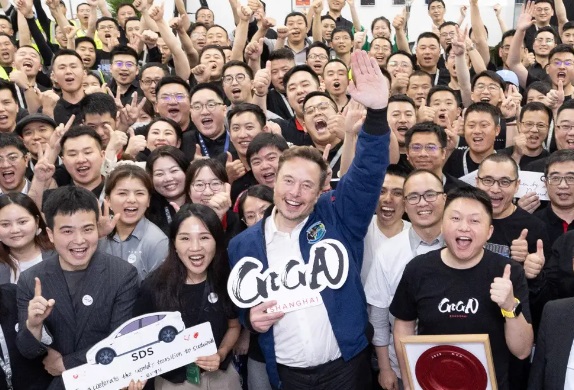
Elon Musk’s interest in China’s electric vehicle market isn’t just about cars; it’s a strategic move that aligns with China’s goals of reducing pollution and optimizing its electricity production. With his keen business acumen, Musk is poised to make the most of the burgeoning Chinese electric vehicle sector, setting the stage for a sustainable and electrified future.
China Emerges as Tesla’s Second-Largest Market
In the realm of the automotive industry, especially electric vehicles, the Chinese market holds immense significance, standing as Tesla’s second-largest market worldwide.
With its robust supply chain infrastructure rooted in China, Tesla, like many other companies, has reaped the benefits of China’s rapid postecovery. This swift recovery allowed car production to persist even during global shutdowns.
100% Digital Communication of Tesla
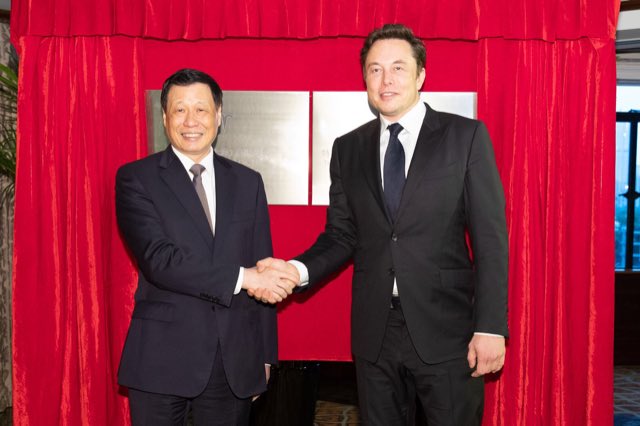
Furthermore, China has evolved into an increasingly attractive destination for foreign automotive companies, having matured its industrial production chain in recent years. Tesla took a bold step in 2019 when it inaugurated its Gigafactory in Shanghai. This facility manufactures locally-produced vehicles eligible for government subsidies.
B2B Communication
Under the leadership of Elon Musk, Tesla’s CEO, the Gigafactory in Shanghai hit a production milestone in April 2020. It became capable of churning out 4,000 cars per week and 200,000 units annually. Consequently, the prices of Tesla vehicles manufactured at this Gigafactory are significantly more affordable compared to those produced at other facilities. For instance, a Model 3 vehicle manufactured in the Gigafactory is approximately 65% cheaper than its counterpart produced in the United States.
Tesla’s Gigafactory in Shanghai has not only revolutionized the perception of “Made in China” but has also come to symbolize high-quality and efficient manufacturing.
Taking steps to deepen its presence in China, Tesla has expanded its focus on digital communication. The company launched its inaugural online flagship store on Tmall in mid-April and commenced livestreaming just eight days later.
Localized Promotions and Sales Initiatives
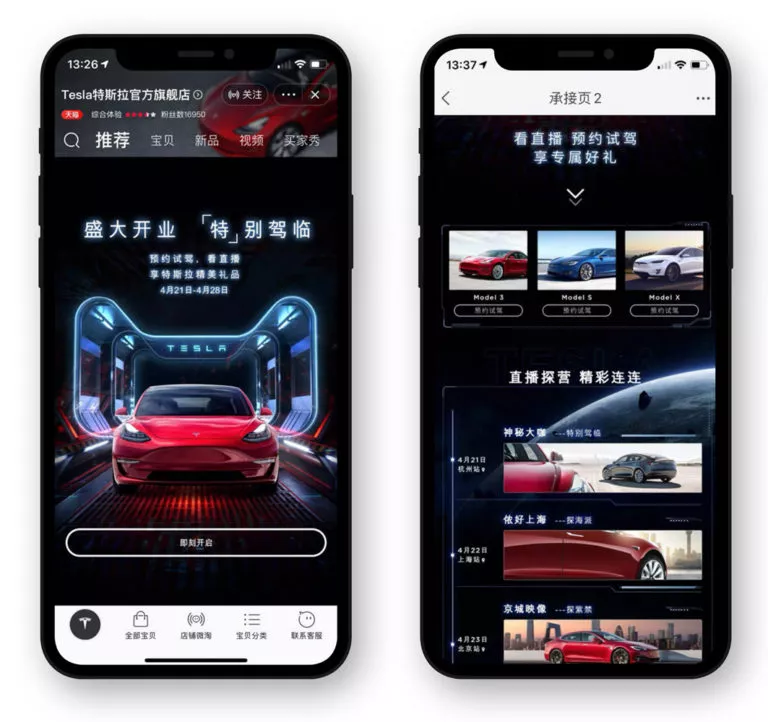
To extend its footprint in China, Tesla rolled out an array of activities and incentives to engage with audiences in both Tier 1 cities such as Shanghai, Beijing, Shenzhen, and Guangzhou, as well as Tier 2 cities including Qingdao, Hangzhou, and Chongqing. These initiatives were strategically tailored to target different demographics, encompassing a wide range of engaging activities
And of course, have an excellent reputation helps in China (like everywhere in the world)