|

SEO Baidu is essential to attract Chinese industrial buyers

In B2B in China, industrial buyers still start the same way they have for years: they search. What changed in 2026 is what they see when they do. Since Baidu rebuilt search around AI on 2 July 2025, a buyer typing a long, detailed query now reads an AI-written answer at the top of the page before scrolling to any supplier links. So the job is no longer just to rank on Baidu. It is to be the supplier the AI names when a buyer asks for one. Baidu SEO is still the foundation, and it is still where you reach Chinese industrial buyers. Here is what works now.

Cost-Effective Agency

KPI and Results focused. We are the most visible Marketing Agency for China. Not because of huge spending but because of our SMART Strategies. Let us help you with: E-Commerce, Search Engine Optimization, Advertising, Weibo, WeChat, WeChat Store & PR.

Baidu is The Chinese “google” , having a nice website ranked on baidu is source of targeted visibility.

No matter if it is on a professional or a personal point of view, Chinese always research on the Internet in order to find the products they need. So do industrial buyers in China when they need to find information on a product or a supplier. In fact a Google survey even highlighted the fact that 90% of Chinese industrial buyers were beginning their search on the Internet.

 

How B2B buyers find suppliers on Baidu in 2026

The behavior is the same, the screen is different. Chinese industrial buyers still research suppliers online first, and they still write long, specific queries, which fits Baidus new AI Smart Box (智能框) perfectly. That box now takes prompts over 1,000 characters and accepts file, image, audio and video uploads. Above the normal supplier links, Baidu shows an AI answer called Baikan (百看). For a lot of B2B questions, the buyer reads that answer first.

This means the winning move is GEO, generative engine optimization: become the source the AI quotes. For a B2B supplier that comes down to three steps. First, build one consistent entity for your company, with the same name, products and facts across Baidu Baike, your Baijiahao account and your own Chinese website. Second, write answer-first content, so the opening line of each page directly answers the buyers question (what you make, for whom, where, at what spec). Third, keep the basics solid, which still decide whether Baidu trusts you at all.

If you want the full method, including how a smaller industrial brand can do this without a giant budget, read our Baidu SEO 2025 guide.

A different way to look for information

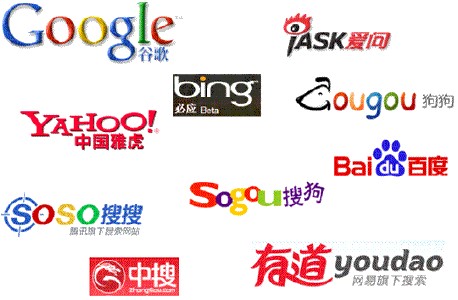
However Chinese do not think and use the Internet just quite in the same way that do the Westerners. They usually write long phrases or sentences where Westerners research with short phrases or one word for example. Google barely registers in China. Because when it comes to researching information on the Chinese web, Baidu is the king. Baidu still holds roughly 47% of China search share today (Statcounter estimate), well ahead of every rival.

It is therefore strongly advised to rework on your website so that it fits the Chinese web as good as possible. The best way to do so is to do SEO with Baidu. It is extremely useful for foreign companies willing to sell to the Chinese market, indeed 95% of Chinese industrial buyers use the Internet to find suppliers.

Here are the first steps to optimize your SEO on Baidu:

A suitable structure

Having a suitable structure means that your company’s website needs to be fast and functional.  The homepage needs to have a lot of links so that the Chinese netizens can find the information quickly. One has to be careful there are no dead links or error codes on the website. The sitemap should be easy to read for the Chinese search engine. Baidu does not recognize java script and flash, Chinese are however big consumers of videos so the website should use html to allow Baidu to read this kind of content.


Name of the pages

The pages on your website should have a short and explicit name about their content. Indeed the title of your pages is important for Baidu, which includes the titles in the search results.

So that the company must complete the <title> tag of your Header and strive to have a title related to the content of your page.


Content of your pages – Professional Chinese 

Just as does Google, Baidu is also able to analyze the content of pages, and it is important to complete the description (meta description tag), which must be related to your title.

If you talk about a certain subject, you must find a coherent lexical field.


Hosted  in China

Baidu.com gives  more importance to websites that are hosted in China. To be effective, the website will therefore ideally be hosted in China.

Websites hosted abroad have to go through the great wall of China’s Internet, which significantly slows down the loading time.


Structure of pages

The Baidu robots give importance to the text, the titles and subtitles in your website’s pages. It is therefore important to structure pages with a table of contents, including different levels of importance.To indicate these levels, use tags. By following these rules, your content will be prioritized.

 Update

Baidu gives priority to fresh content and updates on its website. So that the pages must frequently be uploaded to be higher ranked in the search results of Baidu.

A good start is to produce articles or news on a regular basis using  keywords.


Make links

SEO is no secret, set up links is necessary. There are three types of links: internal, external and social.

This is why the majority of players must go through specialized agencies that will carry out this work.


Maximize its web presence is a key factor for success in China for all industrial companies. Following the steps above is necessary to be highly ranked and have visibility on Baidu, the leader of Chinese search engine.

To go further:

10 Common Challenges Facing Industry in China

How to market a Semiconductor company in China

Best practices to do Business in China


How to Sell to Chemicals in China?


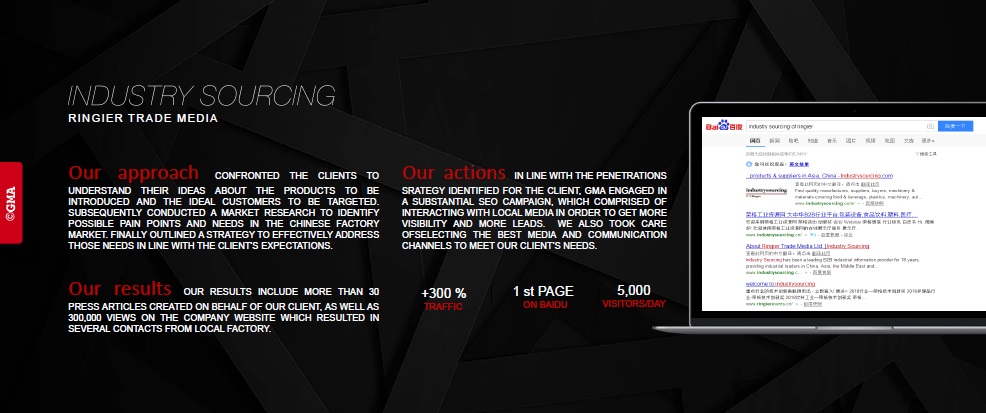
We are a Top Baidu SEO agency in China
 

Now I have enough real data to write the article. Let me compile it.

The 2026 market reality: what the data shows

China now has 1.125 billion internet users, with an internet penetration rate above 80%, according to the State Council’s February 2026 release of CNNIC data. Baidu remains the dominant search engine, holding 56% of total search traffic and over 71% on mobile as of mid-2025, per China Web Search. For industrial B2B, the picture is even sharper: desktop users in China spend an average of 4.2 minutes per session on search, 37% longer than mobile users, and professional keywords account for 42.3% of desktop searches, according to ChinaSEO.com’s 2025 algorithm report. This is the audience industrial brands need to reach. And Baidu is still where they start their search.

How Chinese industrial buyers actually search for suppliers

The behavior of Chinese industrial procurement managers has shifted significantly. More than 72% of B2B buyers in China now evaluate suppliers online before making any direct contact. They search for technical specifications, certifications, case studies, and pricing comparisons before picking up the phone. This is not a minor trend. It changes how industrial brands need to present themselves online.

On Baidu, the search journey for an industrial buyer typically starts with a category search: think “液压阀供应商” (hydraulic valve supplier) or “工业传感器厂家” (industrial sensor manufacturer). They then move to brand comparison pages, technical datasheets, and finally certification or audit documents. Each stage is a ranking opportunity for a foreign brand with a localized Baidu-optimized site.

Baidu has also built procurement infrastructure directly into its platform. The “Baidu AicaiGou” (百度爱采购) B2B marketplace now uses an intelligent agent system that automatically matches buyer needs with manufacturer profiles, checks certifications, and enables virtual factory tours. This means industrial suppliers that have complete, verified profiles on Baidu’s own platforms gain extra visibility beyond standard organic search.

One key implication for foreign manufacturers: Baidu rewards exact-match keyword content far more than Google does. A page title like “304不锈钢螺丝 供应商 上海” (304 stainless steel screws supplier Shanghai) will outperform a generic branded page in Chinese search results. The algorithm still weighs exact-match keyword density near 1%, particularly in title tags and H1 elements. For industrial categories with long technical keyword lists, this means building individual landing pages per product line, each optimized for the specific terms your buyers use.

Page speed also matters more than most foreign brands realize. Baidu’s “Lightning” algorithm penalizes pages that load in over two seconds on mobile. Sites loading within 1.2 seconds see a 47-second increase in average dwell time, according to the ChinaSEO 2025 algorithm analysis. For industrial buyers researching complex products, dwell time correlates directly with purchase intent signals.

Content strategy for industrial Baidu SEO: what actually works

The China B2B e-commerce market was valued at USD 250 billion in 2024 and is projected to grow at 16.3% CAGR through 2030, per Grand View Research. The companies capturing this growth are not the ones running banner ads. They are the ones that built deep, technical Chinese-language content libraries that rank for the precise queries industrial buyers type into Baidu.

A concrete example is Schneider Electric’s China digital strategy. Schneider built a dedicated Chinese-language technical content hub hosted on a .cn domain, with product pages structured around Chinese industrial standards (GB standards), localized case studies referencing specific Chinese industries (automotive, food processing, pharmaceutical), and downloadable certification documents. Their Baidu organic traffic grew significantly as procurement managers searched for terms like “配电柜品牌” (distribution cabinet brands) and found localized, authoritative content rather than translated marketing copy.

The lesson is structural. Content with structured markup, meaning proper use of schema, H-tag hierarchies, and clear product specifications, shows a 32% higher click-through rate and an average ranking improvement of 1.8 positions on Baidu, according to the 2025 ChinaSEO algorithm report. For industrial brands, this translates into building product pages that mirror how Chinese buyers think, not how Western marketing teams write.

Author attribution also matters on Baidu in ways it does not on Google. Professional content with named technical authors achieves a user trust score of 4.7 out of 5, versus 3.2 out of 5 for anonymous content. For industrial brands, this means assigning named engineers or technical specialists as authors on product and application content, with credentials and contact details visible on the page.

Three content types consistently outperform in industrial Baidu SEO. First, application case studies in Chinese that reference specific Chinese buyer industries and cities. Second, comparison pages that stack your product against local Chinese competitors by specification. Third, downloadable technical documents (PDF datasheets, GB standard compliance certificates) that Baidu indexes as separate content assets. Each type answers a distinct question the buyer has at a different stage of their evaluation.

One more factor that foreign brands frequently overlook: backlinks from Chinese industrial directories and trade associations. Baidu’s algorithm gives significant weight to inbound links from domains within the .cn namespace. A listing on China’s major industrial platforms (中国制造网, made-in-china.com, 慧聪网) with a link back to your Chinese site is more valuable for Baidu rankings than a link from an international trade publication. High-quality Chinese-origin backlinks improved ranking stability by 58%, per the same ChinaSEO analysis.

What changed between 2024 and 2026

Several shifts between 2024 and 2026 directly affect industrial Baidu SEO strategy.

First, AI-driven search behavior changed buyer research patterns. Generative AI users in China reached 602 million by December 2025, a 141.7% increase from the end of 2024, per CNNIC data. More Chinese procurement managers now use AI tools to draft supplier shortlists before they run a Baidu search. This means your Baidu content needs to answer the questions an AI would aggregate, including clear product specifications, certifications, minimum order quantities, and lead times.

Second, Baidu’s content quality enforcement became stricter. In Q1 2025 alone, Baidu disposed of 120 million low-quality content pieces and permanently delisted 236,000 sites. Its low-quality content detection accuracy reached 92.3%, up 7.8 percentage points from 2024. Industrial sites with thin, machine-translated product pages took direct ranking hits. Sites with original Chinese-language technical content moved up.

Third, HTTPS became a ranking signal for the first time in 2025. Baidu now factors in privacy and security signals, and sites without HTTPS encryption see measurable ranking penalties. This is now table stakes, not an optional upgrade.

Fourth, the B2B self-service expectation rose. A McKinsey survey shows 90% of Chinese B2B decision-makers expect to complete purchases through an end-to-end self-serve model. Industrial brands that used to rely on offline sales reps now need to close information gaps on their website. Price ranges, technical comparisons, and lead-time estimates need to be on the page, not just available “on request.”

Frequently asked questions

Is Baidu still the best channel to reach Chinese industrial buyers in 2026?

Yes, for most industrial categories. Baidu holds over 56% of China’s total search traffic and above 71% on mobile as of 2025. More importantly, desktop Baidu users, who represent the professional procurement segment, spend 37% more time per session than mobile users and are 2.6 times more likely to click professional documents. Platforms like WeChat and 1688.com play a role in supplier discovery, but the initial search for new suppliers still starts on Baidu for most B2B buyers. A .cn-hosted, Mandarin-optimized website with technical product content is the most direct way to appear in front of a procurement manager who does not already know your brand.

Do I need a Chinese domain (.cn) to rank on Baidu?

A .cn domain is not mandatory, but it gives a significant ranking advantage. Baidu’s crawler prioritizes content hosted on Chinese servers or via CDN nodes inside China, and .cn domains are generally indexed faster and more completely. More importantly, to operate a .cn domain legally, you need an ICP license (互联网内容提供商备案), which is Baidu’s implicit trust signal that the business is a legitimate entity in China. Without an ICP license, even a well-optimized site can face indexation limits. Foreign brands typically file for ICP through a Chinese registered company or a local hosting partner. The process takes four to eight weeks. It is a prerequisite, not an optional step.

How long does it take to see results from Baidu SEO for industrial keywords?

Baidu SEO for industrial keywords typically takes three to six months to show measurable ranking movement, and six to twelve months to generate consistent inbound inquiry volume. Baidu’s crawler is slower than Google’s, particularly for new domains. The first priority is getting pages indexed correctly via Baidu Ziyuan (百度搜索资源平台), Baidu’s equivalent of Google Search Console. Submitting XML sitemaps and using the URL submission tool accelerates initial indexation. Technical pages with structured product data tend to rank faster than general company pages. Combining organic SEO with a short initial Baidu PPC campaign (百度推广) to validate which keywords convert is a practical approach for industrial brands entering the China market.

What content does a foreign industrial brand need to compete on Baidu?

At minimum: a Chinese-language site with product pages optimized for exact-match industrial keywords, technical datasheets downloadable in PDF, at least three to five Chinese-language case studies referencing specific buyer industries, and a page for each major certification your products hold (ISO, CE, GB standard compliance). Baidu also indexes images with alt text, so product photos with Chinese-language descriptions add indexable content. Author attribution on technical pages, with named engineers and credentials, improves trust scoring. Pages should load within two seconds in China, which typically requires a local CDN or Chinese hosting. One element that most foreign brands skip but should not: a Chinese-language FAQ section per product line, targeting the exact phrasing Chinese buyers use when searching for specifications or compliance questions.

How to move forward

Start with a technical audit of your current China web presence. Check whether your site has an ICP license, loads in under two seconds within China, and is indexed by Baidu. Use Baidu Ziyuan to see how many of your pages Baidu has actually crawled.

Then build a keyword map based on how Chinese industrial buyers actually search, using Baidu’s own keyword planner tool. Create product pages and application case studies in simplified Mandarin targeting those exact terms. Add downloadable technical documents. Set up author profiles for technical content contributors.

If you want faster results while organic rankings build, run a targeted Baidu advertising campaign alongside your SEO work. The keyword data from paid campaigns will also tell you which terms drive actual inquiries, refining your organic content priorities.

For brands starting from zero in China, or those that have tried and not seen results, working with a specialist China SEO company based in Shanghai reduces the time spent on technical and compliance groundwork and accelerates the path to qualified inbound leads.

The industrial buyers you want to reach are searching on Baidu today. If your content is not there in their language, a competitor’s is. Contact us at seoagencychina.com/contact-us to discuss your current Baidu visibility and what a targeted industrial SEO plan would look like for your product category.

Marcus Zhan is a China marketing specialist based in Shanghai. He covers digital marketing, consumer trends, and brand strategy for the Chinese market. Connect with him on LinkedIn for industrial China marketing insights.

Sources: CNNIC via State Council, February 2026 | China Web Search, Baidu Market Share 2025 | ChinaSEO.com, Baidu 2025 Algorithm Updates | Grand View Research, China B2B E-Commerce Market Report | 36Kr, Baidu AicaiGou B2B Procurement Platform

Similar Posts

Leave a Reply

Your email address will not be published. Required fields are marked *

Let's Discuss Your Project?

We are a ROI Agency, oriented results

Contact us