
China’s Ophthalmology Market: Challenges For Foreign Device Makers

China’s ophthalmic market gets set to increment in the coming years, driven by the nation’s rapidly maturing populace. Market Scope gauges this year that China’s $2.7 billion Ophthalmic markets will develop at a compound yearly pace of 8.5% to $4 billion out of 2022. China has roughly 33% of the world’s visually impaired individuals, and Cataracts cause about a portion of these instances of visual deficiency. The quantity of individuals with Glaucoma and Retinal illness is likewise on the ascent. In income terms, the two biggest sub-markets are Retinal sickness and Cataract medical procedures.
The nation presently has more than 30,000 rehearsing Ophthalmologists, situated more than 2,700 Ophthalmic focuses all through the country. There are over 400 divisions of ophthalmology located in National, University, Provincial, and Prefectural medical clinics. With around 1,000 focused in district emergency clinics, and 174 in neighborhood centers. Moreover, there are 121 claims to fame emergency clinics and 11 organizations for eye ailment counteraction.
Cost-Effective Agency
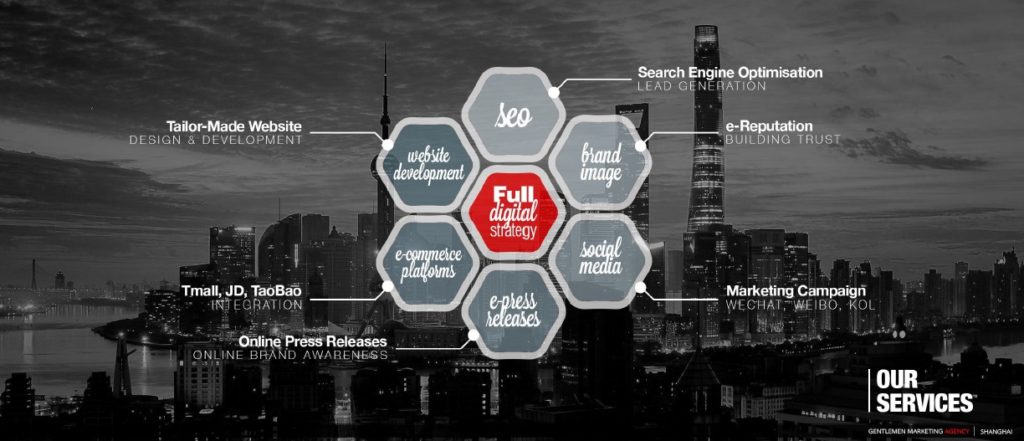
KPI and Results focused. We are the most visible Marketing Agency for China. Not because of huge spending but because of our SMART Strategies. Let us help you with: E-Commerce, Search Engine Optimization, Advertising, Weibo, WeChat, WeChat Store & PR.
Notwithstanding the market’s development, there are wide disparities in the degree of care gave by neighborhood facilities and increasingly complex urban focuses. By and large, there is an absence of institutionalization of clinical practices all through the nation. Chinese Ophthalmologists regularly like to depend on their own clinical experience, making them hesitant to purchase new focal points and different gadgets with which they are not recognizable.
source SCMP

Emergency clinics in China
The nature of Chinese eye care shifts broadly from locale to area and among urban and provincial settings. Little neighborhood facilities give about 75% of essential consideration for eye issues. Propelled ophthalmology treatment is vigorously slanted towards Class III emergency clinics, which are in urban regions. Between 30% to half of the inpatients at large urban emergency clinics are from close by rural zones, with the lion’s share looking for a second or third assessment. The Chinese government is intending to advance changes that will see further developed analysis and medicines performed at lower-level emergency clinics.
The framework and specialized aptitudes of Class III medical clinics are perfect with worldwide guidelines, yet they are excessively packed. Large medical clinics are very much educated and have the budgetary assets to buy trend-setting innovations, yet this doesn’t generally occur.
The present Chinese market for ophthalmic gadgets might get viewed as an oligopoly commanded by a couple of foreign firms, for example, Topcon, Zeiss, and Shin-Nippon. Remote makers give around 85% of all sophisticated ophthalmic hardware in clinics.
OPHTHALMOLOGISTS IN CHINA

Chinese ophthalmologists have, all in all, got delayed adjusting to the more prominent accessibility of top-notch hardware. This is in all likelihood because of a proceeding with the absence of traditional preparation. Most Chinese ophthalmologists have never gotten far-reaching institutionalized development and figured out how to adapt basically at work. The younger age of specialists regularly locates their more established guides occupied with patients and hence can’t get adequate institutionalized preparation. These issues periodically keep refined ophthalmic gadgets from being utilized to augment benefits, causing disparities in treatment and finding
For the most part, the main prerequisite of Chinese ophthalmologists for ophthalmic instruments is comfort. They are typically curious about, nor are they inspired by the visual and physical tools of the new, increasingly refined devices. They lean toward instruments that are sturdy, easy to use, speedy to learn, brisk to get ready, and simple to sanitize. That way, they feel that they don’t sit around idly picking up, creating, and cleaning the instruments when confronting a packed sitting area loaded up with patients.
Most Chinese ophthalmologists have their focal points, which are given by the medical clinic or bought on their utilizing research awards. Most medical clinics have a couple of cut light focal points oversaw by the attendant group and have 1-2 Gonio focal points and exact focal points to share inside the division. Specialists are commonly not prepared for the utilization of new, complex focal points.
read also
Obtainment PRACTICES
Companion guidance can be persuasive in purchasing ophthalmology gear. On the off chance that a specialist sees something fascinating at an abroad public expo, and the cost is lower than in China, they may buy that item for themselves and their associates.
Most emergency clinics have a very much structured acquisition process. Open emergency clinics in China get the majority of the clinical gadgets they use through an offering procedure brought together at the current level. Different techniques for acquirement are allowed distinctly in singular cases.
Most medical clinics have specific obtainment groups, which are answerable for taking care of the acquisition strategies. For the ophthalmology division, the head specialist accumulates data and presents a proposition to the clinic’s procurement office. At that point, the obtainment office would contact providers and drive the offering, determination, and exchange.
To increase a preferred position in the offering, numerous remote makers will “loan” their items to the specialists for as long as one year early, which permits them to manufacture brand and client experience. The procedure of acquirement takes a year typically, yet it can be postponed or suspended because of political or administrative variables.
MARKET OPPORTUNITIES
Ophthalmic Ultrasound and related innovation have seen fast development in China. As China’s 1.4 billion populace ages, it will be an immediate upgrade to the expanding persistent mean eye sicknesses. One of the primary impediments that remote gadget suppliers need to defeat is the absence of ophthalmologists equipped for working propelled gadgets.
When all is said in done, Class III medical clinics in China have the budgetary abilities to put resources into forefront gadgets and are now and then ready to buy outside brands over household items. To prevail in China’s ophthalmology, universal players ought to build up instructive impetuses to win over Chinese ophthalmologists’ hesitance to adjust to new advances. Organizations ought to give specialized preparation to ophthalmologists as an approach to present their items and manufacture brand and client experience.
It is imperative to take note that ophthalmic specialists in China place a high incentive on accommodation and toughness. Purchasers are, hence, regularly increasingly open to hardware that is dependable, easy to utilize, and simple to learn.
Read as well: The Glasses Market in China
If you want to Develop your Digital Client acquisition in China






Here is a great opportunity you mentioned here: ophthalmologists in China. The sector is booming, the Chinese are more and more connected so the need for ophthalmologic products and workers is constantly increasing. I am not surprised that foreign technology and knowledge are more than welcome in China. Chinese people will love it for sure!
Hello
I represent a China based Group distribution . We would like to partnership with foreign eyeswear business with exclusive agreement.
Send me your contact infor on my WeChat