
10 Facts to Understand China’s Top Search Engine: Baidu
As the most popular search engine in China by far, Baidu is simply a tool you can’t avoid if you want to enter the Chinese market. Considered the “Chinese Google”, Baidu stands as the 4th most consulted website in the world. However, it is important to know that Baidu has several functionalities that are different compared to what you might be used to with Google. That’s why it is important to understand Baidu and its ecosystem beforehand. In this article, we will give you 10 facts to discover and understand Baidu’s success.
1. The beginning of Baidu

In 1994, Robin Li was still working for Dow Jones & Company when he decided to go for broke in order to develop what was going to be called RandEx in 1996, the premise of a search engine with an algorithm. After working for Infoseek for a few years, he decided to go back to China to launch Baidu (百度) meaning both “hundred times” and “hundred degrees” in Beijing in January 2000. After a few years, Baidu quickly became one of the largest tech companies in the world, specializing in Internet-related services and products as well as in artificial intelligence (AI), one of China’s most promising industries.
Cost-Effective Agency
KPI and Results focused. We are the most visible Marketing Agency for China. Not because of huge spending but because of our SMART Strategies. Let us help you with: E-Commerce, Search Engine Optimization, Advertising, Weibo, WeChat, WeChat Store & PR.
2. 72.9% of Internet Research in China is Done on Baidu
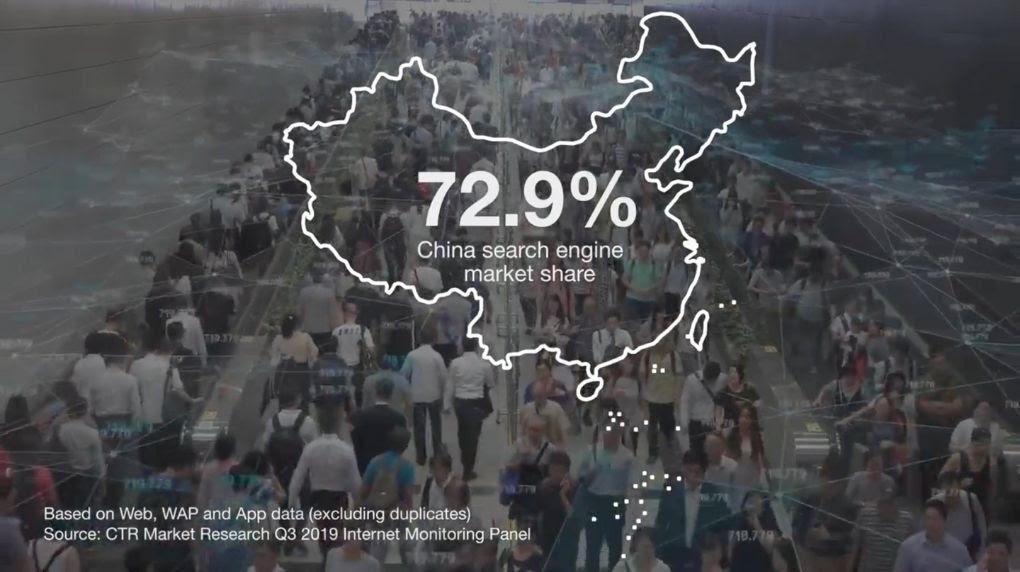
According to the 2019 CTR market research, Baidu has 72.9% of China’s search engine market share, thus standing as the 4th most consulted website in the world. In comparison, only 4% of internet research is done with Google in China.
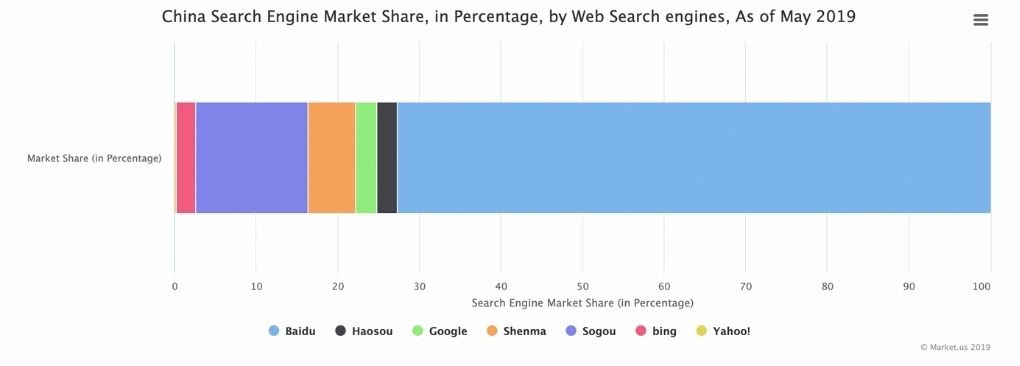
Given the incremental growth in mobile users, Baidu will certainly continue to invest heavily in its mobile ecosystem in order to bring a better user experience to its users. This will provide a lucrative opportunity for users to reach a wider and more engaged audience base.
3. The Baidu ecosystem counts 57 apps & services
Baidu offers various services on top of its well-known search engines such as a mapping service called Baidu Maps and a video platform called iQiYi. It also has overall 57 search and community services, such as Baidu Baike (which is an online encyclopedia), Baidu Wangpan (a cloud storage service similar to Google Cloud), Baidu Yi, Baidu Space, Qunar, Baidu Tieba (a keyword-based discussion forum), Duer, etc.

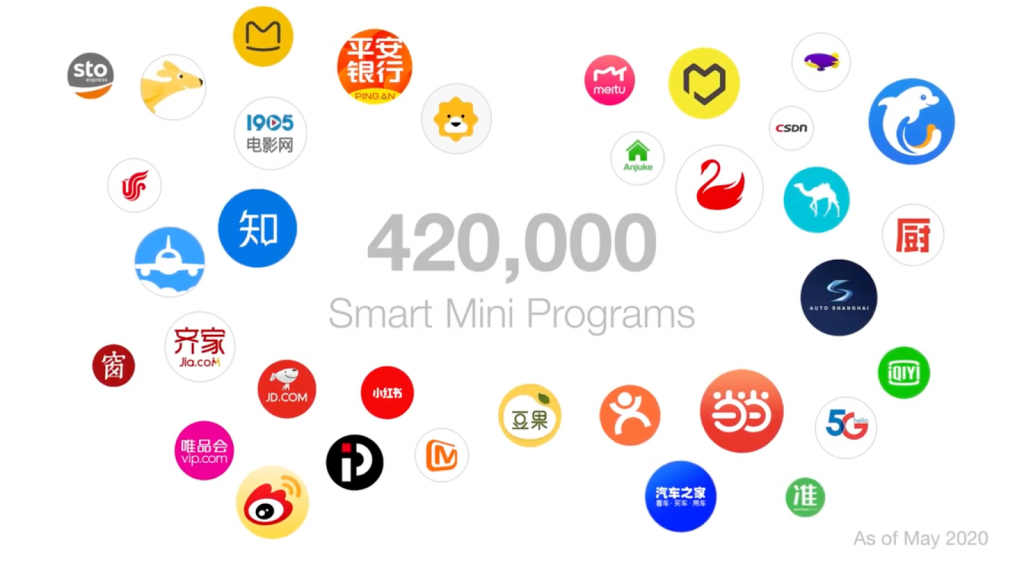
4. 420,000 Mini-programs under Baidu
As the major search engine in the world’s most populous country, Baidu handles on average 6 billion queries per day! In comparison, Google handles on average 5.6 billion search queries per day. It is also important to take into account that Chinese users are using their smartphones all day long, looking to product information directly on the internet and looking for online reviews. In fact, Chinese consumers are relying a lot on word-of-mouth which has been digitalized over the years.
5. Baidu Registers 6 Billion Daily Queries
As the major search engine in the world’s most populous country, Baidu handles on average 6 billion queries per day! In comparison, Google handles on average 5.6 billion search queries per day. It is also important to take into account that Chinese users are using their smartphones all day long, looking for a product’s information directly on the internet and looking for online reviews. In fact, Chinese consumers are relying a lot on word-of-mouth which has been digitalized over the years.
6. Baidu App was Downloaded 1.1 billion times
This is the number of mobile devices reached by Baidu worldwide, as of 2019. It is important to know that Chinese citizens are always connected to the internet, with apps that are now mandatory in China (WeChat services, Weibo, Douyin, shopping apps such as Tmall, JD.com, etc.). As of 2021, China has over 989 million internet users.
7. 1.6 billion
Worldwide, Baidu has more than 1.6 billion users, for a Chinese population of 1.44 billion people as of June 2021.
8. Baidu is worth $16.41 billion
According to Baidu’s official report, in 2020, Baidu’s revenues amounted to $16.41 billion, an increase compared to 2019, especially following the Covid-19 outbreak. In the years to come, Baidu has great ambitions to further develop its market, as stated by its CEO :
As we enter 2021, Baidu is well-positioned as a leading AI company with strong Internet foundation to seize the huge market opportunities in cloud services, autonomous driving, smart transportation, and other AI opportunities. We also hope to capitalize on our huge Internet reach with more non-marketing services
9. Baidu’s founder’s net worth accounts for $10.6 billion USD
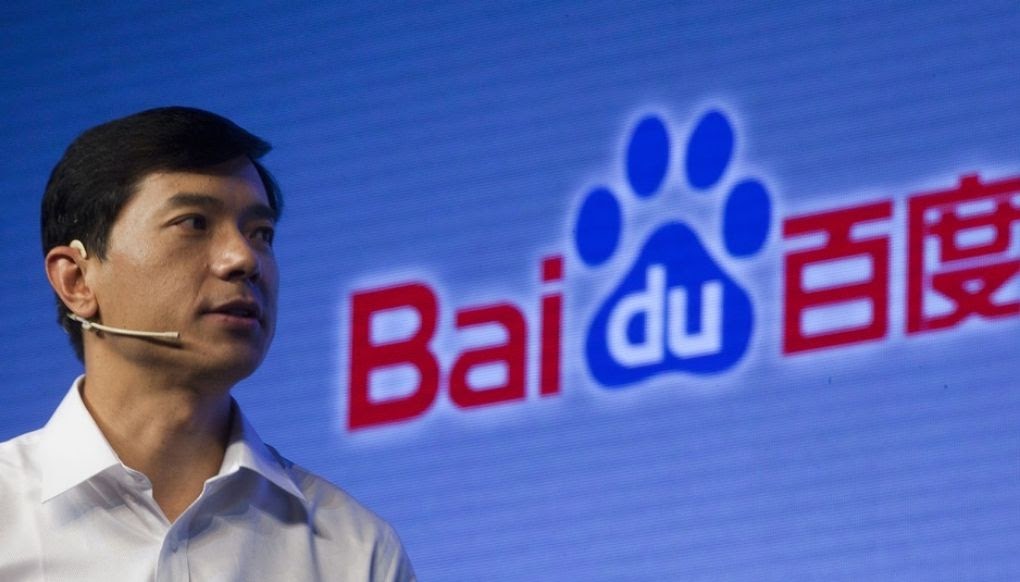
This is 李彦宏 Robin Li’s net worth, as the CEO and co-founder of Baidu. Incorporated in January 2000 by Robin Li and Eric Xu, Baidu quickly became a major player in China, allowing its CEO to reach $10.6 billion USD net worth as of 2021 according to Forbes.
10. Baidu’s ambitions
Through years of investment in research, AI chip design, developer community, patents, and talent development, we are turning AI into innovative use cases. For example, Baidu AI cloud differentiating with AI solutions grew 67% year over year in Q4, reaching an annualized run rate of US$2.0 billion. We will continue to invest heavily in technology to optimize Baidu’s long-term growth and pursue our mission to make the world simpler through technology.”
Robin Li – Baidu’s 2020 Financial Report

Therefore, it is clear that Baidu has wide ambitions for the future, such as the development of technological tools that will help Chinese consumers when looking for something on the internet, marketers who want to promote and advertise their companies, but also in terms of Artificial Intelligence.
Bonus: Mandarin Content
Don’t forget that Baidu is not like Google, it works only with written Chinese content. As a matter of fact, English keywords won’t rank on Baidu, so this is why it is essential to adapt your website in Chinese in order to rank on Baidu’s search engine. Moreover, it is worth mentioning that your website will be ranked according to your homepage, that’s why we always advise our clients to focus as much as they can on the website’s homepage.
Need a Baidu Agency?

Contact us today and let’s schedule a free call with one of our experts to discuss your Chinese project and the solutions we have for you.
Learn more about us and our Baidu SEO/SEM Services
- Baidu SEO/SEM
- China eCommerce
- Chinese Social Media
- Distribution in China
- Lead generation
- and more


2 Comments