Baidu is still a Powerful Tool for Digital Marketing in China
What is Baidu?
Baidu is a Chinese Internet company mainly engaged in search engine services. It is the largest search engine in China. Baidu’s database has more than 100 billion Chinese web pages. Baidu is the principal search engine in China, with more than 80% of the total market share. Therefore, it is naturally dominating China’s market. Another two largest are Qihoo 360 and Sogou. What’s more, since Google is banned in mainland China, most Chinese people use Baidu as their chosen search engine.
Note From the editor: basic knowledge of digital marketing may be in need to understand this article.
Cost-Effective Agency
KPI and Results focused. We are the most visible Marketing Agency for China. Not because of huge spending but because of our SMART Strategies. Let us help you with: E-Commerce, Search Engine Optimization, Advertising, Weibo, WeChat, WeChat Store & PR.
How to optimize your results with Baidu?
- Website Domain Name matters very much for Baidu’s algorithm, the Chinese search engine will usually rank .cn websites higher on the SERP (search engine results page). It is advised in this case to favor a .cn domain name.
- The domain has to be hosted in China, note that hosting it far from the Mainland may impact speed, which is also an important factor for Baidu (see below).
- The website has to have a “physical address” in China; meaning it is required to have contact details.
- You must make sure that your website is in compliance with Chinese internet restrictions if you do not wish your website to be de-indexed from Baidu or refused to list.
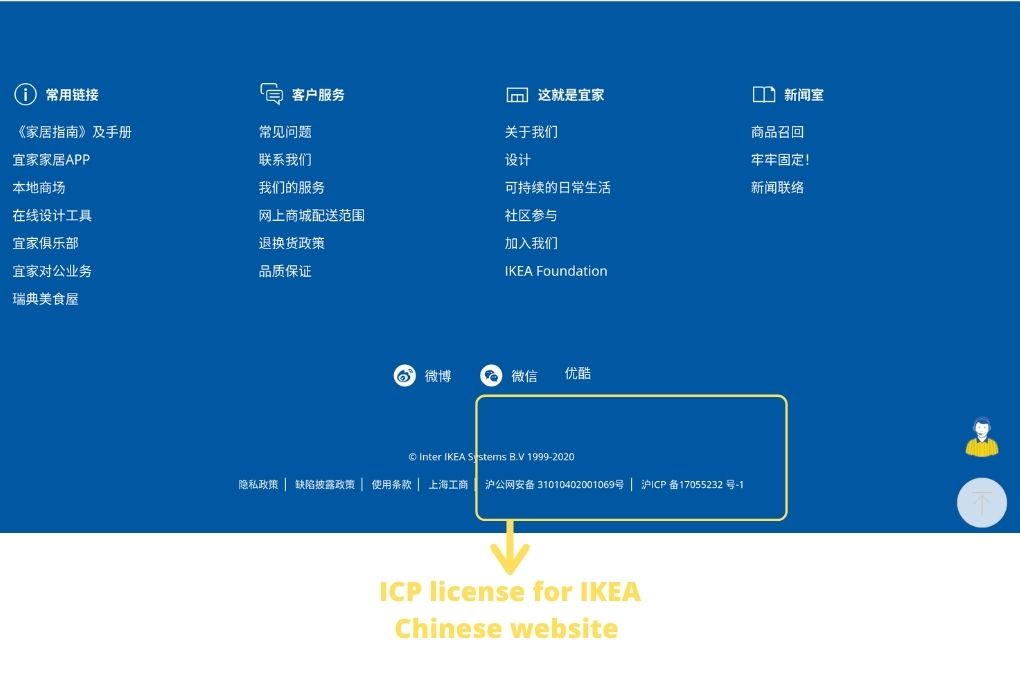
- An ICP license is required by the Chinese bureaucracy, which roughly takes up to a month. Without this basic requirement, ranking high on Baidu SERP will be nearly impossible.
Optimized content & meta-titles can help to boost your ranking on Baidu
Meta-Tittles
Quite obviously your content has to be displayed in Chinese, preferably in simplified Chinese. Baidu is not really inclined to rank dialects or foreign languages (Cantonese, English, French, etc.)
Search Engine Land has carried out an in depths study on Baidu’s algorithm. This research shed light on how primordial Meta-tittles are.
- Title Tags should include your main keywords and display the company’s name, preferably at the end.
- Meta-descriptions are key as Baidu ranks websites higher based on keywords.
- Alt-Tags are favored by Baidu; images should include alt-tags relevant to the page content.
- H-Tags (Heading Tags) are highly important for Baidu, similar to other search engines. Every single page has to comprise at least a Heading 1 tag and the rest of the content has to be arranged with Heading 2 and Heading 3 tags. Including keywords in these H-Tags is wise.
Original Online Content Matters for Baidu
As regards the content, the newest is favored over the oldest. Regular optimization and update are required. Posting fresh content on a daily basis, especially news and press releases and engaging content is vital.
- Original content is favored by the Chinese search engine. This is fairly difficult as online bots are known to republish the content elsewhere on the web. When it comes to duplicated content, addressing plagiarism instances to avoid penalties from Baidu is advised.
- The Anchor Text is essential; Baidu is picky. Internal links (opposite of an URL) to your own website are taken into consideration by the search engine. Including your keywords in the Anchor Text will prove to be a clever strategy as it will ensure a higher ranking in the SERP.
- To the Top, according to much China-based SEO, Baidu bots are not as powerful as Google’s. Ensuring that your keywords are placed near the top of your pages will apparently make the bots rapidly move on instead of scanning the entire page.
Technical Advice for your website success in China
As it is for most search engines, the loading times and speed of your host is a ranking signal for Baidu. Make sure that your pages load quickly, by avoiding heavy content and unnecessary code. While adding and updating the content, you should monitor your website speed.
- Baidu does not favor multiple domain websites. You should stick with only one .cn domain hosted in China and avoid sub-domains.
- A major difference here is that Baidu does not well support flash code. Flash content will not be indexed in Baidu’s database. Simply avoid it.
- Webmaster’s tools are provided by Baidu, although not as advanced as Google’s or Bing’s. Registering with this tool will allow you to monitor and gather relevant statistics.
Backlinks are important for your Baidu SEO strategy
Baidu operates fairly differently from other search engines. You should be cautious while creating backlinks on your web pages. Baidu favors the number of backlinks included in your content, the more the better. Although, the quality of your backlinks is gradually becoming a crucial factor for the Baidu SERP ranking system. Choose your keywords wisely and find a common ground between quality and quantity.
All in all, companies that are willing to settle in the Chinese market have no choice. Mastering the Chinese search engine is a must, complying with the rules of the Chinese internet will ensure a good ranking on Baidu’s complex SERP. Keep in mind that Baidu does not simply work like Google.

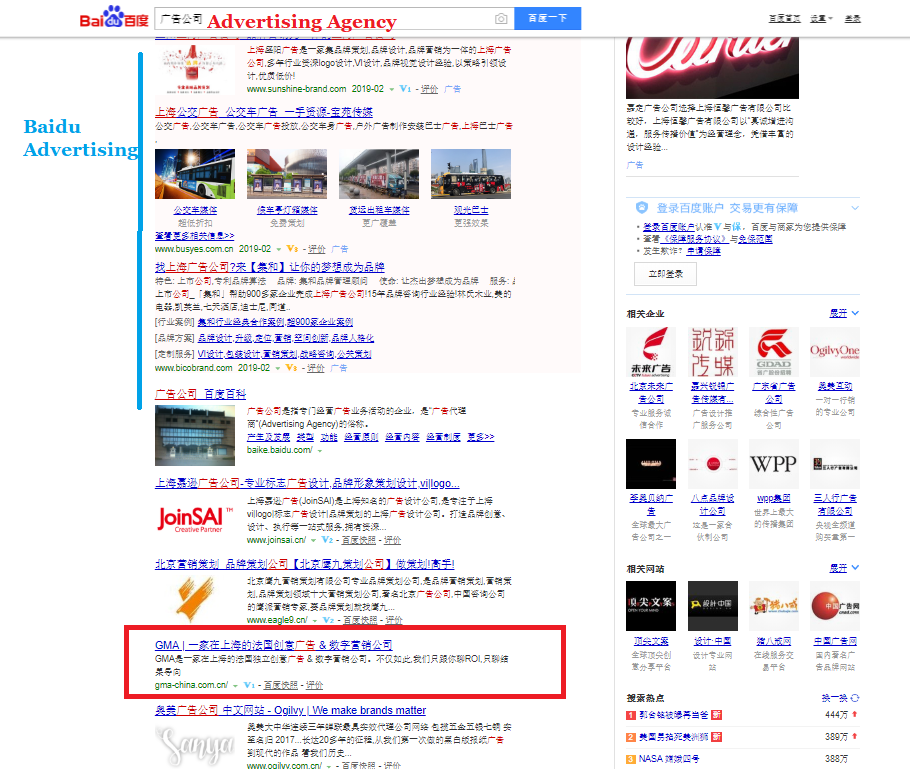
If you are looking for a professional Baidu SEO marketing agency, don’t hesitate to contact us. We are specialized in Chinese marketing. You can find us on Baidu. If you have a project, we are pleased to listen to you and guide you until your success




One Comment