
Why Is It So Hard to Collaborate with Chinese Outbound Tourism Agencies?
Updated

dear foreign friends: it’s not hard to collaborate with Chinese outbound tourism agencies IF you understand how we work. Insights from Jon Wang, founder of SEO Agency China

Source: GMA, originally published in China Social Media Marketing: Top Platforms and Winning Strategies on marketingtochina.com.
The problem is, most foreign businesses approach us in ways that simply don’t align with how we operate. You’re using your methods instead of adapting to ours.
As a Chinese business owner, I can tell you, we prioritize relationships, trust, and ease of communication. If you don’t show that you’re serious about adapting to our culture and business practices, it’s no wonder you’re struggling. Let me explain why your current approach is failing and what you can do to fix it.
1. We Chinese People Do Not Use Email for Business
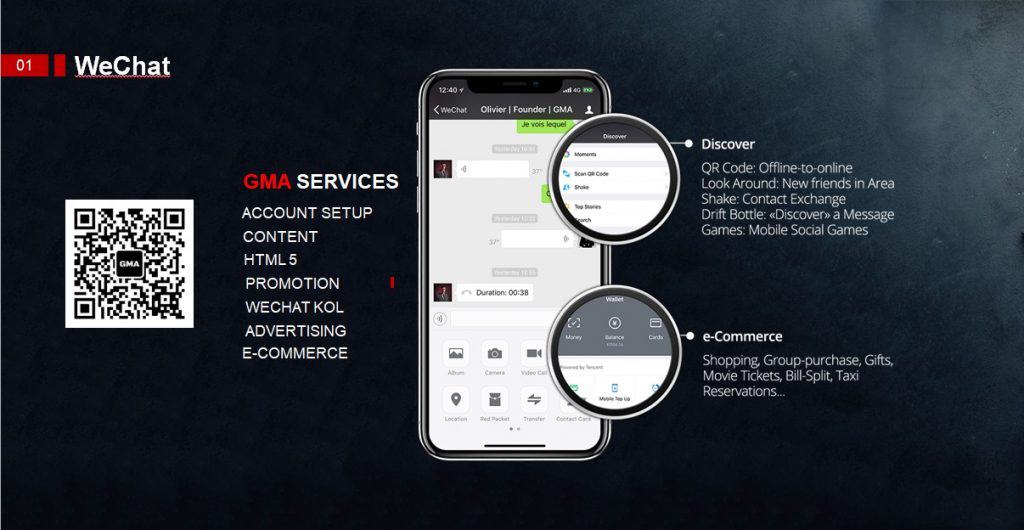
First things first: stop using email to contact us. We don’t check email the way Western businesses do. For us, WeChat is king. It’s not just a messaging app—it’s our business platform, our social media, and even our payment system.

When you send an email, here’s what happens:
- It gets lost in a pile of other emails.
- It feels impersonal and disconnected.
- It shows us that you don’t understand how Chinese businesses operate.
What to do instead:
Add us on WeChat, send a friendly introduction, and follow up with quick, easy-to-read messages. Show that you respect our way of doing business.
2. No Chinese Brochure = No Credibility
When you send us materials in English, it feels like you’re asking us to do all the work. If you want us to understand your services, the least you can do is provide a brochure in Mandarin.
Think about it: Would you do business with a partner who didn’t bother to present their information in a language you understand? For us, it’s a matter of respect and professionalism.
What to do instead:
Create a well-designed brochure in Mandarin. Include:
- High-quality photos of your tours and accommodations.
- Clear descriptions of your packages.
- Why Chinese travelers will love your services.

3. Your Website Is Too Slow and Not in Chinese
Here’s another mistake: Your website is in English and hosted outside of China. When we try to load it, it takes forever, and once it does load, we can’t even understand it.
In China, we value efficiency. A slow website tells us that you’re not serious about making things easy for us. And if your website isn’t in Mandarin, you’re essentially saying, “Figure it out yourself.”
What to do instead:
- Host your website inside China so it loads quickly.
- Translate all the content into Mandarin.
- Include a WeChat QR code for direct contact—this is a MUST.

In China, social media equals credibility. If we can’t find you on platforms like Douyin (Chinese TikTok) or Xiaohongshu (Little Red Book), we question whether you’re trustworthy.
Before we work with you, we want to see:
- Videos of your tours in action.
- Testimonials from other travelers.
- Your engagement with the Chinese audience.
If you’re not on these platforms, you’re invisible to us.
What to do instead:
- Post short, engaging videos on Douyin that highlight what makes your services unique.
- Use Xiaohongshu to share testimonials, travel tips, and beautiful photos of your destinations.
- Be consistent and active—don’t just post once and disappear.

5. No Reviews or Trust Signals
Chinese agencies don’t work with just anyone. We need to trust that you’ll deliver quality experiences for our clients. If you don’t have reviews from Chinese travelers or endorsements from Key Opinion Leaders (KOLs), it’s hard for us to take you seriously.
What to do instead:
- Collect testimonials from Chinese clients and share them everywhere—WeChat, your website, and social media.
- Partner with a Chinese travel KOL to promote your services. This adds instant credibility.
- Get mentioned in Chinese travel blogs or news outlets.
6. You Don’t Adapt to Chinese Travelers’ Needs
Here’s the biggest issue: you expect us to adapt to you, instead of the other way around. That’s not how we work. Our clients have specific needs, and we only collaborate with partners who cater to those needs.
For example:
- Do you offer Mandarin-speaking guides?
- Can you accommodate Chinese food preferences?
- Are your tours family-friendly and tailored to Chinese travel habits?
If the answer is “no” or “I don’t know,” then you’re not ready to work with us.
What to do instead:
- Highlight how your services cater specifically to Chinese travelers.
- Create packages around key holidays like Golden Week or Spring Festival.
- Offer perks like shopping tours or photo opportunities, which are very popular among Chinese tourists.
Most of Chinese prefer to work with Chinese because they just understand everything

Why We Only Work with Established, Adaptable Partners
Chinese outbound travel agencies prioritize trust and reliability. We have reputations to protect, and we can’t risk partnering with someone who doesn’t meet our standards. That’s why we only work with companies that:
- Have a proven track record.
- Make it easy to communicate and collaborate.
- Show that they understand our clients’ needs.
If you look unprepared or unprofessional, we’ll move on to someone else—simple as that.
How You Can Fix This and Start Winning Our Trust

1. Use WeChat for All Communication
- Set up a WeChat Official Account.
- Add agencies and clients as contacts.
- Share updates, brochures, and quick responses directly through the app.
2. Build a Chinese Website
- Host it inside China for faster load times.
- Translate all content into Mandarin.
- Include a QR code to add you on WeChat.
3. Create a Brochure in Mandarin
- Highlight what makes your services unique.
- Use professional design and high-quality photos.
- Make it downloadable via WeChat or your website.
4. Establish a Presence on Douyin and Xiaohongshu
- Post videos of your tours and client experiences.
- Partner with travel KOLs to promote your services.
- Share authentic testimonials and behind-the-scenes content.
5. Adapt to Chinese Travelers’ Needs
- Offer Mandarin-speaking guides and familiar meal options.
- Tailor packages to key holidays and travel habits.
- Provide group discounts or family-friendly activities.
TO CONCLUDE
Collaborating with Chinese outbound travel agencies isn’t hard if you take the time to understand our culture and business practices. We want to work with partners who make our lives easier, not harder.
So ask yourself: Are you adapting to us, or are you expecting us to adapt to you? If it’s the latter, you’re going to struggle. But if you’re ready to put in the work—build a Chinese website, switch to WeChat, create a brochure in Mandarin, and show up on social media—you’ll start seeing results.
Trust is everything in China. Earn it, and you’ll open the door to a massive market. (130Million tourists in 2024)
What changed in 2026: key updates for this topic
Chinese outbound tourism recovered fast after 2023, but the agency landscape shifted. In 2025, China issued 144-hour visa-free transit policies with 54 countries, pushing outbound volumes higher. China Tourism Academy, 2025 reported 130 million outbound trips in 2025, up 18% from 2024. But foreign brands still hit the same walls: fragmented agency structures, opaque commission chains, and WeChat-only communication. New regulations in early 2026 tightened licensing for outbound tour operators under the revised Tourism Law amendments. Only agencies with updated Class-A licenses can now package international group tours legally. This reduced the number of active outbound operators by roughly 12% overnight. China Ministry of Culture and Tourism, 2026. Meanwhile, younger Chinese travelers shifted toward FIT (free independent travel), which bypasses traditional agencies entirely. If you target group travel, you now deal with fewer but larger agencies. Each one holds more negotiating power. The collaboration complexity did not decrease. It increased.
Frequently asked questions
How do Chinese outbound tourism agencies make money from foreign partners?
Chinese outbound agencies earn through layered commissions. They charge foreign hotels, attractions, and DMCs a commission on each booking, typically 15% to 30%. They also collect a “kickback” fee from local Chinese shopping stops built into tour itineraries. Foreign partners who skip the shopping component are often deprioritized. Understanding this revenue model is the first step to building a realistic partnership proposal that agencies will actually accept.
Do I need a Chinese business entity to work with a Chinese outbound agency?
Not always, but it helps. Many Chinese agencies prefer to work with a local Chinese representative or a registered entity in China for invoice and tax purposes. Without one, payments become complicated. Wire transfers from abroad face scrutiny under China’s foreign exchange controls. Having a local contact or a WFOE simplifies the contract process, speeds up payment cycles, and signals long-term commitment to the agency partner.
What is the best platform to communicate with Chinese outbound travel agencies?
WeChat is non-negotiable. Chinese outbound agencies do not use email as a primary communication channel. Decisions, approvals, contracts, and even invoices often move through WeChat groups. If your team cannot respond on WeChat during China business hours (GMT+8), response times suffer and deals stall. Set up a verified WeChat account, assign a dedicated contact, and keep communication concise. Voice messages are common and expected in agency WeChat groups.
Why do Chinese agencies take so long to confirm partnerships?
Chinese outbound agencies operate in a relationship-first culture. Before signing anything, they need to verify your credibility through mutual contacts, past client references, or in-person meetings. A cold pitch, even a detailed one, rarely moves fast. Decision-making also involves multiple internal layers: sales, product, and management all weigh in. Build the relationship before the deal. Visit China trade fairs like ITB China or connect through an established local intermediary to cut the timeline.
Need help with this in China? Contact SEO Agency China for a free consultation.
Jon Wang has spent 15 years helping foreign brands enter and grow in China. He leads digital strategy at SEO Agency China and publishes regular market insights on LinkedIn.
Sources: https://www.chinatravelnews.com/article/180342 | https://www.mct.gov.cn/english/news/202601/t20260115_940231.htm | https://www.cnta.gov.cn/xxfb/jdxwnew2/202503/t20250318_4091234.shtml