
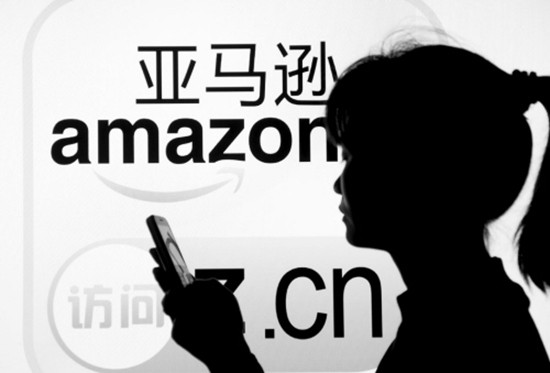
Why is Amazon closing its online sales site in China?
Introduction:
Having decided to focus on its profitable activities and digital services, the American giant announced the closure of its online sales site in the world’s most populous country.
I) Reasons
The U.S. group’s decision underscores its difficulties in the Chinese market against well-established local competitors.
According to the specialist research firm iResearch Global, Tmall, Alibaba Group Holding‘s marketplace, and JD.com held 82% of the e-commerce market in China last year.
Amazon had no major competitive advantage in China compared to its local competitors.
Indeed, unless you look for a very specific product that can’t be found anywhere else; a consumer has more interest in choosing platforms like Tmall or JD that will be able to ship the product much faster than Amazon.
Amazon’s rivals, Alibaba and JD.com, have complicated its market access over the past 10 years.

Amazon bought the Chinese site com in 2004 for $75 million, which became Amazon China in 2011.
But in a sign of Alibaba’s dominance, Amazon nevertheless opened an online store on one of the Chinese group’s sites, Tmall, in 2015.

An Amazon spokeswoman told Reuters that the group has begun informing retailers of its intention to close its market place and will no longer be able to offer their services on Amazon.cn
Nevertheless, Amazon seeks to reassure its customers: “We are working closely with our vendors to ensure a smooth transition and continue to deliver the best possible customer experience,” a spokeswoman said in a statement communiqué.
II) And now?
According to some sources, Chinese consumers will no longer be able to buy products from third-party retailers on Amazon in China but they will still have access to the group’s marketplace in the United States, Great Britain, Germany, and Japan via its website world.
The U.S. group will continue to invest and expand in China through Amazon Global Store, Global Selling, its Kindle readers and digital content, the Amazon spokeswoman said.

Amazon Web Services, the group’s cloud computing division, which sells data storage and computing power to businesses, will also continue to operate in China.
On departure to China, Amazon continues to expand in other countries, notably India, where it competes with Local Flipkart.
Before Amazon, other Western groups withdrew from China.
Walmart sold its Chinese online sales platform to JD.com in 2016 in exchange for a stake in the Chinese group to refocus on its hard-core stores.

Conclusion:
For Amazon, the e-commerce experience in China has been a failure.
Nowadays, it is very difficult for a company, however important, to enter the Chinese market. This is even more so when it comes to e-commerce.
Local competitors should not be underestimated either.

We are digital marketers in China. Thanks to our experience, we have acquired a deep knowledge of the Chinese market.
If you have any questions or would like more information, please contact us.
A project in mind? Don’t hesitate to get close to one of our experts.
More information: check out our website and case studies.