Skip to content

What are the Top-Selling Baby Products Categories in China?
Updated

The baby products market in China is one of the most competitive, and its future looks bright. Chinese parents spend large amounts even before the baby arrives. The demand for innovation in this market isn’t slowing down any time soon. With a fast growth rate, baby products in China are anticipated to expand at a 14.5% annual pace through 2023.

International Brands or Local Brands?

Safety is the number one concern of Chinese parents. That is why International brands still maintain a stronghold in the baby market. Chinese parents believe that foreign brands’ products are more reliable and trustworthy.

With the safety of their babies being the primary focus, Chinese parents enjoy the high-end look and feel of international brands. The extra functions that these products offer are also important to them.

Quality and functionality are prioritized over the price for Millennial Chinese parents

With the development of the middle class and rising disposable income, as well as an increasing number of mothers choosing to work, Chinese millennial parents have a strong impact on the baby products market. They desire the finest items for their children and are prepared to pay more for higher-quality products.

More Foreign Brands are purchased through E-commerce

Purchases of baby products through e-commerce are a big source of growth for its market in China.

The e-commerce market size accounted for over 28% of the total baby product market in China in 2021. The online market value of the baby industry in China amounted to around 1.1 trillion yuan in the same year.
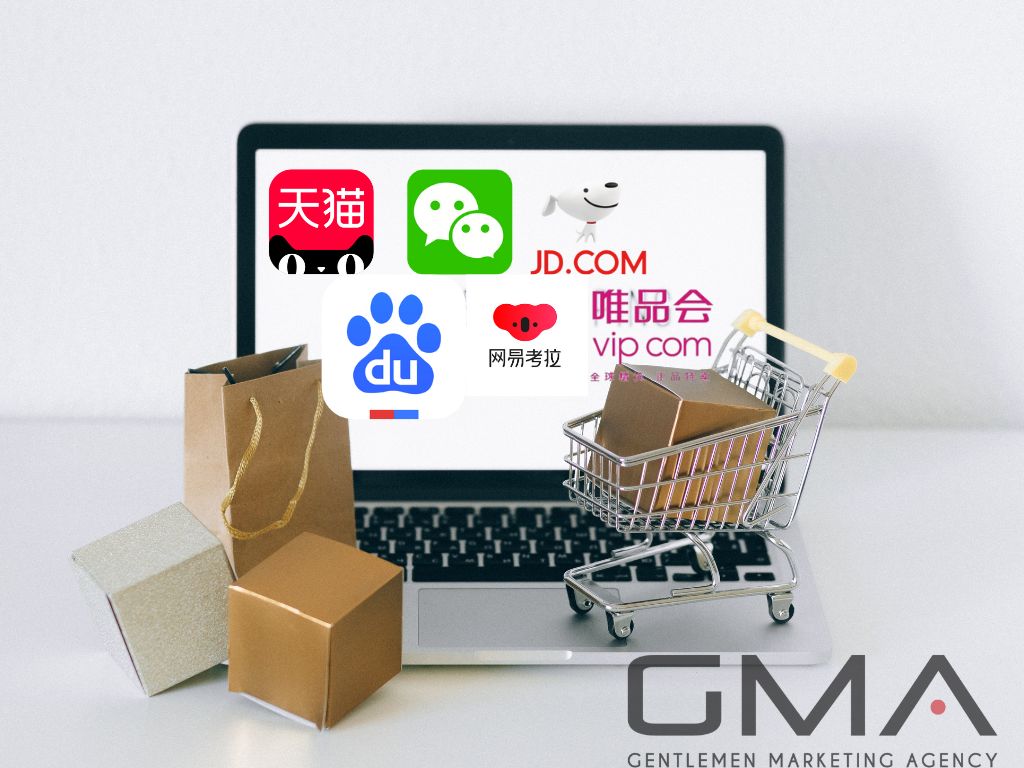
Online shopping has become much more prevalent in recent years. Particularly in China’s baby products market, over half of the industry’s retail value now comes from online sales.

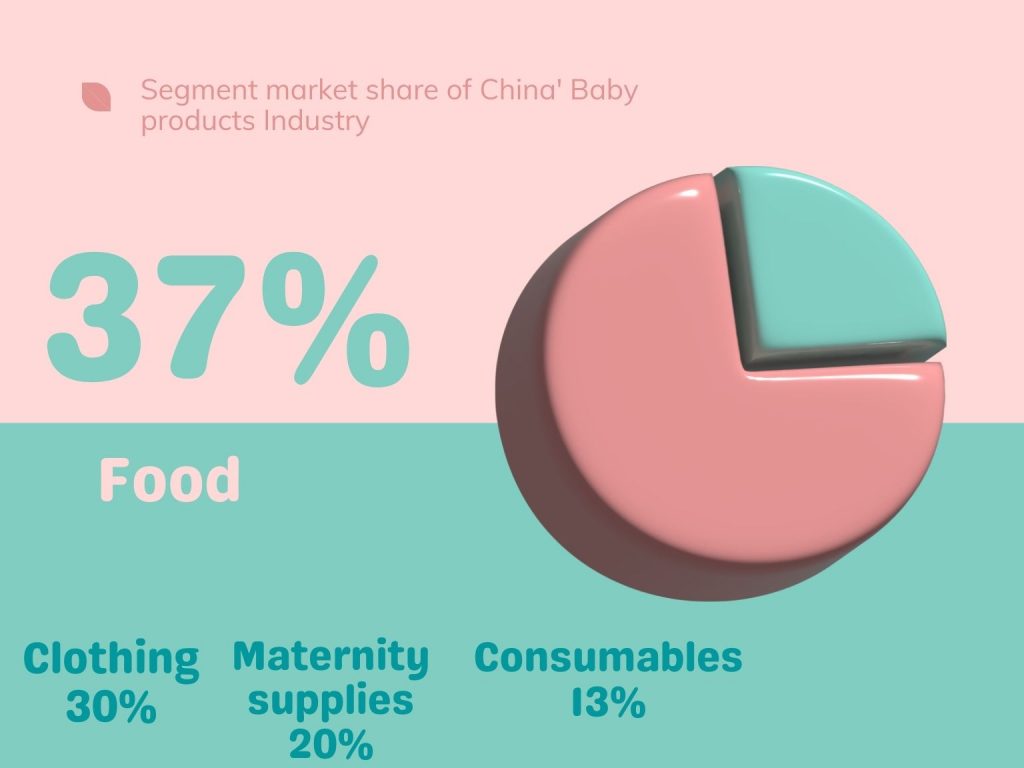
Chinese giant online shopping platform, Tmall, holds the title for online merchandise volume in China with 47%. JD follows behind at 27%. Combining those two platforms’ total share, we get 37% of all online sales for baby products.

Online presence and social media influence are the keys for brands

Social media and online platforms special for baby care and baby products are very popular in China.

Parents use these platforms to research information about specific products. Or sometimes to ask for advice or seek support. These platforms are excellent channels for brands. They establish emotional connections with their customers, reach them and create strong bonds.

Toys on Chinese social media platforms

What are the popular E-commerce and social media platforms?

WeChat, Tmall, Weibo, JD.com, Xiaohongshu, Kaola, Vip.com., Muyingzhijia… These are some of the most popular online retailers and marketplaces driving China’s baby product market growth.

Their expansive product selection, different price options, and convenient delivery is appealing to parents. Especially for the ones who don’t have time to go out shopping in malls or stores.

These platforms connect with consumers in an interactive way. They showcase product features and benefits. They also offer live streaming capabilities. This creates an immersive shopping experience for users.
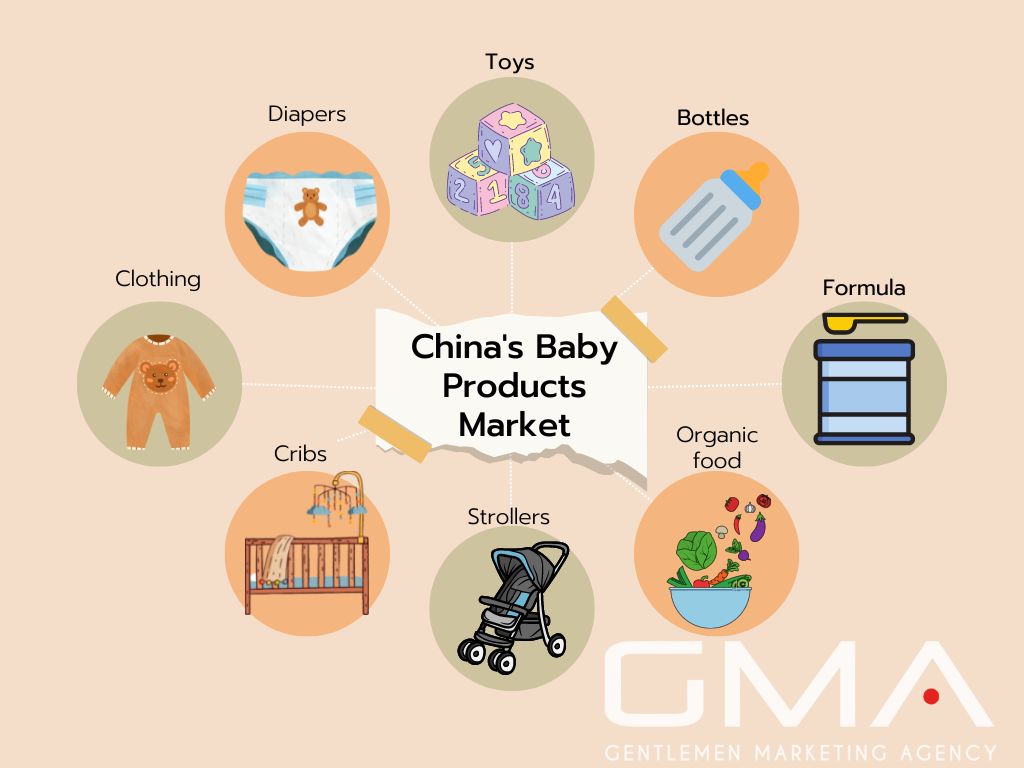
Top-selling baby products in China in 2026: where the money goes

With fewer babies each year, the growth comes from trading up, not from more buyers. Premium and ultra-premium lines lead across the board: infant formula with HMO and A2 protein, premium diapers (now about 35 percent of the diaper market and growing close to four times faster than standard), lightweight travel strollers, and safety-certified feeding and bath products. The pattern is the same in every category: parents pay more for proof of safety, clean ingredients and good design.

The buying journey now starts online and ends online. Young Chinese mothers research on Xiaohongshu (RedNote), where other parents post honest unboxings, ingredient checks and real reviews, then they buy on Tmall or JD. A foreign baby brand that is missing from those notes is invisible at the moment of choice. Our Xiaohongshu marketing guide for 2026 explains how to earn that visibility, even on a small budget.

What are the top-selling baby products categories in China?

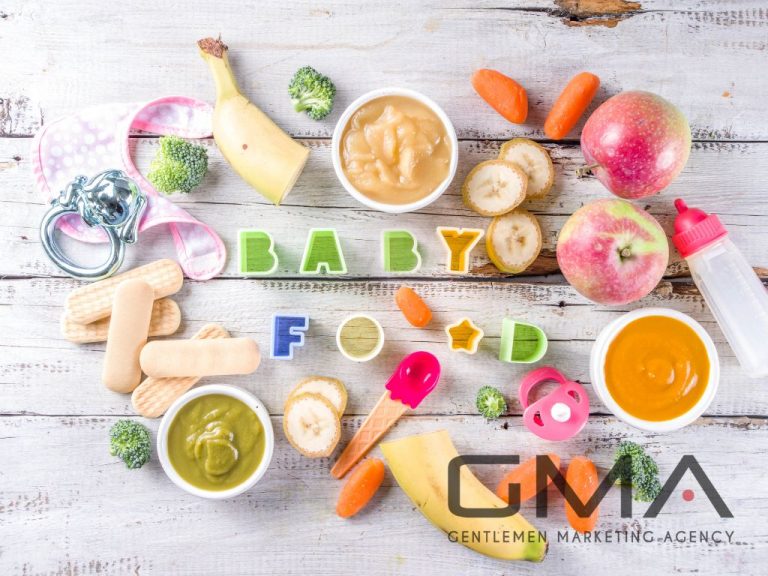
Organic Baby Food

Chinese parents are becoming more concerned about the quality of food their children consume. More and more Chinese parents question the safety of locally grown ingredients. They want to protect young babies from chemicals, hormones, and other toxic ingredients.

Some Chinese parents are turning to organic baby food as a healthier alternative to processed milk. Processed milk is often related to gas, reflux, and colic health issues among infants.

Working mothers, on the other hand, created a demand for convenient and easy-to-use products like baby food pouches. These organic and ready-to-use meals are a perfect fit for their hectic routines. Less preparation means more time with babies. Plus babies enjoy organic ingredients free from toxins and chemicals.

Considering all these facts China’s organic baby food sector is anticipated to develop in the future.
Baby Formula

Following several product safety breaches in the country, most Chinese parents are inclined toward foreign goods. The top five infant formula businesses, which account for 40% of the market, are all based outside of China, particularly in the United States and Europe.

There is a high demand for organic baby formula. More and more Chinese parents prefer to use organic infant milk formula over regular ones. Goat milk-based formula, on the other hand, is gaining more popularity among parents due to its purported advantages for infant gut health.
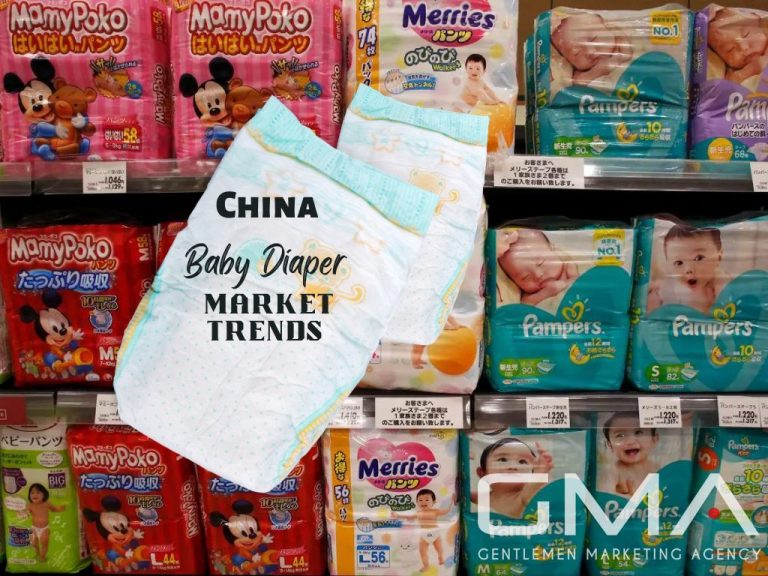
Baby Diapers

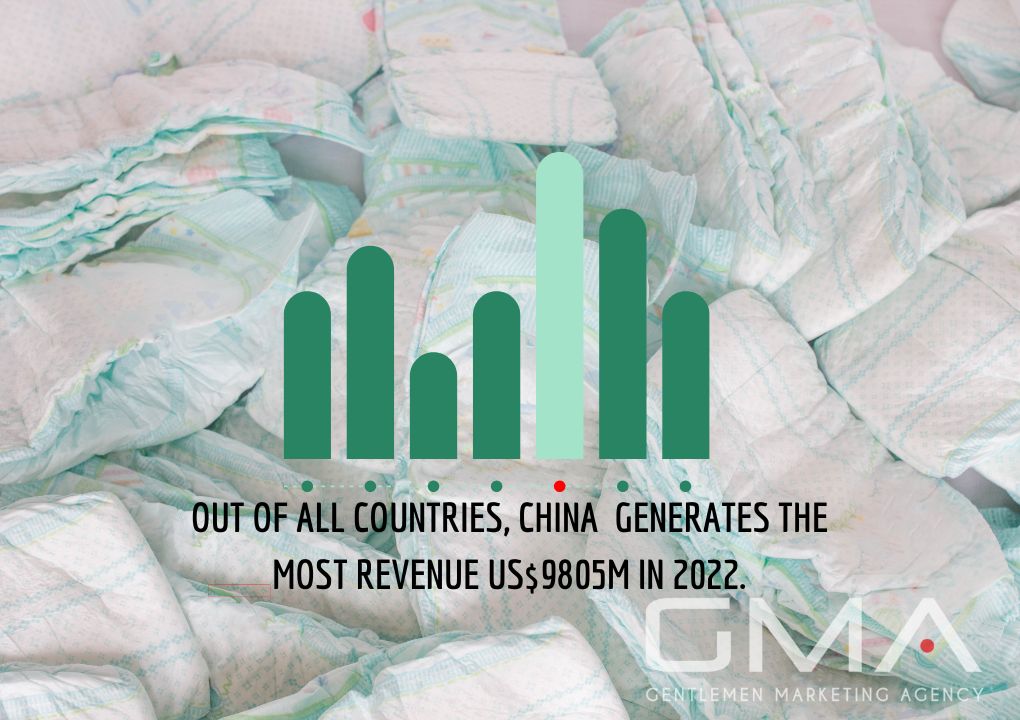
By 2022, the baby diapers segment is predicted to bring in US$9.80bn globally and grow at a rate of 10.43% each year from 2022-2026. Out of all countries, China will generate the most revenue (US$9805m in 2022).

In today’s world, almost any parent in China uses disposable diapers instead of traditional cloth. This is due to the higher level of convenience and hygiene that they offer. Moreover, the availability of a wide range of brands and sizes makes it easy for parents to find the perfect fit for their baby.

When it comes to selecting a diaper, Chinese parents look for a variety of factors. Non-toxic, price, convenience, skin sensitivity, size, softness, fabric quality, and wetness indicators.. are a handful of the features they consider.
Baby clothing & accessories

There is one thing for sure, every mother on this planet enjoys dressing up their babies. So it is no surprise that baby clothing & accessories are one of the top trends shaping the Chinese baby products market.

Although stylish baby clothing is in high demand, it is not simply about appearances. There is a growing trend among millennial parents to use organic and natural materials. They aim to give their children the most natural and healthy items on the market available. While the trend toward less use of pesticides is clear, many parents are concerned about overexposure to chemicals. Therefore they seek safe alternatives. Most popular newborn clothes for instance are the ones that are made up of organic cotton.
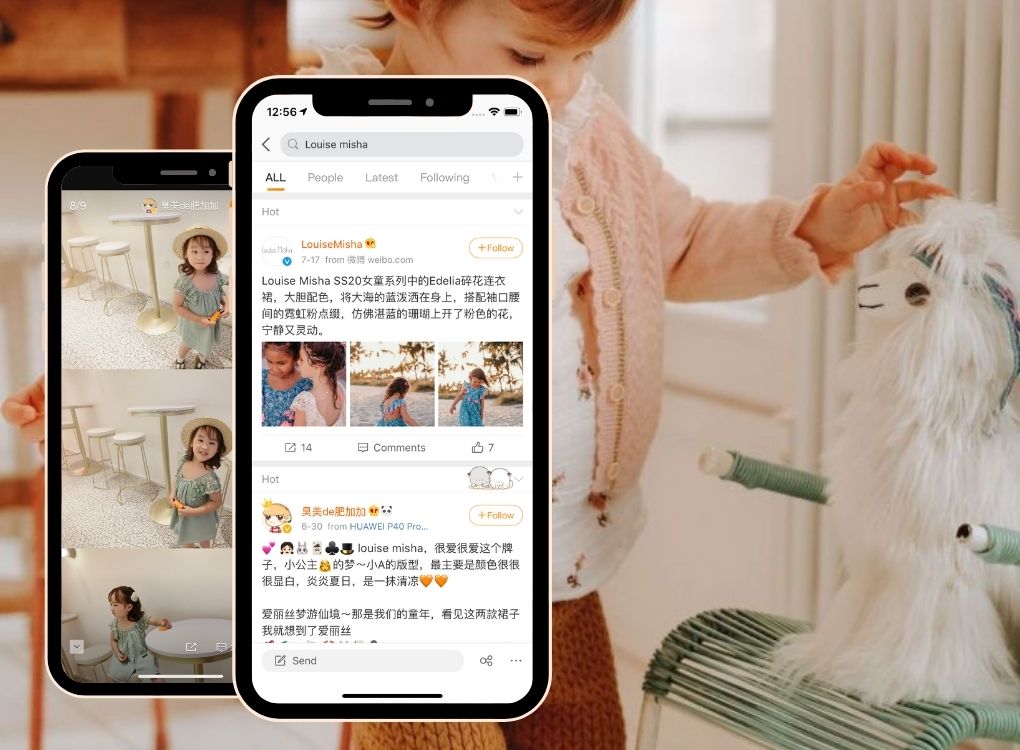
Kidswear brand review on Xiaohongshu (RedNote)

Baby hygiene products

China’s baby hygiene products are changing. They have to meet the demands of today’s parents, who are more health-conscious and aware than ever before. 

Baby skin products are one of the top-selling baby products in China. Diaper rash cream is the leader. Body lotion, shower gel, delicate shampoo, hair softening spray, face creams, sunscreen, and mosquito repellent follows.

Particularly in the segment of baby skin care, consumers are more willing to pay higher prices. Not only for safety but for extra nourishing benefits. Consequently, we observe a trend toward more gentle skincare products. They don’t use harsh chemicals like paraben and are hypoallergenic as well as dermatologically tested.

The most popular products are still the products of imported brands. Chinese customers can easily buy them online through cross-border e-commerce platforms.

Baby toys

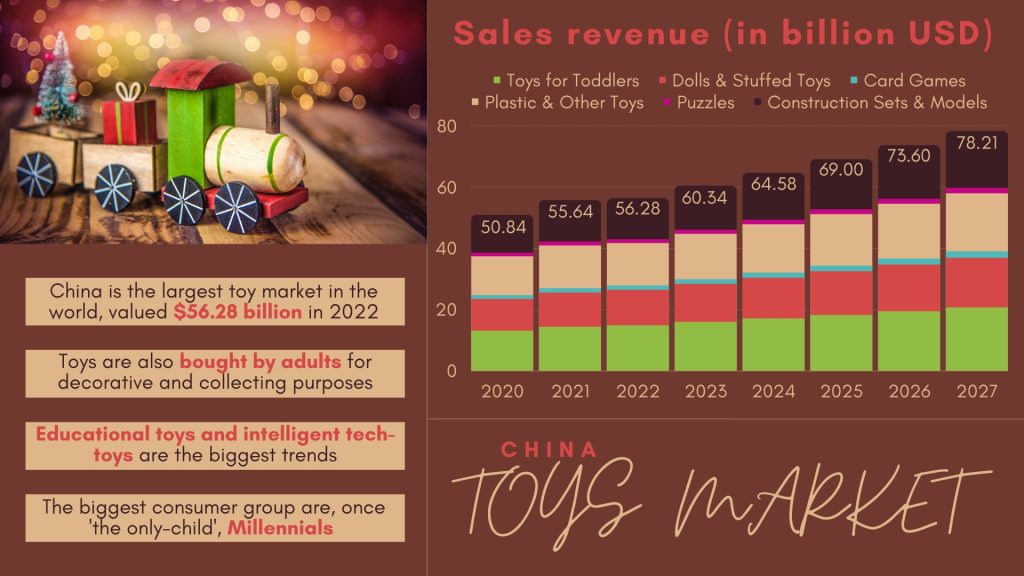
According to a new study by Grand View Research, Inc., China’s baby education toy market is anticipated to reach $13.4 billion in 2025. The business is expected to grow at a CAGR of 10 percent over the next decade. China National Light Industry Council stated that, in 2016, the baby educational toy market was valued at USD 8.4 billion. It is expected to continue growing steadily in subsequent years.

The baby educational toy market in China is expected to grow as more people shop on the internet and use social media platforms. Toys that assist in babies’ academic development and creativity are becoming more popular. They are designed to captivate a baby’s imagination, with interactive features like colors, shapes, and sounds.
Baby strollers

China’s infant stroller market has been growing rapidly in recent years, reaching $21 billion in 2020. The industry is expected to continue growing at a similar pace and reach $27 billion by 2023. Some models cost as much as several thousand dollars more. Chinese parents are searching for costly yet long-lasting and high-end goods.

As parents move away from big strollers, demand for baby carriers is increasing. For Chinese parents, functionality and mobility are important factors when choosing a stroller. Carbon fiber strollers with lightweight are becoming more popular.  

Baby Car Seats

Upper- and middle-class families with large disposable cash are the most interested in purchasing baby car seats. These Chinese parents are ready to pay extra for a safety guarantee on high-end foreign goods. Portable, foldable, and lightweight baby car seats that may be carried around are one of the newest developments in the baby car seat industry. They are handy when parents take taxis.

Baby Furniture

The baby furniture market in China is expected to grow at a CAGR of over 5% during the period 2019-2024. The market is highly competitive with several small and large international and domestic players.

There has been an increase in the demand for baby beds, cribs, and other necessary furniture items for infants in recent years. Many factors are driving this trend, including the rise of urbanization and the growth of the middle class. As more families move to cities, they are looking for ways to improve their homes in comfort and style.

Baby furniture that can be used for multiple purposes and transformed is another trend in the Chinese market. Some cribs, for example, may be converted into toddler beds. Others may be utilized as changing tables or dressers. 
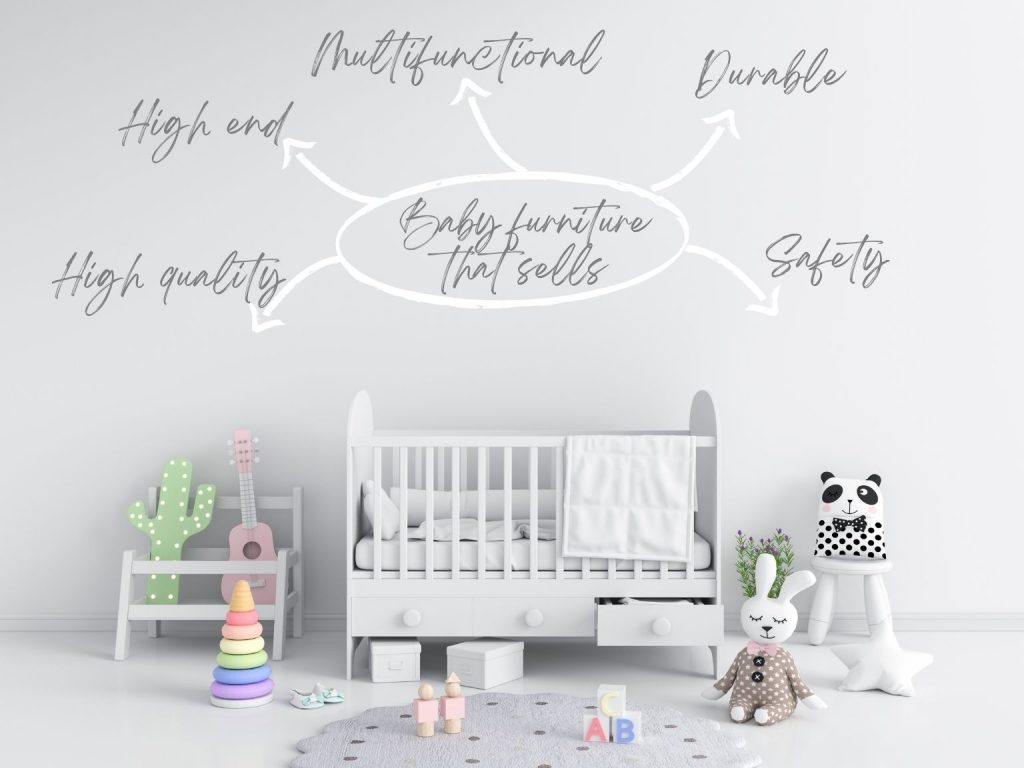
Manufacturers are responding to the growing interest among parents in space-saving solutions. They develop baby furniture that may be changed into different tools or used for various purposes.

Nursery monitoring systems

Nursery monitoring systems are becoming more popular in China as they offer parents real-time updates on their child’s health. These systems often work with a mobile app, making it easy for parents to check in on their little ones from anywhere.

Wet wipes

Demand for baby wipes is anticipated to rise shortly as a result of rising parents’ awareness about cleanliness and safety. Germs and bacteria are the most common causes of illnesses. Baby wipes are expected to grow in popularity throughout China due to growing customer spending on newborn hygiene goods.

The baby wipes market is developing rapidly online. Specialty outlets are the primary distribution channels for Chinese consumers in the baby care sector. To reach more customers and boost sales, some of the leading maternal and infant stores expanded their businesses to online

By integrating both offline and online channels, these businesses can connect with more consumers. So they increase their overall sales figures.

Nontoxic, organic, and hypoallergenic wipes are of growing interest to Chinese parents. Parents often take into consideration how many wipes come in a pack as well as if bulk quantities are available.

We can help you promote your baby products in China!

China’s baby products market has a promising future. Though it may face challenges, with the rise of e-commerce and new retail in China, more opportunities are on the rise. To excel among many rivals, brands need to improve product quality and create a pristine reputation while also building brand awareness. Only then can they earn the approval of today’s discerning consumers.
SEO Agency China (SAC) is a China-focused agency built for smaller and challenger brands. We help foreign baby brands get found on Xiaohongshu, Baidu and Tmall, win honest reviews and sell, without the big-agency price tag.

We generate marketing strategies for increasing brand awareness among customers as well as develop branding strategies for businesses entering the market.
Don’t hesitate to leave us a comment or contact us to discuss your project in China!
The 2026 market reality: what the data shows

China’s baby products market reached approximately USD 181 billion in manufacturing output in 2026, making it the largest single-country market for infant goods globally, according to IBISWorld. Birth numbers ticked upward in 2024 for the first time since 2017, with 9.54 million newborns, a gain of 520,000 year-on-year, as reported by NielsenIQ. That reversal matters because it signals a new consumption cycle, not a structural collapse. At the same time, the China baby diapers segment alone is valued at USD 10.94 billion in 2025 and is projected to reach USD 16.35 billion by 2032 at a 5.9% CAGR, per Coherent Market Insights. Fewer children per family means parents spend more per child, pushing average transaction values upward across every category.

The five categories driving the most revenue

Not all baby products perform equally. Five categories account for the bulk of market value in China, and each follows a different logic.

Infant formula sits at the top. The China baby food market was valued at USD 18.15 billion in 2024 and is forecast to cross USD 33.37 billion by 2033, driven almost entirely by formula, per ResearchAndMarkets. Chinese parents show strong preference for premium and ultra-premium SKUs. Products featuring HMO (human milk oligosaccharides) and science-backed claims on immunity or brain development command a price 30 to 50% above standard formula. Foreign brands, particularly European ones, benefit from a persistent perception advantage linked to raw material origin and quality controls.

Diapers are the second-largest category by value. The market is split between mass volume at lower price points, dominated by domestic brands like Hengan and Unicharm China, and a growing premium tier led by Pampers and Huggies. P&G reported nearly 20% organic sales growth for Pampers in China in fiscal 2025 after launching silk-material diapers in the super-premium segment, gaining over two points of value share. This tells a clear story: volume is under pressure from the birth rate, but value keeps growing.

Baby skincare and toiletries hold a 29.5% revenue share of the broader baby and child-specific products market in 2025, the largest single share among non-food categories. Organic and natural formulations, free from parabens and sulfates, are the primary differentiator. Brands like Mustela and California Baby have built strong reputations here.

Baby gear and equipment (strollers, car seats, bassinets) is a category where foreign brands still dominate the premium end. Bugaboo, Cybex, and Stokke are visible on Xiaohongshu feeds and command prices far above domestic competitors. Purchases are researched extensively before conversion, making content marketing critical.

Baby food and complementary feeding (purees, cereals, snacks) is growing as Chinese parents adopt more structured weaning schedules. New GB standards released in 2025 raise the bar on ingredient ratios for cereal-based foods, which is pushing out lower-quality domestic players and creating space for brands that can meet tighter specifications.

Where Chinese parents actually buy: platforms and discovery

The channel mix in China’s baby market is different from what most foreign brands expect. Offline is not dead. NielsenIQ data shows that nearly 60% of maternal and infant product sales still go through offline channels, particularly specialty maternity and baby stores near hospitals and in community areas. These stores function as trust anchors. First-time parents often make initial brand decisions there before shifting to online reorders.

Online, Tmall holds the strongest position. Its share of online baby product sales reached nearly 40% in 2024, rising for three consecutive years. But the fastest-moving channel is social commerce. Content e-commerce platforms, primarily Douyin (TikTok’s Chinese version) and Xiaohongshu (Little Red Book), expanded at a 76% growth rate in the maternal and baby category, according to NielsenIQ’s 2025 report. This is not a marginal channel. It is now a primary discovery engine for new parents.

The decision journey typically works like this: parents discover a product through a Xiaohongshu review or a Douyin short video from a KOL (key opinion leader) or KOC (key opinion consumer). They check verified reviews on Tmall or JD. They purchase either through the platform storefront or through a WeChat group managed by a trusted community figure.

A concrete example: Hipp Organic, the German baby formula brand, built its China presence almost entirely through Xiaohongshu content seeding before opening its Tmall Global flagship. Mothers documented unboxing, ingredient comparisons, and feeding diaries. That user-generated content drove search volume on Baidu and Tmall simultaneously. It lowered Hipp’s customer acquisition cost compared to paid search alone.

For foreign brands considering entry, this means the channel investment question is not Tmall versus Douyin. Both matter, but at different stages. Tmall is where you convert. Douyin and Xiaohongshu are where you build the reason to convert. Separating those two functions and budgeting for both is the difference between a launch that stalls and one that compounds.

JD.com remains relevant for categories where logistics speed and authenticity guarantees matter most, specifically formula and premium consumables. JD’s self-operated warehouse network gives it a credibility advantage for products where cold chain or tamper-evident packaging is a concern.

What changed between 2024 and 2026

Several shifts altered the competitive landscape between 2024 and 2026.

Regulatory tightening on formula. China released 50 new national food safety standards in March 2025. The new GB 25596-2025 standard for special medical purpose infant formula takes effect in March 2027. It adds choline as a mandatory ingredient, tightens DHA minimum levels, and introduces six new clinical categories. Liquid infant formula is now subject to the same registration requirements as powdered formula, effective December 2025. Brands that do not have their formulas registered under the new framework will not be able to sell. This is a compliance deadline, not an option.

Consumer sentiment on domestic versus foreign brands. The gap has narrowed. Chinese domestic brands in diapers and baby gear improved quality perception significantly between 2022 and 2025. Brands like Babycare (国内品牌) gained market share from Pampers at mid-tier price points. Foreign brands still lead on formula and premium skincare, but they can no longer rely on “imported equals better” as a default positioning. They need to articulate specific ingredient or technology advantages.

Premium segment expansion at both ends. Ultra-premium products at 2x to 3x the category average price grew faster than mid-tier in 2024 and 2025. Simultaneously, domestic brands compressed margins at the entry level, squeezing foreign brands that were not clearly premium or clearly mass. The middle ground is increasingly difficult to defend.

Birth rate signal. The 2024 uptick in births (9.54 million, up from 9.02 million in 2023) reduced pessimism about the market’s long-term trajectory. More brands returned to China entry plans that had been shelved during 2022 and 2023.

Frequently asked questions

What are the best-selling baby product categories on Chinese e-commerce platforms?

Infant formula is the top-selling category by value on both Tmall and JD.com. Diapers rank second by sales volume and are the most repurchased category. Baby skincare and toiletries rank third by revenue share among non-food items, holding a 29.5% share of the broader baby care market in 2025. Baby gear (strollers, car seats) generates high average order values and is heavily researched on Xiaohongshu before purchase. Complementary baby foods, including cereal puffs and pouched purees, are the fastest-growing sub-segment by new SKU launches. For foreign brands, formula and premium skincare offer the clearest positioning advantage because trust in imported product safety remains high in those two areas specifically.

Is China’s baby products market still growing despite the declining birth rate?

Yes, and the reason is spending per child. Fewer births have not reduced total market value because parents, grandparents, and extended family now concentrate more spending on each child. The China maternity goods market was valued at USD 38.5 billion in 2025 and is projected to reach USD 95.7 billion by 2034, a CAGR above 10%, according to IMARC Group. The 2024 birth count rose to 9.54 million, breaking a seven-year decline. Ultra-premium product segments expanded faster than the overall market in 2024 and 2025. The dynamic is more about wallet share than birth volume. Brands that position on quality, safety, and science outperform those competing primarily on price.

How important is Xiaohongshu for marketing baby products in China?

Xiaohongshu (Little Red Book) is the primary product discovery platform for new parents in China, particularly mothers aged 25 to 35 in Tier 1 and Tier 2 cities. It functions as a peer review network where parents share feeding schedules, ingredient comparisons, and unboxing content. Searches for baby formula, diapers, and skincare on Xiaohongshu often precede purchase decisions on Tmall. Social commerce platforms including Xiaohongshu and Douyin grew at 76% in the maternal and baby category in 2024. For a foreign brand entering China, Xiaohongshu seeding, through both KOLs and authentic KOC reviews, is the most cost-effective way to build initial credibility before scaling paid traffic on Tmall or JD.

What regulations must foreign baby product brands comply with to sell in China?

Requirements vary by product type. Infant formula requires product registration with China’s State Administration for Market Regulation (SAMR), which involves factory audits, formula composition review, and Chinese-language labeling compliance. The new GB 25596-2025 standard for special medical purpose formulas takes effect in March 2027, adding new mandatory ingredients and clinical categories. Liquid formula is now also subject to full registration under rules effective December 2025. Baby skincare products must be registered or filed with NMPA as cosmetics. Baby food (non-formula) must meet GB 10769-2025 standards for cereal-based complementary foods. All products require Chinese-language labels with origin, ingredient list, and age-appropriate use statements. Working with a local regulatory consultant before product development finalization avoids costly reformulation later.

How to move forward

Foreign brands that perform well in China’s baby market share a few common traits. They enter with a specific category focus rather than a broad product range. They invest in Chinese-language content on Xiaohongshu and Douyin before allocating budget to paid search. They set up a Tmall Global or JD Worldwide flagship to validate demand before committing to full SAMR registration. And they localize their science messaging rather than translating Western claims verbatim.

The practical steps are: first, confirm regulatory requirements for your specific category with a China-qualified consultant. Second, build your content presence on Xiaohongshu and Douyin with authentic parent-facing content before your official launch. Third, open your Tmall or JD flagship and run targeted promotions during the key baby shopping festivals (618, Double 11, and the pre-Chinese New Year period). Fourth, invest in Baidu SEO and SEM to capture parents who search for specific ingredients or product comparisons. For that, see our Baidu advertising service page.

If you want a clear picture of where your brand fits in this market and what entry would realistically require, get in touch here.

Marcus Zhan is a China marketing specialist based in Shanghai. He covers digital marketing, consumer trends, and brand strategy for the Chinese market. Connect with him on LinkedIn to discuss China baby market entry.

Sources: IBISWorld, Baby Product Manufacturing in China 2025 | NielsenIQ, 2025 China Baby Market Report | Coherent Market Insights, China Baby Diapers Market 2025-2032 | ResearchAndMarkets, China Baby Food Market 2025-2033 | ChemLinked, China GB Standards for Infant Formula 2025 | IMARC Group, China Maternity Goods Market 2034

Let's talk

Discuss your China project

Tell us the goal and we'll send a proposal. No obligation.