WeChat for Retails , Solution 2026

wechat

If you sell in China, you cannot skip WeChat. It is not a social app you bolt on at the end, it is where Chinese shoppers find you, talk to you, pay you, and come back. This guide lays out, in plain terms, how WeChat works as a retail engine in 2026 and how a smaller brand can use it without a giant budget.

Understanding WeChat Retail in 2026

WeChat retail means using Tencent’s WeChat, China’s main super app with about 1.41 billion monthly active users at the end of Q3 2025, as a full retail system rather than just a chat tool. By 2026 it has grown well past messaging into one place for selling, marketing, customer service, payments, and data. For retailers, WeChat ties online and offline together through Mini Programs, Official Accounts, and WeChat Pay, so you can sell, build loyalty, and keep the customer relationship inside your own space. For a deeper look at how the whole platform fits together, see our analysis of the WeChat ecosystem.

Cost-Effective Agency

KPI and Results focused. We are the most visible Marketing Agency for China. Not because of huge spending but because of our SMART Strategies. Let us help you with: E-Commerce, Search Engine Optimization, Advertising, Weibo, WeChat, WeChat Store & PR.

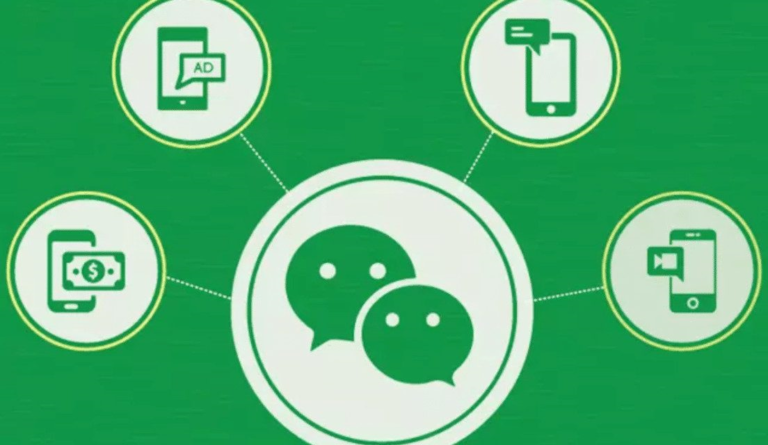
Official Accounts, and WeChat Pay to drive sales, build loyalty, and personalize interactions. It’s particularly powerful in China, where it captures a significant share of digital retail (projected at 20-30% of total eCommerce GMV), emphasizing community-driven shopping, hyper-targeted ads, and AI-enhanced CRM. Businesses use it to reduce reliance on third-party platforms, own customer data, and achieve higher conversion rates through closed-loop ecosystems.

Full WeChat Retail Solution for Businesses: All Options Explained

In 2026, WeChat offers a modular, end-to-end retail solution that businesses can customize based on scale, industry (e.g., fashion, beauty, F&B), and goals.

The platform’s “private domain traffic” model focuses on retaining users within your brand’s ecosystem, minimizing acquisition costs while maximizing lifetime value. Below, I break down the full suite of options, including setup, strategies, and best practices. Implementation typically starts with registering a WeChat Official Account (verified for businesses) and integrating tools via Tencent’s developer portal.

  1. WeChat Official Accounts (OA): The Foundation for Brand Presence Official Accounts serve as your brand’s digital storefront and communication hub, with over 20 million active OAs in China. Types include Subscription Accounts (for content marketing) and Service Accounts (for advanced features like payments and Mini Programs). Full Solution: Use OAs to publish articles, videos, and promotions; send targeted push notifications (up to 4/month for Service Accounts); and integrate CRM for user segmentation. For retail, embed shoppable content or link to Mini Programs. Business Strategies: Build subscriber lists via QR codes in stores or ads; leverage AI analytics for behavior tracking (e.g., open rates, clicks); and run loyalty programs with points/rewards. Cost: Free setup, but verification fees (~RMB 300). Ideal for customer service bots and newsletters. ROI tip: Focus on high-quality content to achieve 10-20% engagement rates.
  2. WeChat Mini Programs: Customizable eCommerce Apps Mini Programs are lightweight, app-like experiences within WeChat, with over 8 million active ones by 2026, driving 40%+ of WeChat’s eCommerce volume. They load instantly without downloads, perfect for mobile-first shoppers. Full Solution: Develop or use templates for online stores, product catalogs, virtual try-ons (via AR), booking systems, and inventory management. Integrate with WeChat Pay for seamless checkout and logistics APIs (e.g., SF Express). Advanced features include live streaming integration and data syncing with enterprise systems. Business Strategies: Launch flash sales, group buys, or membership clubs; use location-based services (LBS) for O2O (e.g., in-store pickups); and employ AI for personalized recommendations. Development cost: RMB 10,000-100,000 via agencies. Promotion: Share via QR codes, OAs, or ads. Example: Luxury brands like Louis Vuitton use them for exclusive drops, boosting conversions by 30%.
  3. WeChat Pay: Frictionless Payments and Financial Tools With 1.2 billion users, WeChat Pay dominates mobile payments in China, processing trillions in transactions annually. It supports RMB settlements for global brands, auto-converting currencies. Full Solution: Enable in-app purchases, QR code scans for offline retail, and red packet promotions. Integrate with Mini Programs or OAs for subscriptions, installments, or refunds. For cross-border, it handles overseas settlements automatically. Business Strategies: Offer discounts for WeChat Pay users to encourage adoption; use Wallet features for loyalty cards; and analyze transaction data for upsell opportunities. Compliance: Requires business verification and anti-fraud tools. Global expansion: Brands can accept payments from Chinese tourists abroad, increasing revenue by 15-25%.
  4. WeChat Advertising: Targeted Reach and Performance Marketing WeChat’s ad ecosystem, powered by Tencent’s data, reaches precise audiences with low CPC (RMB 0.5-5 per click). Formats include Moments Ads (social feed), Banner Ads (in articles/OAs), and Video Ads. Full Solution: Run campaigns via Qianchuan (Tencent’s ad platform) with AI optimization for targeting (e.g., demographics, interests, behaviors). Track ROI through pixel tracking and A/B testing. Integrate with eCommerce for direct conversions. Business Strategies: Use lookalike audiences to expand reach; combine with livestreaming for real-time sales (e.g., KOL-hosted sessions); and focus on “effect-first” models like pay-per-lead. Budget: Start at RMB 5,000/day. Trends: Geo-targeted ads for local retail, yielding 2-3x higher engagement.
  5. WeChat Channels (Video and Livestreaming): Content-Driven Sales Channels is WeChat’s short-video and live platform, rivaling Douyin, with billions of daily views. It’s ideal for discovery and impulse buys. Full Solution: Create shoppable videos, host live events with real-time Q&A and purchases, and build fan communities. Integrate with Mini Programs for “watch-and-buy” flows. Analytics track views, shares, and conversions. Business Strategies: Collaborate with KOLs/KOCs for authentic endorsements; schedule themed lives (e.g., product unboxings); and use AR filters for interactive demos. Cost: Free for basic, paid for promotions. Retail impact: Drives 20-30% of social commerce GMV, especially for beauty and fashion.
  6. WeChat CRM and Data Analytics: Customer Insights and Automation WeChat’s backend tools provide enterprise-level CRM, unifying data from all features. Full Solution: Segment users based on interactions, purchase history, and profiles; automate chatbots for 24/7 support; and export data to external systems (e.g., ERP). AI features predict churn and personalize offers. Business Strategies: Implement SCRM (Social CRM) for lifecycle management; run A/B tests on campaigns; and comply with data privacy (e.g., GDPR for foreign brands). Integration cost: Via APIs, RMB 50,000+. Benefit: Increases customer retention by 25% through targeted re-engagement.
  7. WeChat Enterprise (Work) Integration: Internal Operations For larger retailers, WeChat Work connects teams with customers seamlessly. Full Solution: Use for staff training, inventory alerts, and customer service handoffs. Integrate with OA/Mini Programs for unified ops. Business Strategies: Enable field sales teams to scan QR for leads; automate order fulfillment notifications. Cost: Subscription-based (RMB 100/user/month). Scales for chains with 100+ stores.
  8. Cross-Platform and O2O Extensions: Hybrid Retail Models WeChat links with external ecosystems like Tencent Maps, Meituan (delivery), and offline POS systems. Full Solution: Build O2O flows (e.g., online orders, in-store pickup); use LBS for proximity marketing; and partner with super-apps for broader reach. Business Strategies: Run geo-fenced promotions; integrate with smart retail (e.g., IoT shelves). For global brands: Leverage WeChat’s international version for overseas Chinese consumers.

Implementation Roadmap for Businesses: Start with OA registration (1-2 weeks), develop a Mini Program (1-3 months), launch ads and content (ongoing). Partner with agencies like TMOGroup or Charlesworth for localization. Challenges: Regulatory compliance (e.g., data localization) and competition from Douyin/Pinduoduo. Success Metrics: Aim for 15-20% GMV growth, 50%+ repeat purchases. In 2026, AI and metaverse integrations (e.g., virtual stores) will further enhance scalability.

The 2026 numbers that show why WeChat retail is growing

WeChat retail is not standing still, it is one of the fastest-moving parts of Chinese e-commerce right now. A few recent figures show why brands are paying attention:

  • Mini Shop sales jumped 4.3x. WeChat Mini Shop (the in-app store) GMV grew about 4.3 times year on year in 2025, and Tencent is pushing total WeChat Store GMV from roughly RMB 150 billion toward RMB 300 billion or more.
  • Closed-loop ad revenue is nearly doubling. Advertising tied directly to WeChat Stores is expected to climb from about RMB 11 billion to RMB 20 billion in 2025, a sign that selling inside WeChat is becoming a real channel, not an experiment.
  • Channels (video) is huge. Tencent reported around RMB 1.5 trillion in WeChat Channels GMV in 2025, which makes short video and livestreaming inside WeChat a serious sales surface.
  • Mini Programs reach over a billion. WeChat Mini Programs passed about 1.1 billion monthly active users in 2025, with daily transactions running into the billions, so the audience for an in-app store is already there.

The takeaway for a smaller brand: the tools and the buyers exist, and the cost of building a private-domain store is far lower than fighting for paid traffic on a giant marketplace. The work is in running it well, not in getting access.

WeChat Retail FAQ

Do I need a Chinese company to sell on WeChat?

Not always. A verified Service Account and WeChat Pay usually need a business entity, but cross-border options and partner setups let foreign brands sell to Chinese buyers without a full local company first. Start with the lightest route that fits your category, then add a local structure when sales justify it.

What does a WeChat Mini Program store cost to build?

A template-based store can start around RMB 10,000, while a custom build with inventory, AR, or livestream features runs from tens of thousands of RMB upward. The bigger ongoing cost is content and community work, the part that actually drives repeat sales.

Is WeChat better than Tmall or Douyin for selling?

They do different jobs. Tmall and Douyin are public marketplaces where you buy reach and pay for traffic each time. WeChat is private domain: you own the customer relationship and sell to people who already follow you, which lowers repeat-purchase cost. Most brands use WeChat alongside a marketplace, not instead of one.

What drives sales inside WeChat?

Private-domain operation: building a following through your Official Account and Channels, giving them a reason to join your community, and converting them in your Mini Program store. Brands that treat WeChat as a relationship channel see far higher repeat purchase rates than those that just run ads and hope.

Where we come in

We are an affordable, China-focused team that helps smaller foreign brands set up and run WeChat retail without overspending: the right account type, a Mini Program store that fits your budget, and the content and community work that actually turns followers into buyers. If you want WeChat to sell rather than just exist, tell us what you sell.

Jon Wang is a pragmatic, China-focused consultant with hands-on experience in Chinese e-commerce, distribution and digital marketing, always focused on practical solutions for smaller brands and tighter budgets.

Similar Posts

Leave a Reply

Your email address will not be published. Required fields are marked *

Let's Discuss Your Project?

We are a ROI Agency, oriented results

Contact us