Skip to content

Useful tips for a winning SEO campaign in China !

Updated

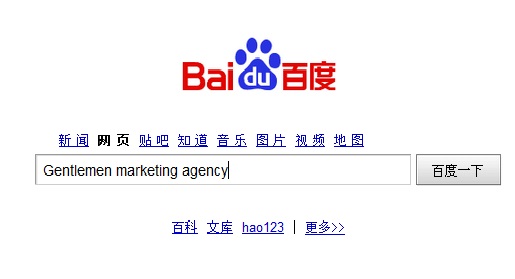
Gaining visibility and notoriety is what any company is aiming for. Ranking number 1 on the search engine is the top objective. To reach such goals, companies need to set up an effective SEO strategy. Here are some tips to succeed in your SEO strategy in China, which is a bit different than the usual SEO by using Google. To penetrate the Chinese market you’ll have to focus your campaign on Baidu.

In 2026, Baidu is still the most used search engine in China, holding about 47% of search share (Statcounter estimate). Most Chinese netizens still pass through Baidu, but they now often read an AI answer before they click any link.

A website in Chinese

Sans titre

This may look obvious, but proposing Chinese content is the key to penetrating this market.

First of all, having an English website will penalize you for referencing Baidu (Number 1 search engine in China) who will rather favor a website in Chinese than in any other language. You should also be careful of the translation, it should be in proper Chinese and not a word-to-word translating, which may not fit the requested tone of interaction between a brand and its customers. And it is an understatement to note that the vast majority of people will search for information in their own language first.

To optimize your position on Baidu research you must also host your website on a ‘.cn’ website!

Take in account the different research behaviours

tumblr_ldihorSEFo1qeockv

Chinese netizens are more likely to use keywords while westerners are more likely to do Google research by using full sentences. This is why the use of keywords is less competitive on Baidu than on Google because it is extremely specified.

Find percussive keywords

baidu_webanalyticsportal

As said before, Chinese netizens have the ‘keyword’ culture, you should then define a set of keywords, translate them into Chinese and then target those that offer a good compromise between traffic and competition. A very interesting keyword with a lot of keyword search will be less interesting than a keyword with half of the keywords but almost no competition. As would do Google Analytics or Google Adwords you have a similar service offered by Baidu called Baidu Tongji. Thanks to Baidu Tongji, you can observe which words are the most used over a period, it is based on the research made via the Baidu search bar.

After shaping your keywords pack you should now use them as many times as you can, in your titles, in your content to optimize your referencing. But be careful on the choice of your keywords, some of them could be censored by the government and your website could eventually be banished from Baidu.

The big 2026 change: AI search and GEO

Baidu rebuilt search around AI on 2 July 2025. The old search bar is now a “Smart Box” (智能框) that reads prompts of 1,000+ characters and accepts files, images, audio and video. Above the blue links sits an AI answer called Baikan (百看). Baidu’s own assistant, the Wenxin Assistant (文心助手, renamed from ERNIE Bot in October 2025), passed 200 million monthly users by January 2026 and runs on ERNIE 5.0. This means people often get their answer without clicking a single link.

So SEO is shifting to GEO, Generative Engine Optimization. The job is to be the source the AI quotes, not just to rank a page. Three plain steps:

  • Keep one consistent brand entity across Baidu Baike, Baijiahao and your own site, so the AI trusts who you are.
  • Write answer-first: state the answer in the first two lines, then explain. The AI pulls clean, direct answers.
  • Keep the basics solid: ICP licence, China hosting, fast mobile pages and Baidu Webmaster Tools. Without these the AI will not trust your site.

We wrote a full breakdown of what changed and how to win the AI answer. Read our 2025 Baidu SEO guide before you plan your campaign.

Have a well-though website plan

QQ

Baidu’s robots are giving a lot of credit to home pages, this is why you should, first, have a well-informative home page that will contain every essential information. To do so, you should then always manage to give updated qualitative content and backlinks, the more you take time to update, the more your website will lose places in the search results page.

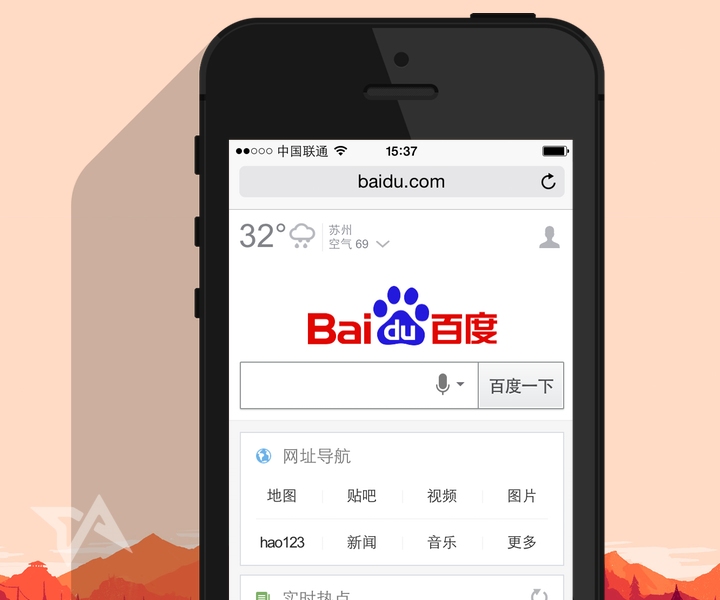
Take also into account that 80% of Chinese netizens use the Internet via their mobile phones, so, don’t forget to create a phone-optimized website.

Baidu’s SEM tool : Pay Per Click

Untitled-5-1024x640

SEM may seem the most appealing method at first but will quickly become very expensive, especially with a PPC four times as expensive as Google PPC. So, while in the short run you may be leaning toward a PPC campaign, the most efficient strategy is an SEO campaign that will bring you lasting results where a PPC campaign would stop as soon as you would stop financing it.

It is far from easy but you now have the main tools to start your SEO campaign in China. If you want to go for further information about SEO in China, contact us, we can help you:

  • Translate and optimize your Website for China
  • Open and run a PPC account for Baidu
  • Choose the right keywords for a good ranking

Our Baidu SEO experts will be happy to discuss your project.
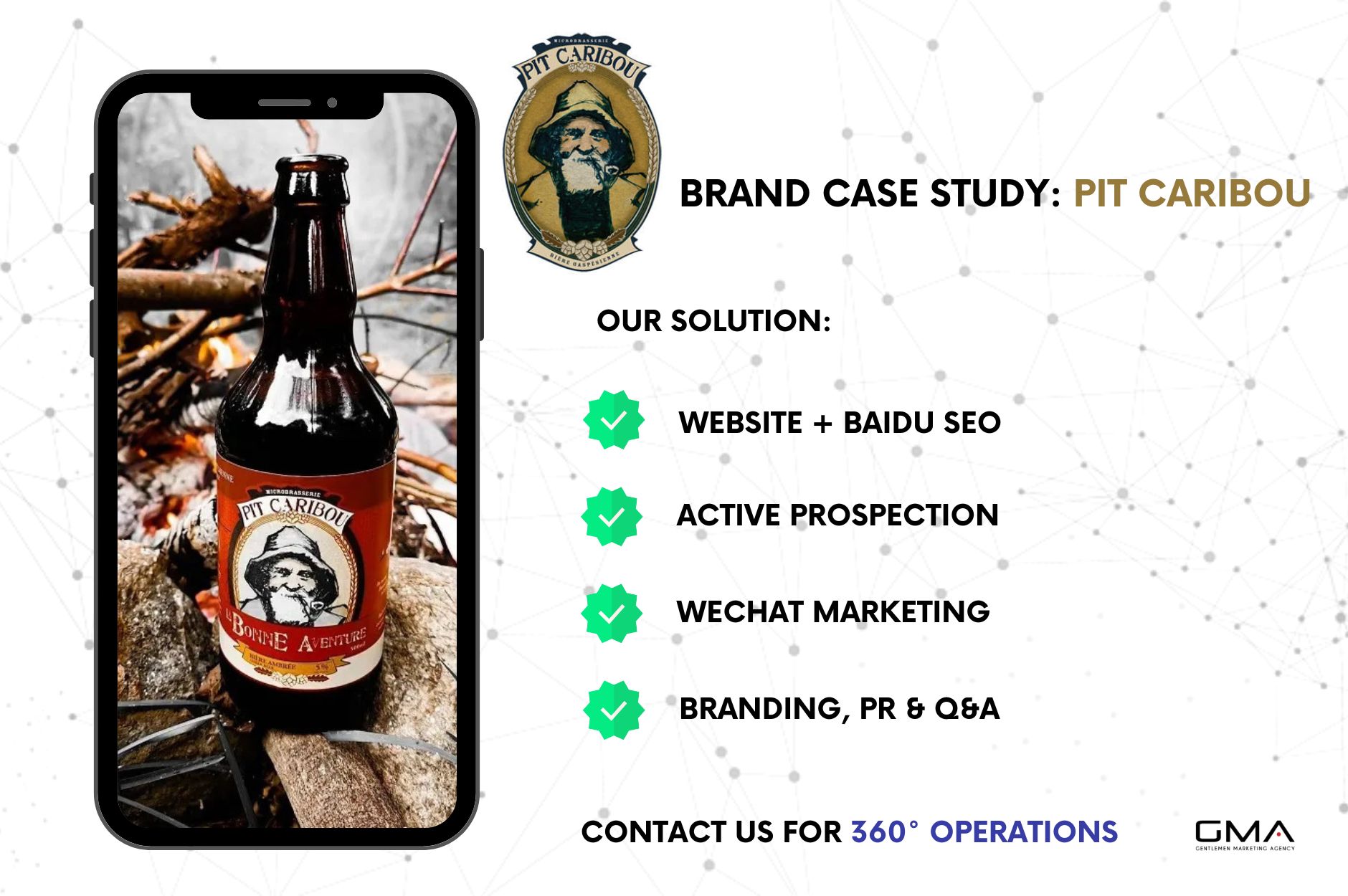
canadian-beer-brewery-360-marketing-in-china-case-study-by-gma

The 2026 market reality: what the data shows

China has 1.3 billion internet users as of end-2025, with a penetration rate of 91.6% of the total population, according to DataReportal’s Digital 2026 China report. Baidu holds roughly 64% of the search market overall and 77.86% on mobile, where 78% of all searches now originate, per The Egg’s 2026 search engine breakdown. Search engine users in China reached 777 million in mid-2025, representing 69.2% of all Chinese netizens, according to CNNIC’s 57th Statistical Report. These numbers matter because they define the floor: any brand that wants organic visibility in China is, by default, competing on Baidu, on mobile, at scale.

Why a China-hosted, ICP-licensed website is non-negotiable

The first question most foreign brands ask is whether they can rank on Baidu without a Chinese website. The short answer is no, not reliably. Baidu’s crawler operates inside China’s network. It prioritizes pages hosted on servers with low latency to Chinese data centers. A site loading from a European or North American server will almost always be slower inside China, and page speed is now one of Baidu’s most weighted technical signals. According to ChinaSEO.com’s analysis of the 2025 algorithm updates, page loading speed now accounts for 28% of Baidu’s ranking weight, up from 15% in 2023. Sites that load within 1.2 seconds see dwell time increase by 47 seconds on average. Sites that take more than 2 seconds to load experience a 53% bounce rate.

Beyond hosting, an ICP (Internet Content Provider) license is required by Chinese law for any commercial website operating on a .cn domain or on Chinese servers. Without an ICP license, Baidu’s algorithm will apply a trust penalty. The ICP filing process runs through China’s Ministry of Industry and Information Technology (MIIT) and requires a local Chinese business entity as the applicant. This step alone filters out most foreign brands that try to self-manage their China SEO. Working with a local registered partner is the practical solution.

HTTPS is now a baseline requirement, not a differentiator. Baidu added HTTPS as a ranking signal in 2018, and the 2025 updates reinforced this. Sites still running on HTTP are actively penalized. Beyond the certificate itself, Baidu also evaluates privacy statements and user data handling disclosures. This reflects pressure from China’s Personal Information Protection Law (PIPL), which came into full force in 2022 and continues to shape how Baidu assesses site compliance.

One more technical point that catches brands off guard: Baidu does not index JavaScript-rendered content the same way Google does. If your site relies on a React or Vue frontend to display key product information, Baidu’s crawler may see an empty page. Server-side rendering or static HTML output is the correct approach for Baidu SEO. Technical audits that miss this point produce rankings that simply do not materialize.

Content in Simplified Chinese: volume, structure, and authorship

Over 83% of Baidu’s top-ranking pages are written in Simplified Chinese, according to Aumcore’s 2025 ranking factor analysis. English-language content does not rank for Chinese-language queries. This is not a preference, it is a structural fact. A brand that publishes only English content is invisible to the 777 million Chinese search engine users. The implication is that translation is not optional, but translation alone is not enough.

Baidu’s 2025 “Smart Match+” algorithm evaluates content across 18 quality dimensions. One of the most significant changes is the weight placed on professional author attribution. Pages with named authors and source labeling achieve a user trust score of 4.7 out of 5 on average, compared to 3.2 out of 5 for anonymous content, per ChinaSEO.com. This mirrors what happened in Google’s E-E-A-T framework, but Baidu moves faster to penalize anonymous, low-value pages. In practice, this means every article published for Baidu SEO should carry a named author with a short bio, a publication date, and cited sources.

Content structure matters too. Baidu responds well to pages that answer the user’s query directly in the first paragraph, without burying the answer behind an introduction. The inverted pyramid style, where the most important information comes first, aligns with what Baidu’s AI-powered ERNIE model looks for when generating its “AI Overview” summaries. Brands that write long, slow introductions before reaching the point are losing click-through rate to competitors who answer immediately.

A real example: Nestlé China built its Baidu content strategy around localized health and nutrition articles signed by registered dietitians, with Baidu Baike citations cross-referencing the brand’s product claims. The result was a multi-year hold on the first page for competitive keywords in the functional food space. The formula was not complex: real authors, real sources, real answers, in Chinese. The brands that struggle are those that translate their global content library without adapting the structure or adding local citations.

Video content is also gaining ranking weight inside Baidu search results. Baidu’s Knowledge Graph 3.0 gives properly optimized videos 40% more display weight in search results. Short-form video embedded on-page, with Chinese transcripts, is now a standard part of competitive content packages.

What changed between 2024 and 2026

Three shifts stand out in the 2024-to-2026 window. First, AI search entered the mainstream. Baidu launched its AI Overview feature in early 2025, powered by the ERNIE model. This means that for many queries, the top of the search results page is now an AI-generated summary, not a list of blue links. Brands that do not appear in these summaries lose visibility even when they rank on page one. Getting cited in AI summaries requires the same signals as traditional ranking, but the emphasis on data-backed, source-cited content is even stronger.

Second, Xiaohongshu (RedNote) and Douyin became legitimate search platforms for product research. A growing share of Chinese consumers start their product search on Xiaohongshu rather than Baidu, especially in lifestyle, beauty, and food categories. This does not replace Baidu SEO, but it changes the full-funnel picture. Brands need presence on both channels, with content strategies suited to each.

Third, entity consistency across platforms became a ranking factor. Baidu’s AI systems cross-reference a brand’s name, products, and claims across Baidu Baike, Sogou Baike, and third-party wiki sources. If the information is inconsistent or absent, the AI model discounts the brand’s authority. Brands that invested in accurate, updated Baidu Baike entries between 2024 and 2026 saw measurable gains in both AI Overview citations and organic ranking stability. Brands that ignored this saw volatility in rankings that technical SEO alone could not explain.

Frequently asked questions

Does Google SEO experience transfer to Baidu?

Partially. The core principles, quality content, fast load times, credible backlinks, apply to both. But the technical requirements diverge significantly. Baidu does not crawl JavaScript well, so server-side rendering is mandatory. Baidu also weights ICP licensing, Chinese-server hosting, and Chinese-language backlinks in ways Google does not. An experienced Google SEO team can adapt, but they need specific Baidu knowledge before touching a China campaign. Skipping the technical audit and assuming Google best practices will transfer is the most common and most costly mistake foreign brands make.

How long does it take to rank on Baidu?

For a new domain with proper ICP filing, Chinese hosting, and consistent content output, initial ranking movement typically appears between 3 and 6 months. Competitive keywords in sectors like finance, health, or education take longer, often 9 to 12 months, because Baidu applies stricter quality review to those verticals. Brands that already have Chinese-language content and a clean technical setup can accelerate this timeline. Paid Baidu SEM campaigns can fill the gap during the organic ramp-up period, targeting the same keywords the organic strategy is building toward.

Is Baidu the only search engine worth optimizing for in China?

Baidu is the priority for most brands, but not the only platform. Bing holds the number two position in China with roughly 16% market share and is used more by professional and technical audiences. For B2B brands targeting engineers or procurement teams, Bing visibility adds real reach. Xiaohongshu and Douyin have also become search destinations for product discovery, particularly among consumers aged 18 to 35. A full China digital strategy maps content to the platforms where target buyers actually search, which is rarely just one.

What is the biggest SEO mistake foreign brands make in China?

Publishing translated content without local optimization, then waiting for results that never come. The second most common mistake is launching a Chinese website without an ICP license or on foreign hosting, which caps organic performance from day one. A third recurring error is ignoring Baidu Baike. Many brands spend months on content creation but have no entry in Baidu’s own knowledge base, which directly affects how Baidu’s AI systems evaluate brand authority. All three mistakes have the same root cause: applying a Western SEO playbook to a market that operates on different infrastructure, language, and platform logic.

How to move forward

China SEO is not a single tactic. It is a stack: technical foundation, ICP and hosting, Simplified Chinese content with named authors, Baidu Baike entity management, mobile-first page architecture, and increasingly, video content. Brands that treat any one of these as optional tend to get partial results and draw the wrong conclusions about what is possible. The market is large enough to reward brands that execute correctly. 777 million active search users is not a niche.

If you are starting from zero, the right entry point is a technical and content audit that covers ICP status, hosting location, mobile load speed, and existing keyword gaps. From there, a content roadmap in Simplified Chinese targeting mid-competition keywords builds the authority base for more competitive terms over 12 to 18 months. Paid Baidu advertising runs in parallel to capture traffic while organic rankings build. For brands in consumer categories, a presence on Xiaohongshu adds the social discovery layer that Baidu alone does not cover. If you want to discuss where your brand stands and what a realistic China SEO plan looks like for your category, contact the team directly.

Marcus Zhan is a China marketing specialist based in Shanghai. He covers digital marketing, consumer trends, and brand strategy for the Chinese market. Connect with him on LinkedIn to discuss China SEO strategy.

Sources: DataReportal, Digital 2026: China | CNNIC, 57th Statistical Report on Internet Development in China (2026) | The Egg, Most Popular Search Engines in China 2026 | ChinaSEO.com, Baidu 2025 Algorithm Updates | Search Engine Land, China’s Fragmented Search Ecosystem 2026 | Aumcore, Baidu Ranking Factors 2025

1 comment

  1. Hello my name is Allisha and I am the SEO manager here at SIO. We can help you with our strategic superpowers to improve your organic search, we offer services per month for a $150/10 keywords package including below outlined monthly services & deliverable.

    Process 1: Competitors Keyword Research and Analysis: We have to select the right keywords to have potential traffic for you business so we will analysis your competitors keywords optimization strategy to know what they are targeting and we will follow the same.

    Process 2: Competitors On Page SEO Optimization: We will compare your website onpage strategy to your competitor to know what factors we are missing, and then we will prepare a plan of action of that to fix them step by step.

    Process 3: Competitors Link Building Strategy: Your top 3 competitors must have been using the quality link building strategy as a result they are on top page. So to beat them on this point we will download all the backlinks of your competitors then we will start analysis one by one to create backlinks for your website on the same place.

    Process 4: Competitors Content Development& Marketing Strategy: We will compare your website content to your competitors to see in which point we are lacking and we will fix that by developing strong content that meets specific compliance.

    Process 5: Competitor Social Engagement Strategy: We will compare your social media presence to your competitors to know in which point they did beat you and we will fix that efficiently and effectively.

    Process 6: Competitors Local SEO Strategies: We will compare your local results to your competitors and will take care of Citations, Reviews, and Google Places Optimization with a goal to get your website on Page #1 and inside the Map Listing and other Local Directories.

    We would like to corporate with you for Baidu SEO possible you think ?

Leave a comment

Your email address will not be published. Required fields are marked *

Let's talk

Discuss your China project

Tell us the goal and we'll send a proposal. No obligation.