PinDuoDuo : Sell big and invest Small , the new groupon plateform for Food in China
Did you hear that Pinduoduo has sold for USD969 Million of food products in 12 Days in China? Crazy news, the increase in the shares of Pinduoduo Inc. (Nasdaq: PDD) rose nearly 2 percent to $ 20.41 after the start of the Guangxi Harvest Festival on Friday, June 7 (2019)
Pinduoduo declared that from June 1 to June 12, 2019, it had sold $ 969 million worth of fresh fruit, food, and other agricultural products during the festival, of which nearly 70% came from first and second-tier cities. a large volume of passion fruit.
Cost-Effective Agency
KPI and Results focused. We are the most visible Marketing Agency for China. Not because of huge spending but because of our SMART Strategies. Let us help you with: E-Commerce, Search Engine Optimization, Advertising, Weibo, WeChat, WeChat Store & PR.
Among the most popular fruits of the past two years, the passion fruit is appreciated by many consumers in first and second-tier cities. Pinduoduo said that on the basis of stable consumer demand, Guangxi passion fruit production areas have already implemented a large-scale “planned production”.
What is Pinduoduo?
Pingduoduo is the mainstream mobile phone shopping app in China. It was established in September 2015. Groupon Business model, so Pinduoduo Members launched a WeChat group with friends, family, neighbors, etc. to buy goods at a lower price. Designed to unite more people, buy better things at lower prices, and experience more benefits and fun. On July 26, 2018, Pingduoduo was listed in the United States

Pinduoduo’s daily active buyers have outnumbered JD.com and it came out of the mid-year Promotion festival in China. It was popularized by JD as a counterpart to archrival Alibaba’s “11/11” shopping day — with 135 million daily active users (June 2019). As of 2020, Pinduoduo has become the biggest Chinese e-commerce platform in terms of annual users. Yes, in front of Tmall, although Tmall stills dominate in terms of generated revenue.
- JD: 441 million active users (2020)
- Alibaba: 780 million users (2020)
Pinduoduo: plans for the future
In 2020, Pinduoduo has made it clear that its plan to enter and earn its spot in the food delivery market, indeed the company wants to expand next-day delivery for fresh produce. The competition will be fierce and requires to build brand new logistics, which will be costly, but Pingduoduo’s main strategy consists in matching farmers to shoppers, this strategy could give Pingduoduo a consequent advantage over its rivals already established on the market, Pinduoduo brings a proven ability to fulfill the demand for fruits and vegetables directly sourced from growers, effectively eliminating the middleman and cutting layers of distribution. That has also allowed it to sell fresh food at cheap prices, undercutting the competition. Last year, its customers placed orders for about $21 billion of agricultural products.
The Chinese company now plans to expand its business operations and invest in new warehouse service providers, and delivery fleets for vegetables and other fresh produce. Duo Duo Maicai, the self-pickup service launched by the company in August 2020 in Wuhan and Nanchang, is now available in most Chinese provinces, the aforementioned service may very well contribute to 15% of Pinduoduo’s gross merchandise value, equivalent to nearly 1 trillion yuan ($152 billion).
Pinduoduo has the potential to become a formidable challenger to the major supplier; Alibaba by targeting the country’s more rural regions.
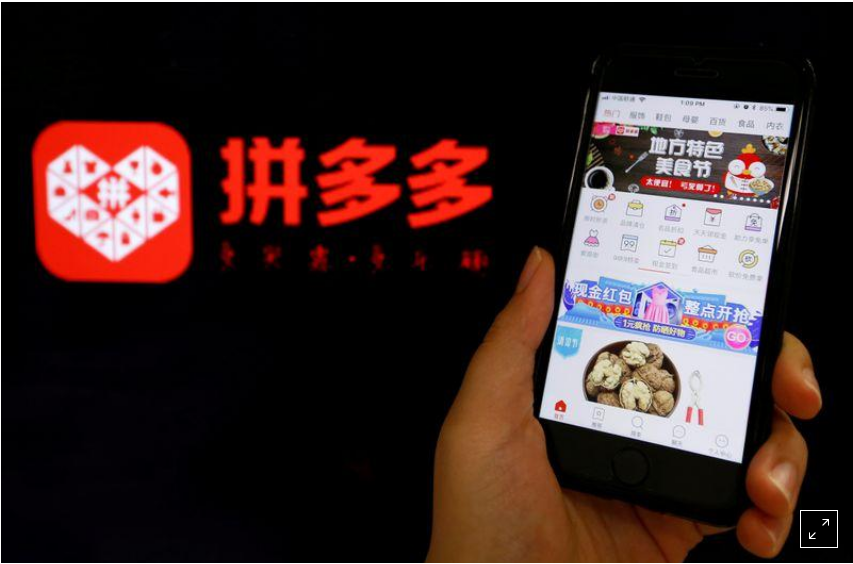
Pinduoduo is now the biggest (as of 2021) E-Commerce platform in China

That result further solidified Pinduoduo’s position as China’s 2nd biggest e-commerce company by a number of daily buyers/users.
The Shanghai-based e-commerce site said the Guangxi Harvest Festival was only one part of its big “618” sale, which is similar to Black Friday with fresh products offered at very advantageous prices. At the event “618”, to be held on June 18, consumers will be able to taste the fresh products of Pinduoduo at a low price.
Consumers in first and second-tier cities are the largest consumer groups of fixed-price agricultural products produced directly by the locality. and the brand goes to the countryside. The formation of obvious convections of commodities has in fact led to the integration of the level of factor from the product level to that of the commodities, thus favoring a more unified internal market “,

Pinduoduo constantly increases the slope of the flows and its cash subsidies. On the basis of this plan, suppliers are actively adapting their procurement behavior.
source
Do you want to sell on PinDuoduo?

We can help you
- Register to pinduoduo
- Develop the offer
- Start to sell
- Promotion on Pinduoduo
- We have a PPT to explain what is pinduoduo
- We can tell you the amount you need to invest to enter (by email) and if your products can be accepted
- You can have a 15min free call with our Team.