Lead generation, 7 keys for success in China

How to generate thousands of prospect every month, and optimise your business process in China?
Cost-Effective Agency
KPI and Results focused. We are the most visible Marketing Agency for China. Not because of huge spending but because of our SMART Strategies. Let us help you with: E-Commerce, Search Engine Optimization, Advertising, Weibo, WeChat, WeChat Store & PR.
In 2024, lead generation in China is based on 8 key principles
- Inbound Marketing
- Content : impact your clients in China
- Efficient Landing page to optimise conversion
- Online Ads : Baidu, Douyin
- Branding & E-Reputation : vital in China
- SEO : Baidu & Alibaba
- WeChat Nuturing
- Douyin ads & Retargetting
Lead generation:Â key sucess in China

Inbound Marketing
Inbound Marketing is a way to promote your company in order to attract new customers to your website and thus, improve your amount of leads. Inbound marketing is understood as a way to bring new customers to you, and not your company looking for its new customers.
Content Marketing: Give added value information
Nowadays in China, having good content is essential. Your content must really be proficient in order to stand out. You must have quality content. Therefore, you have to know what is quality content. This kind of content can either be some viral content, such as photos, videos, graphics, gifs, …
Chinese customers are very demanding. They want good quality content. So you must get some content that will interest them.
If you can bring up some storytelling about your brand or your company, it will always be a plus. Your customers will be more concerned about your brand if there is some emotion behind them.
Very efficient landing page
Having an efficient landing page is important to attract your clients in the B2B world. They just want to do business with you. They must have a good first impression of your company. Therefore, the design must be very clean and tidy, but also professional and smooth. You must be proficient in user experience. You can provide videos, photos, infographics, …

There are many different ways to succeed in building a great landing page. Moreover, the loading of your landing pages must be very quick, otherwise, your clients will run away. There are often problems with the loading time when it comes to visiting a website in China. Landing page experts will help you to get things right, in order to have new incoming leads every day.
Here, Damac website is a very good example of a quality landing page you can ideally get. It is very efficient and attractive.
Online ads, invest and measure
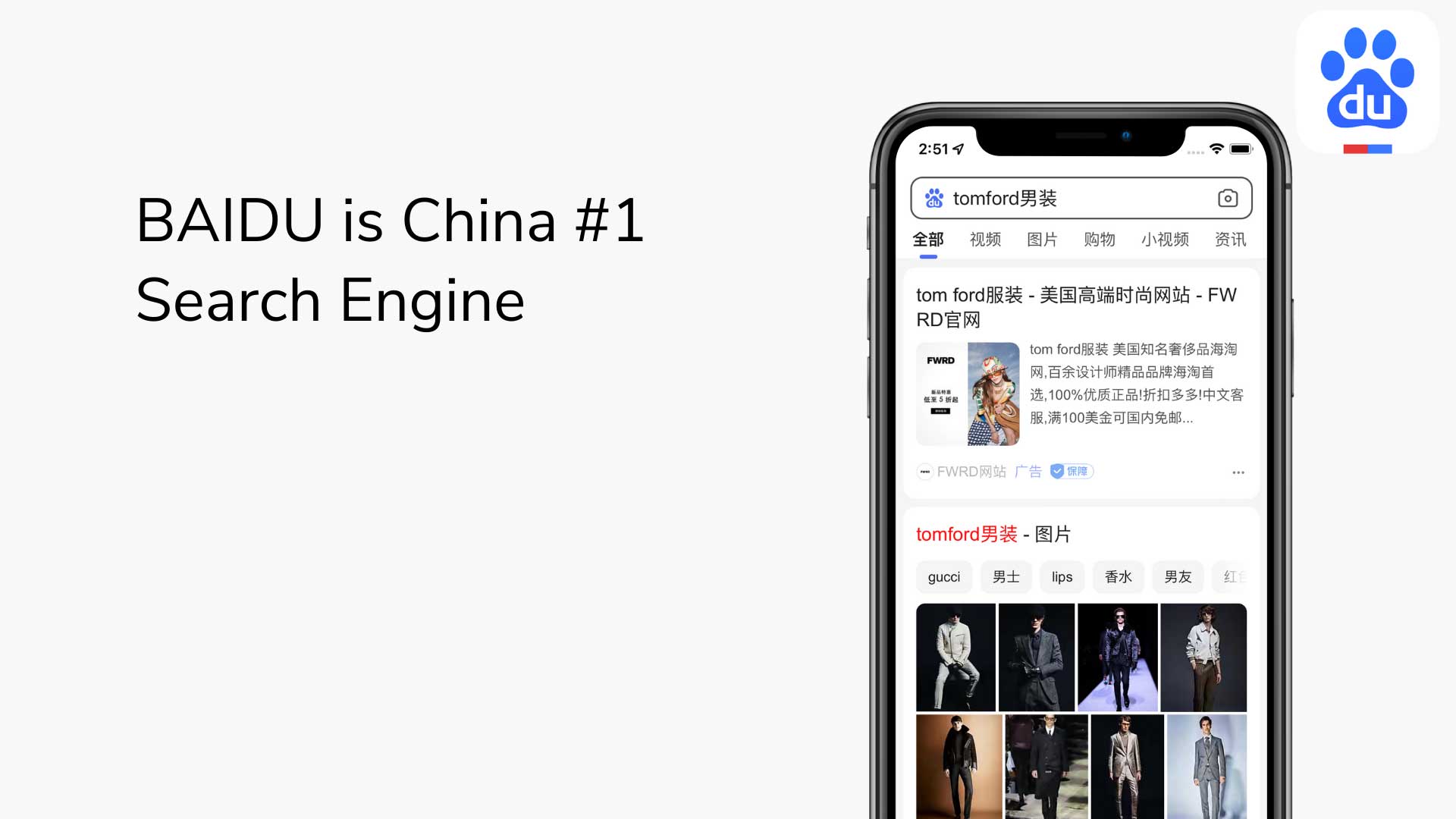
There are many brands available on Baidu. Many of them spend an enormous amount of money in banner ads, but also on the PPC method, which stands for Pay Per Click. These methods will increase the stakes but also reduce the impact of this kind of campaign. Therefore, it is good to use them, but you must know how to handle them: when to start and when to stop. With these methods, you can also benefit from measuring tools to know if you do things right or not. Baidu specialized agencies will help you to control the cost and will make the best banners for your website. Get in touch with them!
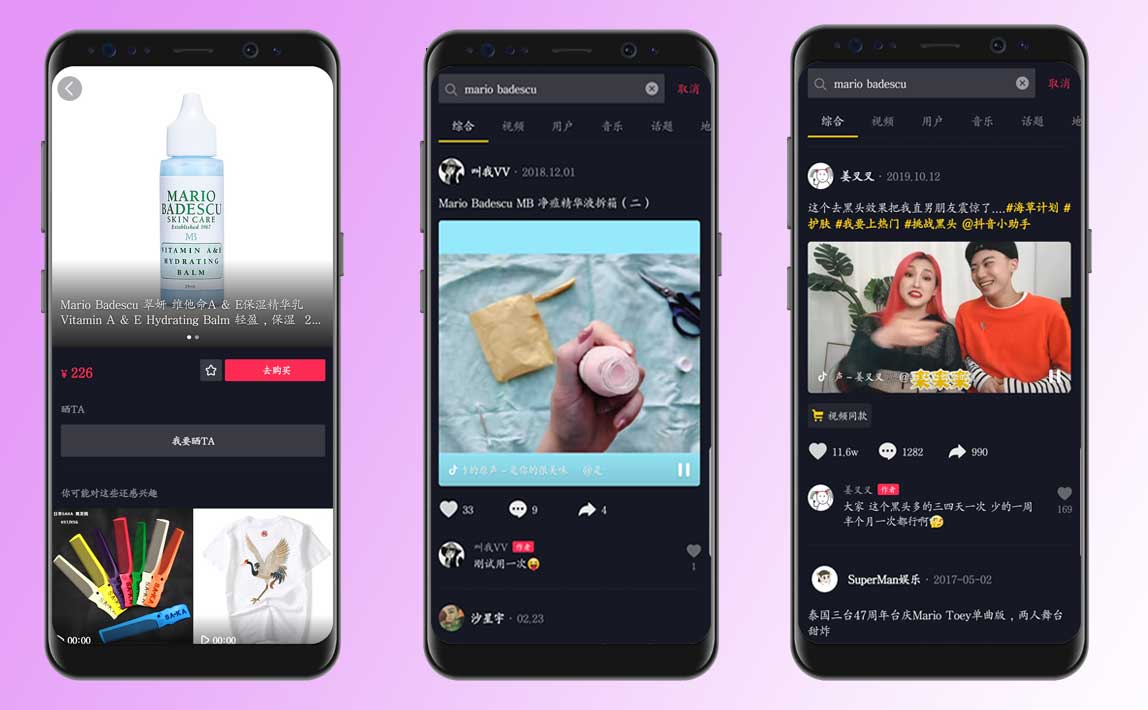
Douyin (Tiktokp) in also a new way to target Clients
Branding will bring you confidence
Branding is very important in terms of lead generation in China. Indeed, it will allow you to build your brand image and reinforce the characteristics of your brand. Then, you will be able to keep your price up (if it is the case) because your products will correspond to a trusted brand, a quality brand. Branding will bring you confidence. L’Occitane is proficient in branding, as they promote the fact they are around since 1976. It is also known that branding is what we call an ROI, Return On Investment. Branding brings you many more leads if you work efficiently on it!
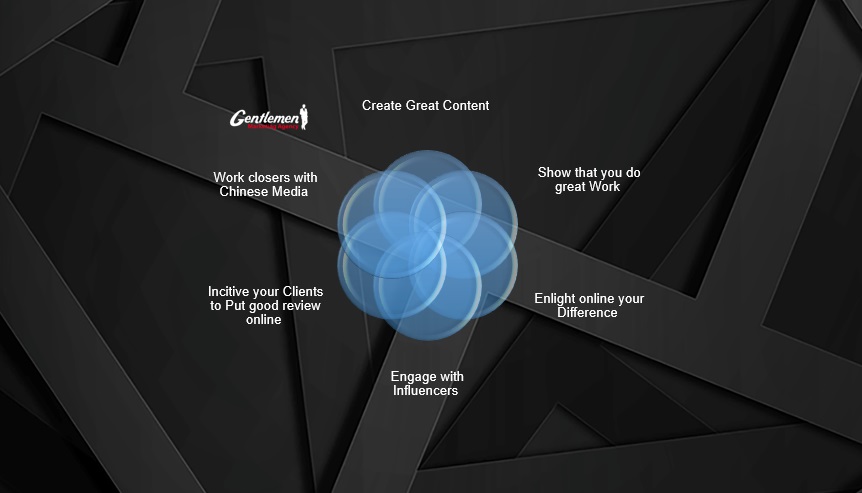
E-REPUTATION IN CHINA IS THE KEY
SEO on Chinese search Engine
Search Engine Optimization is one of the best ways to generate leads. SEO will allow your website to rank at the top of the searches if you do it right. SEO will be proficient especially on Baidu, but to do so, you will have to get your website content right, your articles must be very nicely written, you must get good titles too.

Actually, your main title is one of the most important things about SEO. It must attract your readers. You must work on it to make it great. Also, you have to provide some backlinks referring to some quality information websites. This will increase the trust rank of your website, and then, your readers will trust you. Also, you can choose to create partnerships with other reliable websites, in order to get even more backlinks referring to your websites. Your website must also be hosted in China to have the best loading performance.
SEO done in this way will get your website very trustworthy and reliable. Thus, leads will flow to you!
• How to be an SEO Champion of Baidu?
WeChat Lead Nurturing
Lead nurturing is very important when it comes to B2B. It allows you to keep in touch with your potential clients. These potential clients can often be serious clients, but they don’t have a budget for now for example. Therefore, you need to feed them with some information about your company. In this sense, it is important to use social networks. These networks will enable you to provide some newsletters or to send some interesting articles to them. WeChat is an excellent tool to manage lead nurturing. On the most famous Chinese social network, you can provide some interesting content to your potential customers. WeChat experts can help you to manage your lead nurturing in order for you to never lose any potential customers!
Douyin, a game changer
Douyin, the Chinese equivalent of TikTok, offers potent advertising opportunities, especially in the B2B sector.
- how Douyin ads can be effectively used for B2B businesses?
- How firms can be focused on the concept of retargeting and its key advantages.
Concept of Douyin Ads for B2B with Retargeting:
- Douyin ads for B2B marketing leverage the platform’s vast user base to target industry professionals and decision-makers.
- Retargeting within this context means showing ads to users who have already interacted with your content or visited your website but have not yet converted (e.g., signed up, made an inquiry, or purchased).
- This strategy increases the efficiency of ads by focusing on individuals who have shown interest in your products or services.
Five Key Points of Douyin Retargeting for B2B:
- Highly Targeted Engagement:
- Punchline: “Catch them where they linger – Bring your brand back to their screens!”
- Example: If a user visits a webpage about high-precision manufacturing tools but leaves without contacting sales, retarget them on Douyin with a video ad demonstrating those tools in action.
- Increased Conversion Rates:
- Punchline: “Turn maybes into definites – Keep your brand top of mind!”
- Example: After a user downloads a white paper on supply chain solutions from your website, retarget them with a series of short clips highlighting key benefits and client testimonials.
- Cost-Effective Advertising:
- Punchline: “Spend smart, not hard – Focus your budget on warm leads!”
- Example: Use Douyin’s analytics to track users who have watched more than 75% of your previous ads and retarget them with further detailed information and a strong call to action.
- Enhanced Brand Recall:
- Punchline: “They’ve seen you before; make sure they remember you now!”
- Example: For users who attended your webinar via a Douyin ad, follow up with another ad that summarizes the webinar and offers additional resources, reinforcing brand memory.
- Sequential Messaging:
- Punchline: “Lead them down the funnel – Step by step, closer to conversion!”
- Example: Start with general awareness ads about your innovative logistics software, and for those who interact, follow up with more specific ads about features, demos, and customer success stories.
Is Douyin is a good strategy for B2B in China?
These strategies ensure that your Douyin ads not only reach a broad audience but engage with a specifically interested segment, enhancing the likelihood of converting interest into actionable business outcomes. This targeted approach makes Douyin a valuable platform for B2B marketers looking to optimize their advertising spend and maximize returns.

How much cost Douyin Ads ?
The cost of advertising on Douyin, like many other digital platforms, can vary widely based on several factors such as targeting, ad format, competition, and the specific objectives of the campaign. Here’s a general breakdown of how pricing can range on Douyin:
Factors Influencing Cost:
- Ad Format: Douyin offers various ad formats including brand takeovers, in-feed ads, hashtag challenges, and branded effects. Each format has a different pricing structure.
- Targeting Specificity: The more specifically you target your ads (by demographics, location, interests, etc.), the more it may cost.
- Campaign Duration and Timing: The length of the campaign and specific times during which the ads run can also impact the cost.
- Bid Strategy: Douyin, like many platforms, uses a bidding system for ad placements. Your costs can depend on the competition for your chosen audience and keywords.
Estimated Cost Ranges:
- In-feed Ads: These ads appear in the user’s news feed. The cost typically operates on a Cost Per Mille (CPM) basis, ranging from around 10 RMB to 100 RMB ($1.20 to $12 USD) per thousand views, depending on the level of targeting and competition.
- Brand Takeovers: This format allows brands to take over the app upon opening. These can be significantly more expensive due to their prominent placement and can cost tens of thousands of dollars per day.
- Hashtag Challenges: Starting a hashtag challenge can be a costly endeavor because it involves both creative content and potential influencer partnerships to promote the challenge. Campaigns can range from a few thousand dollars to over $50,000, depending on the scale and promotional efforts involved.
- Branded Effects: Creating custom filters or effects involves both development costs and promotion. These can range from $4,000 to upwards of $30,000 based on the complexity and visibility of the effect.
- Boost video, most effective way to get views, 100rmb for 5000-200,000 views depending of the virality
Getting Precise Quotes:
To get precise pricing for a Douyin ad campaign, it’s best to directly consult with Douyin’s advertising team or a certified advertising partner. They can provide detailed guidance based on your specific marketing goals, budget, and target audience, helping you plan an effective and cost-efficient campaign.
Read more
Know more about us?

WE ARE A LEADING LEAD GENERATION AGENCY IN CHINA
Contact us
- We will send you B2B white book
- We will send you our lead generation case studies
- You can have a call with our lead generation expert
The 2026 market reality: what the data shows
China now has 1.30 billion internet users, with social media reaching 90.3% of the total population as of late 2025. According to CNNIC, China’s internet penetration crossed 80% in 2025, and 71% of short-video and live-stream viewers made a purchase after watching content. For B2B companies entering China, those numbers define the baseline. Lead generation here does not work the way it works in Europe or North America. The platforms are different, the search behavior is different, and the buyer journey is different. You either adapt to that reality or you burn budget.
Why Baidu still matters for B2B lead generation in China
Most foreign companies underestimate Baidu. They assume that because Google dominates globally, Baidu is a second-tier option. That logic does not work in China. Baidu controls the majority of search engine traffic in the country and remains the first stop for B2B buyers researching vendors, certifications, and pricing. When a procurement manager in Shanghai wants to evaluate a foreign software provider, they search on Baidu, not Google.
Baidu’s online marketing revenue was RMB 17.9 billion in Q4 2024 alone. The platform processes hundreds of millions of queries per day, and a significant share of those queries come from business decision-makers. For lead generation, this means two things. First, your company needs to appear on Baidu when buyers search for your category. Second, your landing page needs to be hosted in China, load fast, and pass ICP licensing requirements. A page that loads in 8 seconds kills conversion before a prospect even reads your headline.
Baidu SEO for B2B follows a specific logic. Content depth matters more than content frequency. A detailed 3,000-word page on your industrial product, written in Mandarin, with proper keyword mapping and internal links, will outperform ten thin pages optimized for quantity. Baidu’s algorithm also weights domain trust heavily. New domains take 3 to 6 months to build authority, which is why early investment in Baidu SEO pays compound returns. Companies that wait until they need leads urgently are already behind.
Baidu SEM works faster. Pay-per-click on Baidu can generate qualified inquiries within days of launch. Cost per click varies by industry. In sectors like machinery, logistics, or industrial chemicals, CPCs can run between 20 and 80 RMB per click, with conversion rates from 1% to 4% depending on landing page quality. The math is straightforward: optimize the page, lower the cost per lead. Ignore the page, and you pay twice for the same result.
WeChat, Douyin, and Xiaohongshu: choosing the right channel for your sector
WeChat is used by around 91.8% of China’s internet users, according to Meltwater’s 2025 social media report. That number makes it unavoidable. But WeChat is not a lead acquisition platform in the traditional sense. It is a relationship and nurturing platform. B2B companies use WeChat Official Accounts to publish technical content, case studies, and product updates. Prospects who find you on Baidu will often check your WeChat account before they contact you. If your account is inactive or non-existent, you lose credibility at the moment of highest intent.
Douyin is a different case. The platform had over 750 million active users in 2024, and live-streaming on Douyin generated 4.9 trillion RMB that year. B2B use cases on Douyin are more limited, but they exist. Manufacturing companies in sectors like automation equipment, food processing machinery, and construction materials have used Douyin to show their factory floor, demonstrate product capabilities, and drive inquiries. A German conveyor belt manufacturer that entered China in 2023 ran a Douyin campaign showing their equipment operating in Chinese factories. Within three months, they collected over 400 qualified leads at a cost per lead significantly below their previous trade show spend.
Xiaohongshu is now relevant beyond consumer goods. Decision-makers in sectors like cosmetics ingredients, specialty chemicals, and premium B2B services use the platform to research trends, read peer reviews, and evaluate foreign brands. Xiaohongshu posts appear in Baidu search results, which creates a secondary SEO benefit. If your competitors are not on Xiaohongshu and you are, you pick up visibility that costs very little relative to paid search.
The key principle: do not try to be on every platform at once. Pick the channel where your buyer spends time, and build depth there before spreading to others. A WeChat account with 50 well-written articles is worth more than five platforms each with ten posts.
What changed between 2024 and 2026
Three shifts define the gap between 2024 and 2026 in China lead generation.
First, AI search is now a real factor. Baidu integrated AI answers directly into search results starting in 2023 and accelerated that rollout through 2025. Queries that previously sent users to a list of blue links now return AI-generated summaries. For B2B content, this means that thin pages with no unique data get absorbed into AI answers without attribution. Pages with original research, specific data points, and expert commentary get cited. The standard for content quality rose sharply.
Second, private traffic became the dominant B2B strategy. In 2024, most companies chased public platform reach. By 2026, the leading B2B operators in China focus on building closed communities: WeChat groups, enterprise WeCom channels, and curated prospect lists. The logic is simple. Acquiring a contact once and nurturing them through a private channel is cheaper than re-acquiring them repeatedly on public platforms where ad costs keep rising.
Third, trust signals matter more. China’s B2B buyers in 2026 are more skeptical of foreign vendors than they were in 2020. Geopolitical context has pushed procurement teams to scrutinize supply chain risks. Foreign companies that demonstrate long-term commitment to China, with local staff, local case studies, and Chinese-language content, close deals faster than those operating remotely. Your digital presence is now a proxy for your operational credibility.
Frequently asked questions
How long does it take to generate leads in China through SEO?
For a new domain targeting Baidu, expect 4 to 6 months before organic traffic becomes meaningful. Baidu gives more weight to established domains, so the first months are primarily about building authority through content, backlinks from Chinese directories, and technical optimization. If your domain already has some history in China and you hold an ICP license, that timeline can compress to 2 to 3 months. During the ramp-up period, Baidu SEM can cover the gap. Running paid search in parallel with SEO lets you collect lead data and test which keyword clusters convert best, then use that data to prioritize your organic content calendar. Companies that skip paid search during the SEO build phase often waste months on content that does not match actual buyer intent.
Is LinkedIn useful for B2B lead generation in China?
LinkedIn is accessible in China but penetration is significantly lower than in Western markets. It is most useful for targeting senior executives, people who studied abroad, or procurement contacts in multinational companies operating in China. For reaching domestic Chinese enterprises, state-owned companies, or second and third-tier city buyers, LinkedIn has limited reach. WeChat is the primary professional communication channel for domestic B2B in China, and it operates very differently: cold outreach is harder, relationships are built through introductions and content, and the sales cycle is longer. If your target is foreign-invested enterprises operating in China, LinkedIn can work. If your target is purely domestic Chinese companies, invest that same budget in Baidu or WeChat first.
What is the role of trade shows in China lead generation in 2026?
Trade shows in China are still active and generate qualified contacts in sectors like machinery, electronics, food and beverage, and medical devices. Canton Fair, China International Import Expo, and dozens of sector-specific expos draw genuine procurement buyers. The problem is cost per lead and follow-up quality. Most companies collect business cards at a trade show and then lose momentum because they have no structured digital follow-up system in China. The companies that extract the most value from trade shows in 2026 are those that connect event leads directly into a WeChat-based nurture flow. When a prospect gives you a business card, the next step should be a WeChat friend request, not an email. Email open rates from Chinese B2B contacts are low. WeChat message open rates are above 70%.
How do you qualify leads in the Chinese market?
Qualification in China follows the same BANT logic as elsewhere (budget, authority, need, timeline), but the signals look different. A Chinese buyer who requests a WeChat call is more serious than one who sends a form inquiry. Decision-making in Chinese companies is often top-down: if you are speaking with a middle manager, find out early whether the CEO or general manager is involved. For foreign companies, a key qualification signal is whether the prospect has experience working with foreign vendors before. If they have not, expect a longer education and trust-building phase. Also qualify by geography: buyers in first-tier cities (Beijing, Shanghai, Shenzhen) often move faster and have clearer procurement processes than buyers in smaller cities, though those markets are growing quickly and competition there is lower.
How to move forward
Lead generation in China requires a clear sequence. Start with your search presence: get your ICP license, build a China-hosted landing page, and launch a Baidu advertising campaign to collect initial data. Use that data to inform your Baidu SEO strategy and build content that matches actual buyer intent. Layer in a WeChat presence to capture and nurture prospects who find you through search. If your product is visual or demonstrable, add a Douyin or Xiaohongshu content program on top. Each layer builds on the previous one. Companies that try to do everything at once typically do nothing well. If you want to discuss where your company sits in this sequence and what the right first step looks like for your sector, contact us here.
Marcus Zhan is a China marketing specialist based in Shanghai. Connect with him on LinkedIn to discuss B2B lead generation strategy for China.
Sources: DataReportal Digital 2026: China | CNNIC via Chinese Government 2025 | Meltwater Social Media Statistics China 2025 | Baidu Inc. Form 6-K FY2025 (SEC)
Are you a lead generation companies in china ?
What do you think in China about lead Generation reviews?
I am searching of a B2B lead generation agency in China ?
Hello,
We are a B2B Lead Generation Company, we can help you with Facebook, Google and youtube.
Hi Magic Digital Agency,
you may be a killer on FB google and youtube, in China you will get no results… You know why? Because it is BLOCKED .
have a nice day, and thank you for the comments.