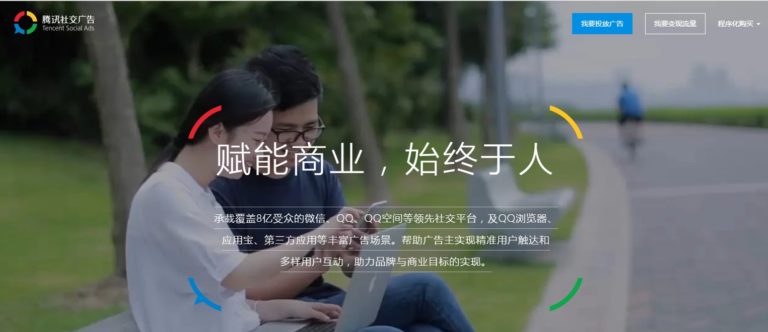
Interested by the Chinese market ? Everything is happening online (in 2023)

If you are interested in the Chinese market in 2026, here is the one thing to understand: almost everything happens online. China had 1.125 billion internet users at the end of 2025, an 80.1% penetration rate, and 1.116 billion of them, 99.4%, are on mobile. Whether you want to enter China, grow sales, get distributors to find you or build B2B, the answer starts on a phone screen. The economy is online, the shopping is online, and now the search is even AI-driven. This guide shows where to put your effort.
Cost-Effective Agency
KPI and Results focused. We are the most visible Marketing Agency for China. Not because of huge spending but because of our SMART Strategies. Let us help you with: E-Commerce, Search Engine Optimization, Advertising, Weibo, WeChat, WeChat Store & PR.
online … online and online.
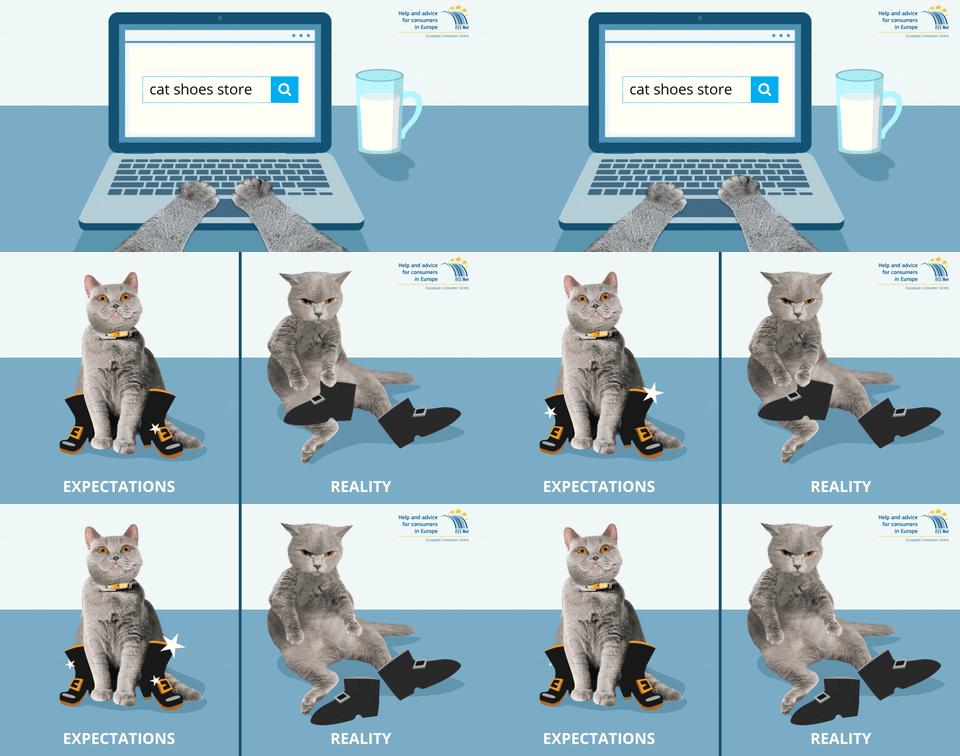
Even cat are using Online in China. lol
China online in 2026: the numbers and what changed
The scale is hard to picture from outside. China ended 2025 with 1.125 billion internet users at 80.1% penetration, and 1.116 billion of them go online on mobile, which is 99.4%. In plain terms: if a Chinese consumer is online, they are almost certainly on a phone. So a slow or desktop-only experience loses you the market before you start.
What changed most recently is how people search and shop. Generative-AI users reached 602 million by December 2025, up 141.7% in one year. Baidu rebuilt its search around AI on 2 July 2025 and now shows an AI-written answer above the normal links, so being found means being the source the AI trusts, not just ranking. On the shopping side, e-commerce keeps pulling everything in. Tmall, the biggest trusted marketplace for brands, has added its own AI shopping assistant to help buyers compare and choose, which makes a clear, well-built flagship store more valuable than ever.
For a startup or niche brand, this is the affordable way in: a clean mobile presence, honest content where people already search, and a trusted store to close the sale. If you are weighing the marketplace route, our guide on what Tmall means for brands explains how it works and what it costs.
The Chinese Internet has its own characteristic
Chinese consumers are very different from Western consumers. The first reaction they will have if they don’t know anything about a brand or a company will be to check on the Internet what is said about it. It isn’t half of them or a majority here, we are talking about 80% of the Chinese. Thus, the tool that Internet has become, especially in China, can not be set aside when it comes to e-reputation or direct sales.
In fact, this taste for everything that is online is so strong that we even talk about the « head down » syndrome to call those people who don’t speak to each other anymore and always have their head down on their phone or computer.
PinduoDuo the new way to sell in China online
Brands can use Pinduoduo to sell products in mainland of China.
There are highlights of requirements they need to meet
- Registration certificate of overseas enterprise;
- Identity certificate of the legal representative of the overseas enterprise;
- Identity certificate of store manager.
- Shipment place is outside mainland China (including Hong Kong, Macao and Taiwan) and domestic cross-border bonded warehouse
- The customs/bonded warehouse registered by the enterprise;
- Record information of the enterprise at The Chinese Customs.
- It operates its own brand or authorized brand registered outside mainland China (including Hong Kong, Macao and Taiwan).
Where does your visitor’s website come from? 75% of them come directly from search engines like Baidu or Google. To have your website indexed on the giant Chinese, Baidu, is good but to have an effective SEO strategy to optimize your visibility is even better!
RED marketing = marketing mode (paid ads, brand positioning, 4Ps…) 10%+ Notes’ quality 45%+ interaction with TA 45%.
- Making high quality and creative notes is the key to attract people to click. Through the production of high-quality and original brand-style unique content, coupled with attractive covers to attract users’ attention, comprehensive related hashtags to enhance exposure, precise keywords to fit the users’ search habits, supplemented by large amounts of comments, likes, collection, greatly improve the success of ‘make TA want to buy’.
- With the help of the celebrities and top KOLs recommendation effect, the brand or product can be exploded in a short period of time by sharing product knowledge, using skills, purchasing links and other actions, so as to create a star and cash-cow product.
- Middle-level KOLs: Deep cultivation in a certain vertical field creates exclusive sense of existence and belonging for people in a specific circle, and forms deep recognition of a certain brand and product in their hearts.
- A large number of KOCs (or even general users) share through a large number of their accounts, continuously form the effect of public opinion and word-of-mouth guidance, increase fans’ attention to the brand and products, and trigger fans’ comments, consultation, purchase and other follow-up behaviours.
- Note ranking optimization
Analysed account weight of different dimensions, published content, published time, user behaviour and other platform algorithm mechanisms, optimized and improved the note ranking when searching keywords, so as to effectively increase accurate traffic. - Soft implant product purchase links and interspersed user recommendations and welfare club (RED’s official e-commerce platform) product recommendations in guide purchase notes to improve product exposure, increase order volume and increase purchase rate.
Case study:
Derma Pella : Cosmetics Brands from Jordania
Price: At present, most of the affordable products within 300 yuan, there is a trend to expand high-end product lines
Place: Online to Tmall, JD, and WeChat mini program as the main selling channels. By September 2020, the number of offline stores has exceeded 20. The new retail territory has covered nearly 90 cities across the country,
Promotion: (The following words only include their strategy in RED) The brand entered RED and attracted 1.702 million view.
Promote by general users and KOCs to increase users’ trust . Derma Pella Choose testimonial to let Chinese consumers try.
Enter “dermapella” in the search box of RED, and more than 10,000 notes will appear.

Among them, most of the notes come from the experience of general users, consumers’ conscience-planting recommendation, and the application of life scenes, which greatly increase users’ trust in the brand and generate resonance
Case study : Perfect Diary
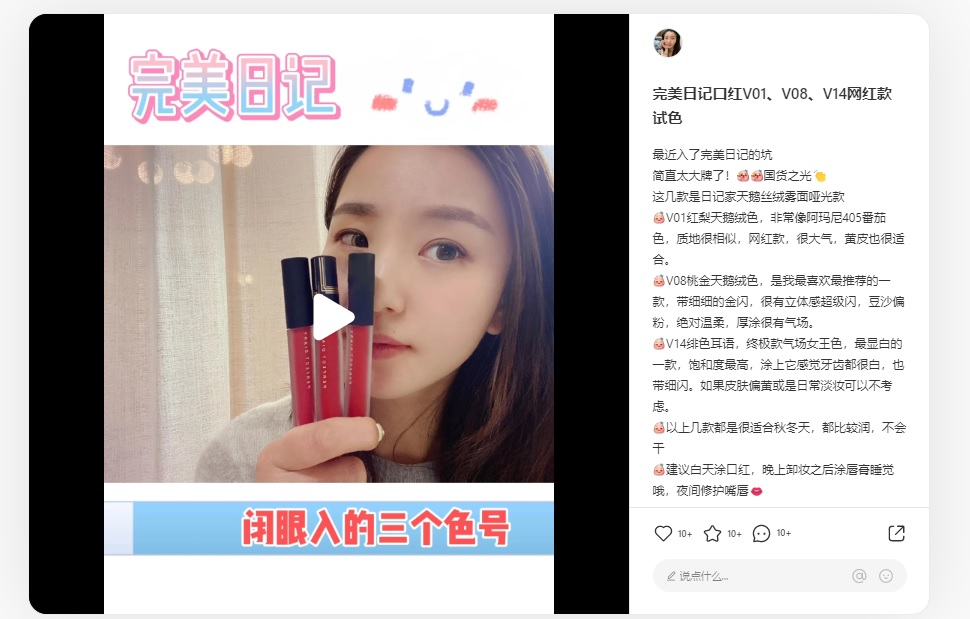
Perfect diary chose RED as the main battlefield of product promotion channel. Since the entry of Perfect Diary into RED, there have been nearly 500 official self-produced notes, attracting nearly 2 million crazy fans. The home page decoration of high appearance level has also become one of the reasons why users fall in love with it.
KOL – Star promotion and rapid growth of brand loyalty
Perfect Diary spent a lot of effort on the product ‘make consumers want to buy’. It invited many top and middle-waist KOLs to write original comparison notes, evaluate, test colours and compare their products, and guide consumers to buy products with their own consumer feelings. This marketing mode makes many consumers on the side-lines become loyal fans of the perfect diary.
Celebrities power, expand brand awareness with massive Budget
The success of Perfect Diary marketing strategy lies in that after it fosters all the basic data and obtains certain trust from users, it invites Lin Yun (young generation Chinese actress), Ouyang Nana (young generation Chinese actress), Angela Chang (middle-age Chinese singer)and other stars to recommend their products to users, resulting in explosive articles. This approach undoubtedly makes perfect diary famous, and many consumers have switched to this domestic beauty product.
WHY BAIDU IS THAT MUCH IMPORTANT ?
Baidu Reputation is SUPER important in China
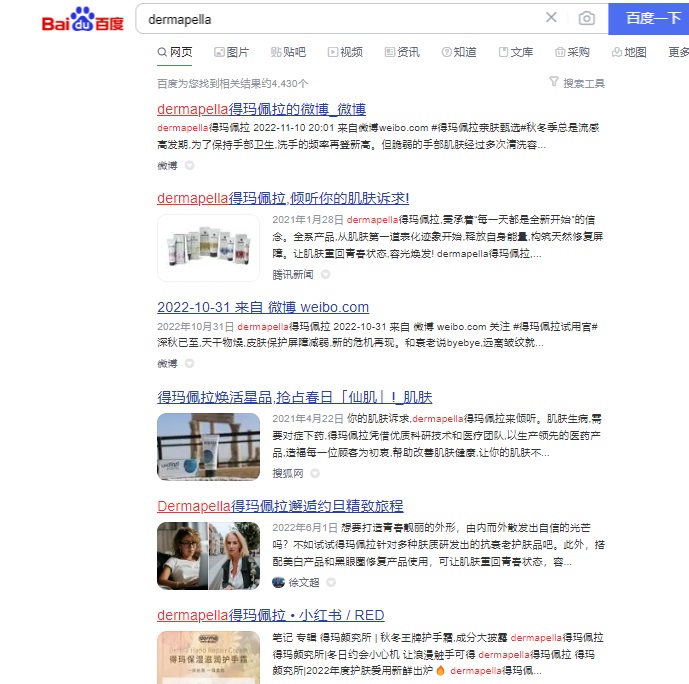
A good SEO allows bringing quality traffic. It means that people that visit your site haven’t been redirected by some ad they clicked on after grocery shopping. Those will be potential clients that already know what they are looking for. Attracted to your site by keywords, they are already interested in the products you are selling. You just have to win them over by offering the price that they are expecting.
In addition, don’t forget that all the search engines are connected.
If you have a good SEO strategy and that your Baidu positioning is on the first or second page then, you will also have a good place on Google or Bing. It is all about keywords. Our agency can help you to have a good place on those search engines and keep it for a long time after the contract is over. To do so, we offer you 2 possibilities: SEO Marketing or PPC (Pay Per Click)
Nevertheless, we will advise you on SEO marketing which is 5 to 6 times less expensive than the PPC. The price difference is caused by the prices stability whatever the situation or the number of clicks.
THE UNIQUE POTENTIAL OF THE CHINESE MARKET
We know the extent of the Chinese market and the impressive number of opportunities that it contains. However, it isn’t easy to establish in it, to build a reputation et more than anything else, to seduce the consumer’s wallet. It is not without mentioning the real challenge for a foreign firm: the language barrier, the culture differences (especially between China and Western countries), the law system differences as well, and of course, the fact that Chinese competitors already know pretty well SEO techniques. To help you to improve your visibility and bring more potential clients faster, you can trust our agency and our expert team in Chinese SEO.
Baidu still holds roughly 47% of China search share today (Statcounter estimate), well ahead of rivals
THE ESSENTIAL NEED FOR COMMUNICATION IN CHINESE
(even in 2023)
Only 1% of the Chinese are able to read enough English to understand and be interested in your site. Moreover, especially when it is about doing business, Chinese prefer naturally ready and listen Mandarin.
It is one of the reasons why your website has to be written in Chinese with simple characters. To enjoy a good place on the ranking, the translation has to be in tune with the Chinese search engine’s criteria and standards.
The services we offer are the best in SEO that you could find in China for foreign firms.
SEOAGENCYCHINA OUR METHOD :
- Analyse the market and the potential client
- Identify the keywords that will suit the best your firm’s website
- Analyse your competition
- Optimize your Website and its pages
- Create quality content
- Maintain your link strategy
- Analyse the result and give you a weekly minutes
Our main goal is to bring quality traffic to your website and give you sales contact. This includes improving your ranking on Baidu, which represents 83% shares of Chinese’s search engine, but also Google.com.hk where you will be able to target white-collar and wealthy customers from Hong Kong. We are certain to be able to bring you the best SEO solutions in China, whether it is on Baidu or on Google.com.hk at very competitive prices, and this is thanks to our comprehension and knowledge of the Chinese Internet’s culture and environment.
If you want to see what we can do for you in terms of services, go here
Further readings :
DO YOU WANT TO DEVELOP YOUR BUSINESS IN CHINA ?
CONTACT US, We can help you
- We are a cost effective agency
- Focus on Results
- No bullshit, just practical advise

The 2026 market reality: what the data shows
China now has 1.30 billion internet users, representing 91.6% of the total population, according to DataReportal’s Digital 2026 China report. Online retail sales reached 15,972 billion yuan in 2025, up 8.6% year-on-year, per the National Bureau of Statistics. Digital consumption now accounts for 46.5% of total resident spending, according to China Internet Watch. For any foreign brand considering this market, the baseline is clear: the Chinese consumer is online, mobile-first, and spending at scale.
Where Chinese consumers actually spend their time online
Understanding the Chinese internet means understanding a closed ecosystem with its own platforms, logic, and rules. Google, Facebook, Instagram, and YouTube do not exist here. The platforms that do exist are large, sophisticated, and deeply integrated into daily life.
WeChat has 1.34 billion monthly active users as of Q2 2025. It is not a messaging app with some extra features. It is where people pay bills, book taxis, read the news, shop from brand stores, and manage their health appointments. For a foreign brand, WeChat is often the first point of sustained contact with a Chinese customer. An official account gives you a content channel. A mini-program gives you a full storefront inside the app. Both matter.
Douyin, the Chinese version of TikTok, has 755 million users and a total GMV of 3.5 trillion yuan in 2024, up 30% year-on-year. Live-streaming commerce accounts for 40% of that figure. A user watches a host demonstrate a product in real time, asks questions in the comment box, and buys within seconds without leaving the app. This is not a niche behavior. It is the default purchase path for millions of consumers in beauty, food, fashion, and electronics.
Xiaohongshu, known internationally as Little Red Book, has 350 million monthly active users and a projected GMV of $20-25 billion in 2025. The platform sits between social media and a search engine. Young urban consumers, particularly women aged 18-35, use it to research products before buying. A brand that appears in organic Xiaohongshu posts builds trust in a way that paid ads rarely achieve. The local term is “grass planting” (种草): a user reads a genuine review, gets convinced, and then goes to buy.
Baidu remains the primary search engine. Foreign platforms like Google are blocked. Any brand that wants to be found when a Chinese consumer types a product category into a search bar must invest in Baidu SEO and Baidu paid search. This is not optional if search visibility matters to your category.
The practical implication: a multi-platform presence is not a luxury. Each platform serves a different moment in the purchase journey. WeChat for retention, Douyin for discovery and impulse buying, Xiaohongshu for research and word of mouth, Baidu for intent-driven search. Ignoring any one of these creates a gap that competitors will fill.
How foreign brands are making it work in practice
The most instructive examples are not the mega-brands with unlimited budgets. They are the mid-size international companies that entered China with a disciplined strategy and adapted to local behavior quickly.
L’Oréal is the clearest large-scale case. The group operates multiple labels across mass-market and premium segments. During China’s 618 shopping festival in 2025, L’Oréal brands ranked among the top sellers on Tmall, JD.com, and Douyin simultaneously. A single Douyin beauty campaign in September 2025 generated CNY 1.2 billion (approximately USD 167 million) in revenue. The engine behind that number was live-streaming: hosts demonstrating products on camera, answering real-time questions, offering time-limited discounts, and converting viewers into buyers within the broadcast window.
What made that work was not just budget. It was local adaptation at every level. Chinese-market product lines with formulas adapted for local skin types. Mandarin-language content created by local teams. Partnerships with Key Opinion Consumers (KOCs) rather than only top-tier celebrities. KOCs are micro-influencers with smaller but highly engaged followings. Their recommendations carry more credibility than a celebrity endorsement because they feel less transactional.
Smaller foreign brands have used Xiaohongshu as an entry point. The strategy is to seed authentic product reviews through KOC partnerships before spending on paid advertising. When Chinese consumers search for a product category on Xiaohongshu, they trust what they see in the top organic posts. A brand that appears there, through real users writing genuine reviews, earns a level of trust that a banner ad cannot buy.
Cross-border e-commerce has also opened a lower-cost entry route. Platforms like Tmall Global allow foreign brands to sell to Chinese consumers without establishing a legal entity in China. The cross-border e-commerce market is expected to reach 3.2 trillion yuan ($450 billion) by 2026. The trade-off is less control over the customer relationship and limited ability to run certain types of promotions that domestic stores can offer.
The consistent pattern across successful foreign brand entries is this: research the specific platform behaviors in your category, start with one or two channels rather than trying to be everywhere at once, use local partners who understand content and compliance, and measure what actually drives sales rather than vanity metrics like follower counts.
What changed between 2024 and 2026
The Chinese consumer has shifted. The post-pandemic spending surge has normalized into something more selective. The phrase that describes it accurately is “rational consumption”: Chinese buyers in 2025-2026 are willing to pay a premium, but only when they can verify that the quality justifies the price. Brand name alone no longer converts. Reviews, livestream demonstrations, and peer recommendations are now the primary trust signals.
On the regulatory side, the pace of change has been significant. China introduced cross-border personal information transfer certification requirements effective January 1, 2026. Foreign brands that collect any data from Chinese users, including through e-commerce stores or WeChat mini-programs, now need to meet specific certification thresholds. Tax reporting requirements on e-commerce platforms tightened in 2025, with platforms required to collect and report seller data to tax authorities. Any foreign brand operating on Chinese platforms needs legal and compliance advice specific to the current rules, not rules from two years ago.
Douyin’s share of e-commerce GMV grew substantially. In 2023, Douyin’s live commerce was a fast-growing but secondary channel. By 2025, it holds a 47% share of live commerce GMV, ahead of Kuaishou (27%) and Taobao Live (23%). Brands that were slow to invest in Douyin content and live-streaming operations have lost ground that is hard to recover.
China’s 2026 Trademark Law amendment also changed the IP landscape. It introduces stricter evidence-based scrutiny across trademark registration and disputes. Foreign brands that have not registered their trademarks in China, in Chinese characters as well as Latin script, face real risk of trademark squatting and counterfeit complications.
Frequently asked questions
Do I need a Chinese entity to sell online in China?
No, not immediately. Cross-border e-commerce platforms like Tmall Global and JD Worldwide allow foreign brands to sell to Chinese consumers while operating from their home country. Products ship from overseas or from bonded warehouses in China’s free trade zones. This route avoids the cost and time of setting up a Wholly Foreign-Owned Enterprise (WFOE) and is a practical starting point for brands testing demand. The trade-off is meaningful: you have less control over pricing, promotions, and the post-sale customer relationship compared to a domestic store. If your sales volume grows past the 1 million yuan annual threshold, China’s 2025 e-commerce regulations also require customs registration. For brands planning a serious long-term presence, the cross-border route is an entry point, not a permanent solution.
Which platform should a foreign brand prioritize first in China?
It depends on the product category and target audience. For beauty, skincare, and lifestyle brands targeting urban women aged 20-35, Xiaohongshu is the strongest starting point because purchase decisions in those categories begin with research there. For food, consumer electronics, and fashion with a younger demographic, Douyin’s live-streaming commerce delivers faster results at scale. For B2B or professional services, Baidu search and WeChat are the primary channels. No single platform dominates every category. The most efficient approach is to identify where your specific target consumer already spends time and start there before expanding. Trying to build a presence on five platforms simultaneously with limited resources usually produces weak results on all of them.
How important is Chinese-language content for reaching consumers in China?
It is not important. It is required. With 1.30 billion internet users and platforms that are entirely in Mandarin, content in English is effectively invisible to the vast majority of Chinese consumers. This goes beyond translation. Direct translation of English marketing copy frequently fails because the cultural references, tone, and messaging logic do not transfer. Local content creation, written by people who understand how Chinese consumers talk about products in a given category, consistently outperforms translated content. Platform algorithms on Douyin, Xiaohongshu, and WeChat also favor content that matches local user behavior patterns. A post written and formatted for a Chinese audience gets distributed to more users than one that reads like a translation. Budget for proper localization from day one.
Is the Chinese market still worth entering for foreign brands in 2026?
The data says yes, but the conditions have changed. China’s online retail market is $3.3 trillion in 2025 and growing. The internet penetration rate of 91.6% means the addressable audience is nearly the entire population. At the same time, competition is more intense than it was in 2018 or 2019. Domestic Chinese brands have improved in quality and marketing sophistication. Consumers are more discerning. Entry costs are higher. The brands that succeed now are those that do the research first: understand the specific consumer segment, identify the right platforms for that segment, comply with current regulations from the start, and invest in local content quality. The market is large enough that even a focused niche entry can be commercially significant. The era of assuming that “China” is one market where any foreign brand can win just by showing up is over.
How to move forward
Start with research, not spend. Before buying ads or opening a store, map where your specific consumer segment is active in China and what content they respond to. The platform mix for a premium skincare brand is different from the one for an industrial equipment supplier.
For brands that want search visibility, Baidu is the foundation. A China SEO strategy and Baidu advertising are the entry points for intent-driven traffic. For social commerce, the priority channels are WeChat, Douyin, and Xiaohongshu. For sales infrastructure, Tmall and Taobao store management or a broader e-commerce strategy determines how efficiently you convert traffic into revenue. Distribution through local partners is another route: a reliable Chinese distributor can accelerate market access without the overhead of a full China operation.
The brands that get traction in China are the ones that treat it as a separate market requiring separate expertise, not a version of their existing strategy with Chinese subtitles. If you want to assess where your brand stands and what a realistic entry or growth plan looks like, get in touch here.
Marcus Zhan is a China marketing specialist based in Shanghai. He covers digital marketing, consumer trends, and brand strategy for the Chinese market. Connect with him on LinkedIn for China market insights.
Sources: DataReportal, Digital 2026: China | National Bureau of Statistics China, Retail Sales December 2025 | China Internet Watch, Digital Economy 2025 | Up2China, Cross-Border E-Commerce 2025-2026 | Hub of China, Consumer Trends 2025-2026