
Education in China: SME Guide and FAQ (19 Articles, 2026)

If you want to know how to recruit Chinese students or sell education in China, start with one fact: the family decides, and it decides in Chinese. Parents and students compare schools on Baidu, WeChat and Xiaohongshu long before they email you. They weigh cost, safety and career outcomes. A school, course or edtech product that is visible and trusted on those apps gets the shortlist. One that only speaks English does not.
The market has also changed shape. In July 2021 the double reduction rules stopped new for-profit tutoring in core school subjects for children in compulsory education. Money moved to adult English, enrichment, sports, hobbies and study abroad. Study abroad itself is shifting: the United States slipped to third place in the 2026 New Oriental survey, behind the UK and Hong Kong, while family budgets hit a 12-year high.
I run a small team in Shanghai, and we work with schools, tutors and training businesses that have small budgets and no room for waste. This guide pulls together the 20 articles we have written on the subject, grouped by the question you are most likely asking. Each entry tells you what the article gives you and who it helps, with one line taken straight from it.
Read the numbers first, then jump to your section. The FAQ at the end answers the questions schools and founders ask us most often.
Jon Wang founded SEO Agency China, a small team in Shanghai that markets foreign businesses in China on tight budgets. He has helped schools, tutors and training brands reach Chinese parents and students on Baidu, WeChat and Xiaohongshu.
What this guide covers
- Why do Chinese families send children abroad, and where do they go now?
- How do universities and colleges recruit Chinese students?
- How do international schools and kindergartens fill seats in China?
- What can tutors and edtech companies still sell after the double reduction rules?
- Which apps do Chinese parents use to choose a school or a course?
- Is there a market for training, sports and hobby courses?
- FAQ
Education in China: numbers to know in 2026
| Fact | Source |
|---|---|
| July 2021: the double reduction opinion stops approval of new off-campus tutoring institutions in core subjects for compulsory-education pupils, forces existing ones to register as non-profit and bans them from listing or raising capital. | Gov.cn (Xinhua), 24 July 2021 |
| 265,919 students from China studied in the United States in 2024/25, down 4% on the year before. China is now the second source country behind India. | IIE Open Doors 2025 |
| In the 2026 New Oriental survey of 6,904 students and parents, the UK ranks first for the seventh year, Hong Kong second for the first time in 12 years, and the US falls to third. | China Daily, March 2026 |
| The average study-abroad budget reached 605,000 yuan (about US$87,600) in 2026, and undergraduates make up 63% of those planning to go, the highest share in 12 years. | Caixin Global, March 2026 |
| China had 231,900 kindergartens in 2025, 21,400 fewer than in 2024, and 32.26 million children in preschool, down 3.58 million in one year. | Beijing News, Ministry of Education 2025 bulletin |
| Shanghai's public night school opened its autumn 2025 term with 945,800 people online at once; 143 courses filled in one minute, for 2,300 courses and about 46,000 places. | The Paper, August 2025 |
Six questions organise the guide. If you recruit for a university, start with the first two sections. If you run a school or a kindergarten, go to the third. Tutors and edtech founders should read the fourth, which deals with the 2021 rules. The last two cover the apps parents use and the training businesses that sit outside the school system. Every title links to the full article. Each summary is short on purpose: it tells you whether the article is worth your time before you click. Where an article carries a figure we could not confirm, the summary says so, and the numbers table above only lists data we checked on the source page.
Why do Chinese families send children abroad, and where do they go now?
The reasons have not changed much: escape the gaokao, a recognised degree, a better job, a calmer school life. The destinations have. Families now weigh cost and safety harder, so Hong Kong, Singapore, Japan and Southeast Asia gain while the US loses ground. Start here if you need to explain your destination to a Chinese parent. A school that explains why its city is safe, affordable and good for a career speaks to the real worry behind the application.
Trend: Chinese are sending their kids to study abroad

Parents tell you why they spend so much on a foreign education: gaokao pressure, hukou limits, prestige and return on investment. You also get the search phrases families type, the KOL types they trust and the rise of Asian destinations. Useful for admissions teams writing their first China content plan.
More students attend overseas boarding schools (e.g., UK private schools) to boost university admission chances, reflecting a "long-game" strategy .
Read the full article: Trend: Chinese are sending their kids to study abroad
Chinese Students Abroad: Key Drivers of Choosing Overseas Universities


Eight motives behind the decision to study overseas, from network prestige to diploma recognition back home, each with a short example. University marketers can turn the list into the arguments their Chinese page needs. Read it with the 2026 note on the shift from the US toward Asia and Europe.
Without recognition, it can be difficult to get hired in China even with an excellent academic record.
Read the full article: Chinese Students Abroad: Key Drivers of Choosing Overseas Universities
Wealthy Chinese families leaving China for International Schools offering Singapore curriculum in Thailand

A clear case of the new mobility: wealthy and middle-class families moving children to Thailand for a Singapore curriculum, at a lower price than Europe. The piece adds 2025 figures on Chinese pupils in Thailand and a translated Zhihu answer from a parent. Good reading for schools in Southeast Asia.
We do not want our child stuck in the exam pressure back home, but we cannot afford schools in Europe or the United States.
Read the full article: Wealthy Chinese families leaving China for International Schools offering Singapore curriculum in Thailand
How do universities and colleges recruit Chinese students?
Recruitment used to mean one agent and a fair in Beijing. Now the research happens on Chinese apps, weeks before any contact, and both the student and the parent need answers. These four guides cover the channels, the content and the reply speed that decide whether a family applies. None of this needs a large budget. It needs Chinese content that answers the questions families actually ask, and someone who replies on WeChat within hours, not days.
Education Marketing : How to attract Chinese students


The longest guide we have on student recruitment. It explains where Chinese students now go, why cost and safety drive the choice, and how Baidu search, paid ads and Xiaohongshu fit together. Admissions officers who are starting from zero in China get a full channel plan here. Expect a long but practical read.
And here is the part many schools miss: students and parents now research on Xiaohongshu (RED) before they ever fill in a form.
Read the full article: Education Marketing : How to attract Chinese students
How to attract Chinese students to your university?


Short and blunt, written for universities whose China plan is one agent and a brochure. Four moves to recruit in 2026, a summary table, and a FAQ on agents, platforms and timing. The New Oriental 2026 survey results are folded in, so the destination advice is current. Ten minutes, and you know what to fix.
If your university is invisible or only in English there, you are off the list before the first email.
Read the full article: How to attract Chinese students to your university?
China Oversea education: Strategies for marketers


Eight trends in overseas education marketing and the tactics that follow from them: Mandarin content, webinars, agent networks, student stories, parent-focused answers and Douyin live streams. Marketing teams at colleges and language schools can lift whole sections into a brief. Check the opening statistics against official data before quoting them.
If your institution is not visible on Chinese platforms, you do not exist for this audience.
Read the full article: China Oversea education: Strategies for marketers
How Education Businesses Win Chinese Students Online


Why an education purchase in China is a high-stakes family decision, and what that means for your marketing: proof, legitimacy, peer reviews and clear answers in Chinese. Smaller providers learn how to compete with big names by being specific. A quick read before you rewrite your Chinese landing page. It answers the parent-or-student question too.
The buyer is also often two people: the parent who pays and worries, and the student who will actually attend.
Read the full article: How Education Businesses Win Chinese Students Online
How do international schools and kindergartens fill seats in China?
A school sells to an anxious parent who reads every review. Open days alone do not fill seats; follow-up on WeChat does. The preschool segment adds a twist: births are falling and kindergartens are closing, so only well-placed, well-run schools grow. These four pieces cover the parent, the funnel and two school models. Expect parents to ask the same questions three times, through three channels, before they visit. Plan the answers once and use them everywhere.
How to Market an International School to Chinese Parents

What actually moves a Chinese parent to enrol: graduate outcomes, real teaching quality and the voices of other parents, not glossy slogans. It also shows where parents research a school and how a small school wins by owning one strength. Written for heads of admissions and school marketers. Four short sections, no filler.
Parents discuss schools in WeChat groups, read experiences on Xiaohongshu , and then check the school carefully on Baidu before contacting it.
Read the full article: How to Market an International School to Chinese Parents
How International Schools Actually Fill Seats in China

Recruitment treated as a funnel: get found, capture the enquiry, then nurture the family on WeChat until they sign. The section on agents explains why a school should own its pipeline. Helpful for schools that fill open days but still have empty classrooms. Good to share with your enrolment team.
Agents can bring families, but if they are your only channel you are renting your enrolment pipeline and paying for every student.
Read the full article: How International Schools Actually Fill Seats in China
Wellington College China opens its third international school


A 2018 news piece on Wellington College opening its Hangzhou campus after Tianjin and Shanghai. It shows how a British boarding brand expanded city by city and what facilities and curricula it put forward. Read it as a historical benchmark for foreign school brands planning a China campus. Note that details date from 2018.
This will be Wellington College China’s third international school after Tianjin and Shanghai and the thirteenth new member of the Wellington College family worldwide.
Read the full article: Wellington College China opens its third international school
Kindergartens in China : Opportunities for Education Businesses

Business models for foreign education brands in early childhood: curriculum licensing, teacher training, co-branded kindergartens, enrichment modules and parent apps. It lists the cities and districts where demand sits and the mistakes to avoid. Pair it with the 2025 closure figures above before you invest. Founders of curriculum brands should read it twice.
The culture of pooling together family resources for their children’s educational development remains prevalent.
Read the full article: Kindergartens in China : Opportunities for Education Businesses
What can tutors and edtech companies still sell after the double reduction rules?
The 2021 rules hit core-subject tutoring for school-age children, not all learning. Adult English, exam preparation for study abroad, enrichment and school-side technology stayed open. These three articles show where demand moved and how a small player builds a business that stays inside the rules. If your product helps teachers, adults or families outside core-subject tutoring, the door is still open, and competition from the old giants is weaker than it was.
How to Start an online Tutoring Business in China?

A practical plan for an online tutoring start-up after the crackdown: pick a niche, localise, partner, and get found on WeChat and Xiaohongshu. It covers how TAL and VIPKid pivoted and what that tells a newcomer. Useful for foreign teachers and small language schools. The checklist works for any small education start-up.
The 2021 double reduction rules wiped out most academic tutoring, but demand did not vanish, it moved.
Read the full article: How to Start an online Tutoring Business in China?
The #1 English Tutoring Market : China

Where English learning money sits now: working adults, professional English and AI speaking apps rather than school exam prep. You get a segment table, a note on Liulishuo and a translated Zhihu thread on how learners practise speaking. Read it before you price an English product for China.
The money is now in adult, professional and enrichment English, not school exam prep.
Read the full article: The #1 English Tutoring Market : China
Edtech In China: A Very Lucrative Market


An overview of Chinese edtech: AI-led personalised learning, cloud platforms, smart classroom hardware, policy and the main local players. It suggests business models that stay compliant after 2021. Founders of edtech start-ups get the big picture; verify the market-size figures before you put them in a pitch deck. Policy notes are the strongest part.
But many startups fail: they overspend on ads, ignore compliance, or misalign with policy.
Read the full article: Edtech In China: A Very Lucrative Market
Which apps do Chinese parents use to choose a school or a course?
Parents scroll Douyin for short lessons, read Xiaohongshu notes from other mothers, check Baidu, and talk in WeChat groups. Each app plays a different role in the decision. These two articles cover the content that works on each one and the mistakes that cost education brands enquiries. Treat them as one journey: a parent sees a clip, reads reviews, checks the school name, then asks a question. Missing one step breaks the chain.
Cracking the Education in China with Douyin & RED


How education firms reach parents on Douyin and Xiaohongshu: short teaching clips, live classes, parent testimonials and education KOLs. The bonus list of five mistakes, from zero ad budget to no free trial, is worth printing. Written for language schools, tutors and enrichment centres. Light tone, concrete ideas.
If they don’t see your brand online or in prominent ads, they assume you’re not credible.
Read the full article: Cracking the Education in China with Douyin & RED
The lucrative children market in China: Data, Trends, Solution
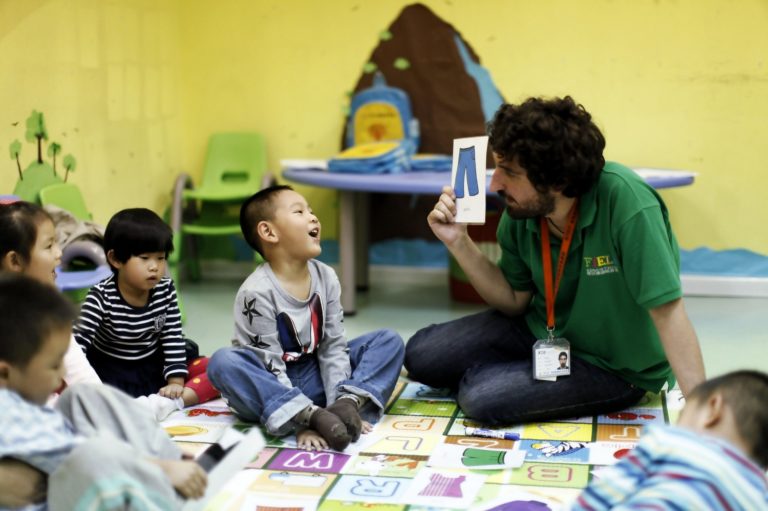

Parents are the buyers behind every education product, so this market study of children's spending in China gives useful context: smart learning devices, extracurricular classes, the trust gap after past safety scandals and the weight of Xiaohongshu reviews. Brands selling to families with young children will find the buyer profile here.
Brands that display CE, FDA, or GB-standard certifications visibly in their listing content convert better on Taobao and Tmall.
Read the full article: The lucrative children market in China: Data, Trends, Solution
Is there a market for training, sports and hobby courses?
Outside the school system, Chinese adults and children pay for skills: cooking, football, marketing, music. Demand is visible, as the Shanghai night school rush shows, and competition at the premium end is thin. These three cases cover a cooking school, football academies and a platform that sells training to marketers. These businesses sell like a restaurant and convert like a course, so reviews and visual content matter as much as the programme itself.
Culinary Training in China: How to Launch a Cooking School or Course


How a foreign chef or cooking school can launch in China: four business models, how students find a course on Xiaohongshu, Douyin and Dianping, and a worked example of a pastry chef filling classes from zero. Practical for anyone selling hobby or vocational training to urban Chinese adults.
Cheap public classes are not your competitor at the premium end, but they prove the appetite, and they leave a lot of people without a seat.
Read the full article: Culinary Training in China: How to Launch a Cooking School or Course
The Fast development of football schools in China


Why football schools multiplied in China after the 2015 reform plan, how the Ministry of Education pushed campus football and how private academies market themselves. Club partnerships, scholarships and WeChat or Douyin content all feature. Sports academies and foreign clubs looking at youth training should start here. Parents' motives are explained well.
Parents see football as a viable path for their children, not only for potential careers but also for physical fitness and character development.
Read the full article: The Fast development of football schools in China
Little Red Book has launched "Red Marketing Academy"
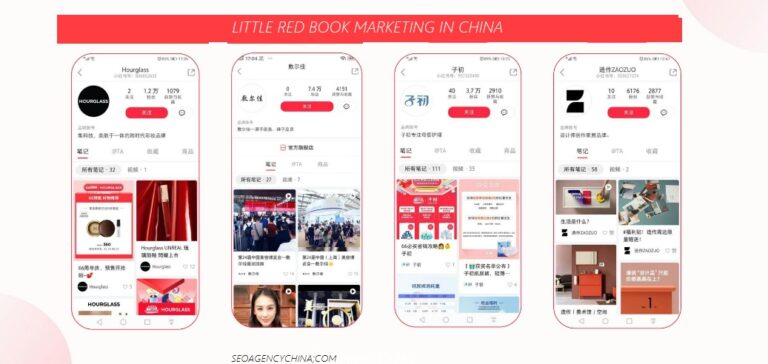

Xiaohongshu built its own school to train brands and marketers, with certified courses by industry and skill level. The case shows how a platform turns training into a product, and it doubles as a primer on how RED search works. Training providers and marketers who sell on RED will both learn from it.
The academy is RED telling the market: stop guessing, here is how the system actually works, and here is a certificate to prove you learned it.
Read the full article: Little Red Book has launched "Red Marketing Academy"
Education in China: frequently asked questions
Are Chinese students still going abroad in 2026?
Yes, in large numbers, but they spread out more. Open Doors counted 265,919 Chinese students in the US in 2024/25, down 4% on the year. The 2026 New Oriental survey ranks the UK first, Hong Kong second and the US third, with an average budget of 605,000 yuan. Families still want a foreign degree. They are just more careful about cost, safety and visas, and they compare several countries at once.
How do I recruit Chinese students without relying only on agents?
Build your own presence where families research. That means a Chinese page that ranks on Baidu, a WeChat official account that answers fast, and honest student stories on Xiaohongshu. Agents still help with paperwork and trust, but a direct channel lowers your cost per student over time and keeps the pipeline yours. Our guide on how to attract Chinese students to your university lays out the four first moves.
Why do Chinese students choose to study abroad?
The common reasons are avoiding the gaokao, getting a degree employers respect, improving English, gaining international experience and, for some, staying abroad to work. Parents also see a foreign education as a long-term investment in status and income. In 2026 the decision is more cost-driven than before, so value for money and job outcomes now sit near the top of the list next to university rankings. For your marketing, that means leading with jobs, safety and total cost, not only with your ranking.
What is the double reduction policy?
It is a July 2021 policy from the General Offices of the CPC Central Committee and the State Council. It cut homework for pupils in compulsory education and stopped approvals of new off-campus tutoring institutions in core school subjects. Existing ones had to register as non-profit, could not list or raise capital, and foreign capital cannot control them. Adult learning, non-academic enrichment and study-abroad preparation were not banned in the same way.
Can a foreign company still teach English to Chinese learners online?
Yes, if you pick the right segment. Core-subject tutoring for school-age children is closed to for-profit players, but adult English, business English, speaking practice and preparation for exams abroad remain open. Most of the growth now comes from working adults who want to speak, not pass a school test. Check your licence and payment set-up with a local partner, then market where learners look, on WeChat and Xiaohongshu. See the English tutoring market in China.
Which platforms do Chinese parents use to choose a school?
Four do most of the work. Baidu is where they check that a school is real and reputable. Xiaohongshu is where they read other parents’ and students’ experiences. Douyin brings discovery through short videos and live campus tours. WeChat is where conversations happen, in parent groups and through a school’s official account. A school needs a consistent presence on all four, in Chinese, with the same facts everywhere. If the facts differ from one app to another, parents notice, and trust drops.
What do Chinese parents care about most when choosing a school?
Outcomes first: where graduates go and what jobs they get. Then safety, cost and the school’s reputation among other parents. They trust peer reviews more than brochures, so real testimonials and visible results weigh more than campus photos. They also expect fast answers in Chinese. Our article on marketing an international school to Chinese parents goes through what they look for.
Is the Chinese kindergarten market still worth entering?
Only with care. The Ministry of Education counted 231,900 kindergartens in 2025, 21,400 fewer than a year earlier, and preschool enrolment fell by 3.58 million children. Demand is shrinking overall, but premium and bilingual schools in strong districts still fill. Licensing a curriculum, training teachers or selling enrichment modules carries less risk than opening your own campus. Start with demand data for the exact district.
Can a small school or training company compete with famous names?
Yes. Chinese families buy trust and fit, not size. A small provider with a clear specialty, real student results and a findable, credible presence in Chinese can beat a bigger brand that only speaks English. Pick one subject, age group or outcome, prove it with reviews and stories, and answer enquiries fast on WeChat. Specific beats generic in this market. Families often feel safer with a provider that clearly knows its niche than with a big name that treats them as one more number.
How long does it take to get enquiries from Chinese students?
Paid campaigns on Baidu or Douyin can bring enquiries within a few weeks. Reputation on Xiaohongshu and organic search on Baidu take a full recruitment cycle, often six to twelve months. Start before the application season, not during it. Families research for months, and the school they find and trust early tends to win the application. Keep your WeChat account active all year, so families who found you early still hear from you when they are ready to apply.
Do Chinese adults pay for hobby and skills courses?
Yes, and demand is visible. When Shanghai’s public night school opened its autumn 2025 term, 945,800 people were online at once and 143 courses filled in one minute. Cooking, baking, music, sport and languages all sell, mostly to urban adults who see a new skill as a hobby and a mark of taste. A foreign teacher wins at the premium end with a clear story and good reviews. See how to launch a cooking school in China.
Can foreign investors own a tutoring business in China?
Not in core-subject tutoring for compulsory-education pupils. The 2021 rules bar foreign capital from controlling or holding stakes in those institutions, including through mergers, franchising or VIE structures. Other parts of education, such as some vocational training, adult learning and edtech tools sold to schools, follow different rules. Get local legal advice on your exact activity before you set up an entity.
Working with us on education marketing in China
We help universities, international schools, language schools and training businesses get found and trusted by Chinese families on Baidu, WeChat, Xiaohongshu and Douyin. We work in Chinese, with small budgets, and we measure enquiries and enrolments, not likes. See our digital marketing service in China, then tell us about your school or course through our contact page.
Last updated: October 2026. This guide is reviewed when new articles are published on the topic.