Do SMS Marketing work in China ?
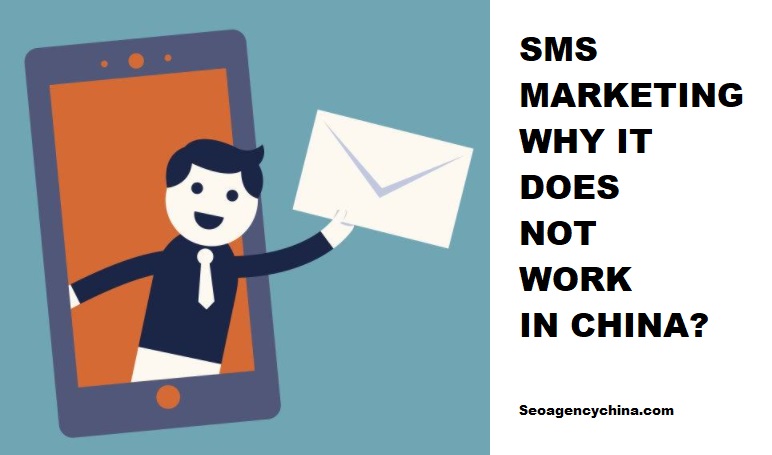
No in 2021 SMS Marketing do not work in China because Chinese do not read their Short Messages on Phone.
Cost-Effective Agency
KPI and Results focused. We are the most visible Marketing Agency for China. Not because of huge spending but because of our SMART Strategies. Let us help you with: E-Commerce, Search Engine Optimization, Advertising, Weibo, WeChat, WeChat Store & PR.

- Chinese are spammed by SMS
- Most of them are cheater or advertising.
- Nobody read short messages in China
If you need an effective Marketing Campaign = WeChat Marketing
Because Chinese people read wechat EVERYDAYs
Read more
General Guidelines for SMS in China
China has more than 65% state-owned SMS networks.
Marketing Cloud encountered blocked and filtering messages when trying to run SMS campaigns using our standard aggregator partners. Prior attempts to run SMS use case via existing partners were stopped without notice due to filtering by China’s Great Firewall and the SMS providers.
Still want to do SMS marketing in China even it does not work?
Contac us to understand your alternative to SMS Marketing
EMAIL US
SMS marketing in China useful information
These messages can be filtered out and there is no technical or legal recourse that can solve the problem. Marketing Cloud can only approve content for their networks that is approved by the People’s Republic of China (PRC). Marketing Cloud can acquire a Chinese code to send, but we do not recommend this strategy.
There are approximately 900 million smartphones owners in China
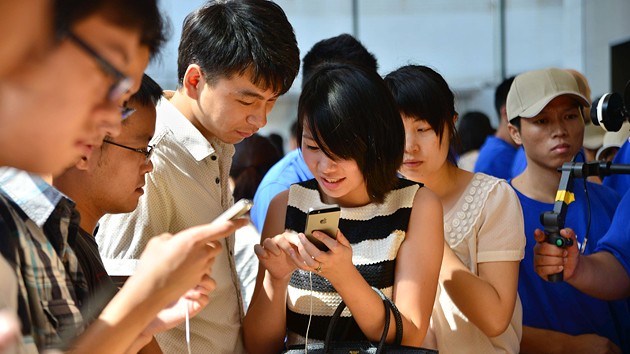
Smartphones have changed the way Chinese consumers purchase goods, just as they did in the developed world. Mobile marketing strategies have been adopted by the world of commerce to mimic those used in Europe and the US. Will the same strategies work in China as in the West? Or does mobile marketing need to be adapted?
Let’s start by looking at the similarities between the Chinese and international mobile markets to better understand the differences. China’s smartphone users access the internet using mobile devices, regardless of where they live. Text messaging is becoming more popular than ever, with 71% using it primarily for mobile marketing.
SMS marketing used to work in 2012-2015
Not everyone is ready to take the leap. Recent Experian research found that only 36% of Chinese businesses had attempted mobile marketing. This compares to 65% in Hong Kong.
China still relies on traditional advertising channels, despite the rise in mobile. Asking businesses about their preferred marketing method, 66% chose paper mail while 34% chose email. With a 61% acceptance rate, SMS was second. Nearly 90% of businesses agree that SMS marketing is an effective strategy.
The future is bright for China’s mobile sector.
ted that they would sell approximately 10 million iPhones in 2014. China Mobile offers every fourth-generation smartphone with a display at minimum half an inch larger than Apple’s iPhone 4.
Apple could introduce two larger-screen iPhones to meet the demand. Miao Zhiwen (a banker) said that he would use the Apple phone mainly to make phone calls because the screen is too small for work.
Miao stated that the iPhone’s screen was too small. “If Apple had a larger display phone, I would have bought it.”
Marketers cannot ignore such valuable insights into the consumer mind. China is an enormous market that is constantly expanding and it is worth adapting mobile marketing strategies to take advantage of this opportunity.
- Every message must include a company name or signature in brackets at the bottom of the message content. You can use this example: [Salesforce] . This signature can be automatically inserted with the signature of our partner. These brackets cannot contain commercial information such as pricing details and discounts.
- Length: Minimum 6 English characters and 3-8 Chinese characters
- No special characters allowed
- Transcriptal Messages
- To send transactional messages, you must have a current business relationship with the end user. Marketing messages cannot be sent to a current business relationship.
- Marketing messages require separate and explicit consent.
- An opt-out method that is acceptable includes a hyperlink to a website opt out page, a toll-free phone number or URL.
- Messages should begin with a greeting You can use this example: Dear customer/member Or Zun Jing De Hui Yuan /Yong Hu Nin Hao .
- Every message must include a company name or signature in brackets at the bottom of the message content. You can use this example: [mGage] Or Hen Hao Wan . This signature can be automatically inserted with the signature of our partner. These brackets cannot contain commercial information such as pricing details and discounts.
- Length: Minimum 6 English characters and 3-8 Chinese characters
- No special characters allowed
- All Messages
Before any delivery attempt, all promotional, transactional and test messages must first be registered.
Any messages that are not in accordance with the template will be blocked and subject to manual review.
All messages must be delivered to one number only. There are strict frequency limits. Failure to comply with these restrictions could result in delivery being blocked or canceled. Any messages that are not in accordance with the pre-approved template will be blocked and subject to manual review.
Within 24 hours, no more than six messages may be sent. A seventh MT message sent within 24 hours is considered spam and is automatically blocked.
Within 24 hours, no more than three messages of the same nature can be sent. A fourth identical message can be sent within 24 hours. It will be blocked and not delivered.
Manual review will delay any message that is not in accordance with the approved template. Before any delivery attempt, all changes to the message content must first be approved.
Test Messages
Only allowlisted members can send more than six MT tests messages within 24 hours, provided that the following restrictions are observed:
Within 24 hours, no more than three test messages can be sent. A fourth identical MT test message will not be sent within 24 hours.
Only approved MT messages can be sent. Any test message that is not in accordance with the pre-approved template will be blocked. Before any delivery attempt, you must pre-register any changes to the test message’s message content.
These frequencies are only available to phone numbers that have been allowed to be listed. To regter a phone number for testing purposes, contact your account manager.
Restricted Content
China can still filter any inappropriate use case, but there are certain content types that will be blocked.
- Adult content
- Advertising for alcohol or tobacco
- Political content
- Advertisement for illegal substances and products in China
The Ministry of Industry and Information Technology (“MIIT”) published measures that would implement high-level provisions regarding SMS marketing in several laws including the Decision of the Standing Committee of the National People’s Congress for Strengthening Network Information Protection (“2012 Decision”) and the Consumer Rights Protection Law (“CRPL”) as well as the Advertising Law. These laws, taken together, generally prohibit companies sending commercial communications without consent to consumers. They require companies to (1) comply to express requests from consumers not send such communications; (2) disclose the identity of the advertiser in any electronic advertising and (3) allow consumers to decline future advertisements.
These general rules for SMS marketing are outlined in the newly promulgated Administrative Rules for Short Message Service (“SMS Rules”), which was published in Chinese here and Covington’s here. The SMS Rules are an addition to the disclosure and consent requirements set forth in the laws above.
- Commercial SMS messages are communications that promote or introduce goods, services or business investment opportunities.
- If consent is sought to receive commercial SMS messages via SMS, the requesting SMS must state the “type, frequency and time limit” of the proposed SMS messages. A rejection is not considered, and it must be rejected again.
- Commercial information sent via SMS must include a way to decline future receipts. No obstacles are allowed. Also, the message must include the name of the content provider (e.g. the advertiser).
- Service providers such as China Mobile and China Unicom, which are mobile operators, must keep records of commercial SMS messages. This includes the time and date of delivery, receipt time, number and code of the sending terminals, as well information about subscriptions and unsubscriptions. After the end of the service relationship between SMS service provider and recipient, subscription and unsubscription information must remain for at least five years.
Refusal to adhere to requirements 2 and 3 may result in a fine of RMB 5,000 (about US $1800) to RMB 30,000. (about US $4800). This is imposed by the local Administration of Industry and Commerce which regulates advertising. Failure to maintain the records described in item 4 may result in a fine of RMB 10,000 (about US $1600), to RMB 3000 (about US $4800) from MIIT’s local counterpart. This fine will be made public.
SMS regulation
The SMS Rules are in part a response by the public to the high frequency SMS spam and part of a wider series of laws and regulations that the government has issued in the last 24 month to regulate marketing collection and usage.
These lead times are based only on current market conditions. Carriers do not provide exact lead times. Expect delays because of holidays and carrier network freezes. These vary depending on the country and carrier as well as the workload of the provisioning teams.
You need a laywer, better call Jing
You can increase customer retention and engagement by using SMS marketing. The SMS open rate is greater than 95%. This is why this channel is ideal if you have a very important message to share with your customers. Sendpulse provides bulk SMS services worldwide at varying rates for each country. This is a fantastic opportunity to grow your business. You can only use SMS with bulk mail service. Send SMS to subscribers who haven’t opened your email.