Deep Analysis of Tencent’s WeChat Ecosystem
Known as a giant in China, we can say that Tencent is now almost everywhere, especially in the digital industry. Following its desire to target a wider audience, Tencent released in 2011 what is known as the most popular app in China: WeChat. Even though it was supposed to be a messaging app at first, WeChat quickly became the core of a vast ecosystem of services that are now vital in China. In order to understand the impact it has in China, we are going to go through the WeChat ecosystem by analyzing its services.
Tencent: A Giant Made in China
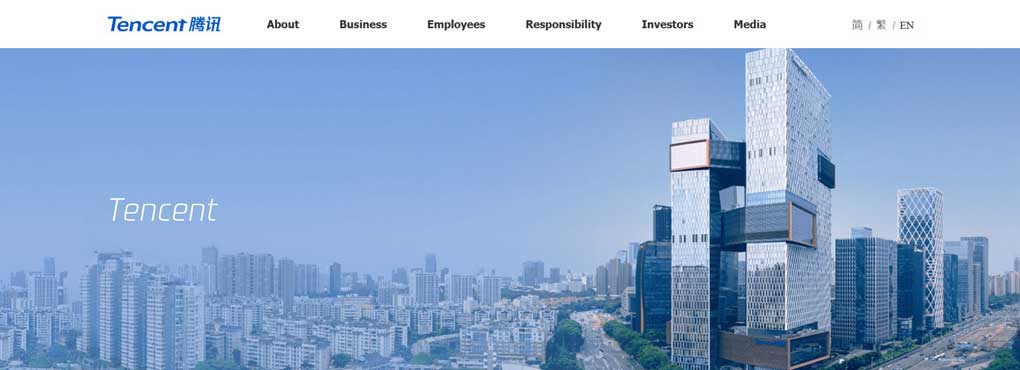
What is Tencent?
Established in 1998, Tencent Holdings Ltd., also known as Tencent (腾讯), is a Chinese multinational technology company. Tencent is known for its various Internet-related services and products, which are highly used in entertainment, video games, as well as in artificial intelligence industries.
Cost-Effective Agency
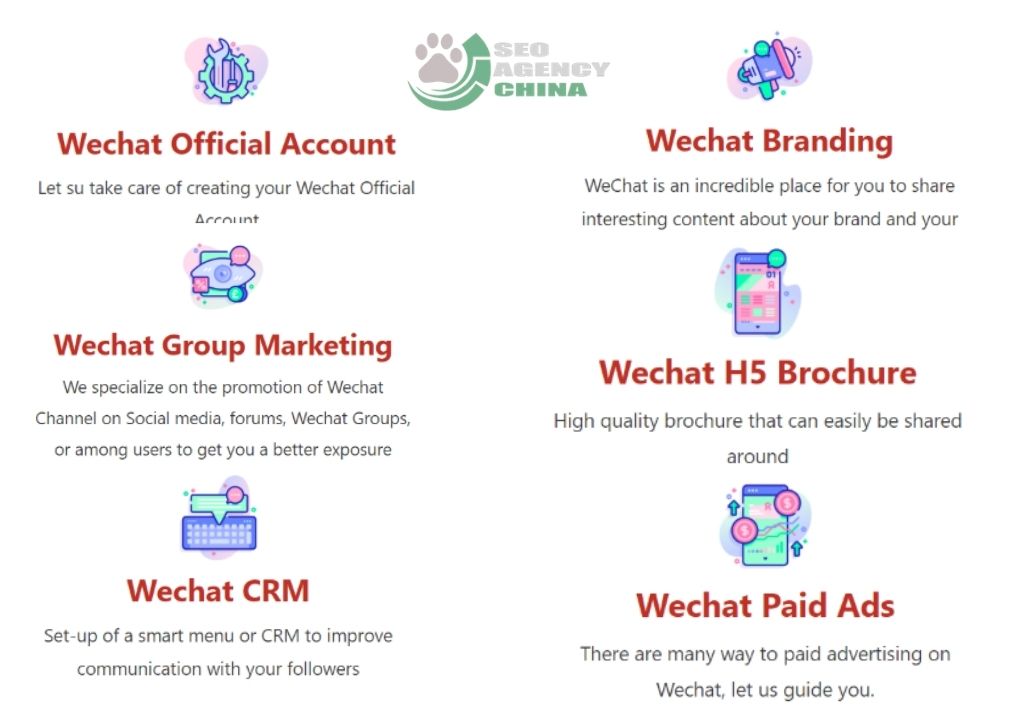
KPI and Results focused. We are the most visible Marketing Agency for China. Not because of huge spending but because of our SMART Strategies. Let us help you with: E-Commerce, Search Engine Optimization, Advertising, Weibo, WeChat, WeChat Store & PR.
What has made the success of Tencent?
Tencent is specialized in new technologies and is the world’s largest video game company. The success of Tencent comes from its social media, venture capital, and investment corporations. Thanks to the variety of services it has, such as social networks, music, web portals, e-commerce, mobile games, e-payment, internet services, etc. In China, Tencent is mainly used in instant messengers like WeChat and QQ, web portals like QQ.com, and music services with Tencent Music Entertainment.
In 2018, Tencent’s market value was worth more than US$500 billion, becoming the first Asian technology company to achieve this. Nowadays, Tencent ranks among the world’s top technology companies in terms of market value and innovation.
WeChat: Tencent’s Powerful Tool
What is WeChat?
Developed by the famous company Tencent, WeChat (known as Weixin 微信 in China) was launched in 2011 in Mainland China, and in 2012 in its international version. This app quickly became the world’s largest standalone mobile app, reaching 1 billion monthly active users in 2018. Nowadays, WeChat is boasting over 1.2 billion monthly active users and is part of Chinese people’s daily life. So, as you probably already know, WeChat was a messaging app at first but Tencent saw its potential to reach a wider audience by implementing services directly available through the app. That’s why WeChat is called the “super app” or “the app for everything”.
WeChat’s Ecosystem
In fact, WeChat’s Ecosystem is one of the most complete in the world, providing text messaging with a hold-to-talk functionality, video conferencing, video games, but it also acts like a social media such as Instagram of Facebook with the possibility the share pictures and videos on what is called the “WeChat Moments”.
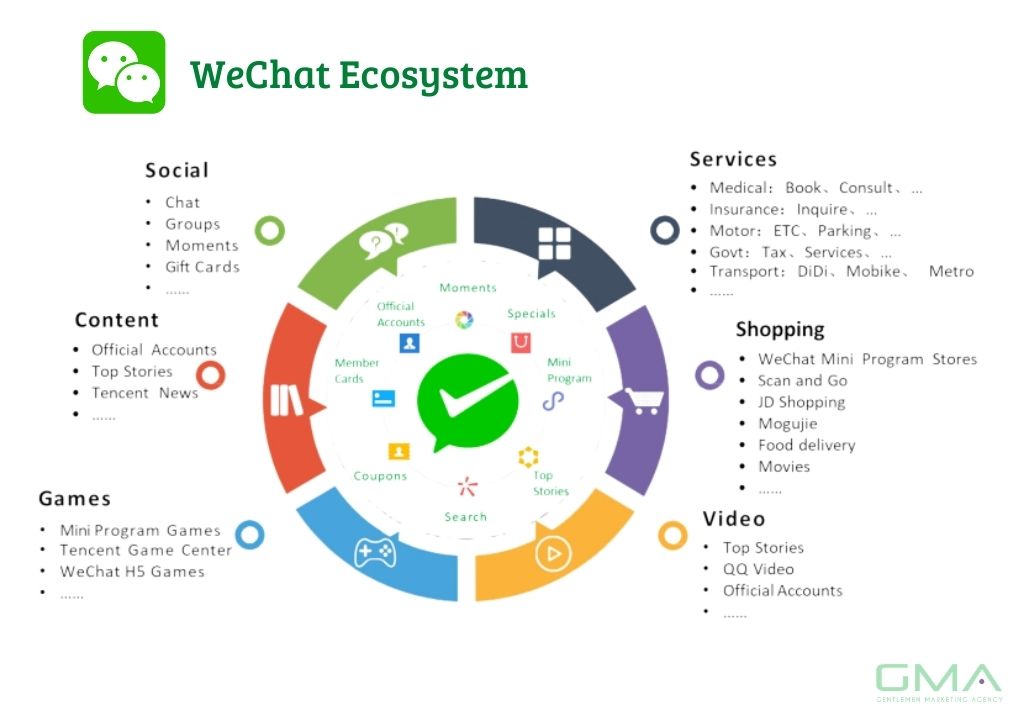
As you can see, we can do almost everything just by using a single app that provides a wide variety of services.
WeChat Traffic Acquisition
If you plan to do business in China, you will need for sure to use WeChat as part of your marketing strategy. WeChat is really a must-have in order to attract and deal with Chinese consumers.
Types of traffic acquisition
For example, Tencent Marketing Solution has taken WeChat one step further by helping luxury brands get traffic. According to them, there are three types of traffic that brands can acquire within the application.
- Acquiring traffic
WeChat allows brands to retain users’ attention by giving them e-vouchers or gift cards for example via the WeChat Moments (朋友圈), which allows brands to gain social traffic. However, it is not the only way to acquire traffic as you also advertise your brand directly on your WeChat account, or hire a KOL (Key Opinion Leader) who will be in charge of presenting and promoting your products. WeChat is a powerful tool for businesses as it can generate lots of word-of-mouth (the best way to get new customers).
- Decoding your audience’s Data
Thanks to its new technologies innovations in terms of data, Tencent has created its Tencent Data Cloud (騰訊雲) which can help you interpret and analyze your audience’s online history in order to get a better understanding of their interests and needs. Moreover, thanks to that you’ll be able to optimize your marketing budget, enhance your ability to reach a wider audience, etc.
- Converting traffic to sales
If you have already used WeChat, you probably know that mini-programs (微信小程序) are really popular in China. Launched in early 2017, these mini-programs are at the core of Wechat’s ecosystem and highly appreciated by international brands. It allows you to turn the traffic you have into real sales thanks to WeChat’s mobile payment (WeChat Pay), open a boutique store, manage the communication with your customers, etc. If you want to develop your brand, you might need to create your own mini-program to connect with your customers. You can contact us for more information about that.
How to take advantage of the WeChat Ecosystem?
If you want to take advantage of WeChat for your business, you will need to clearly understand WeChat’s ecosystem. To do so, you can follow some international brands on WeChat in order to see how they work and advertise their products on WeChat. Moreover, the WeChat ecosystem is mainly a mix of many of our apps, so it won’t be difficult to master all the services. If you want to understand deeper this subject, you can contact our experts.
Contact us to get started on WeChat
With almost 10 years of experience as a digital marketing agency, our experts can help you increase your e-reputation in China through WeChat. This article was just an introduction of Wechat, so if you want to have more information, you can contact us directly.
E-REPUTATION: Primordial before launching, we work together on your unique selling point, then on the social networks and with the help of PR, we make sure that your image on the networks is totally clean and reliable for the Chinese users.
SEO: The optimization of your reference will be essential, our team of specialists will take care of your e-reputation, the management of your social networks while setting up an SEO / SEM campaign allowing you to gain places in the ranking of the Baidu Chinese search engine.
LEAD GENERATION: Our teams are professionals in lead generation. To optimize it, your e-reputation must be irreproachable. Investing in online advertising and creating quality content will help you develop your e-reputation. Finally, the evaluation of the results will be important to guide us in the next stages of your development.
DIGITAL SOLUTIONS: Website creation, development, and audit; social media marketing (including WeChat & Weibo); PR; monthly reports and analyzes by our team of experts.