
Choosing a China Marketing Agency, and What It Should Cost: 21 Guides
Updated

Choosing a China marketing agency comes down to three decisions: which model you buy, what you pay for it, and how you check the work. A local shop in Shanghai, a global network, an in-house hire and a freelancer all solve a different problem at a different price. Most foreign brands pick on the logo and the pitch, then argue about the invoice six months later. This page gives you the order to decide in.
I run a small team in Shanghai. We sell the service this page is about, so read the money parts with that in mind and check them against a second quote. I have put the ranges, the questions and the uncomfortable bits in anyway, because the brands that go badly wrong in China are almost never the ones who asked too many questions.
Two things are worth saying before the list. First, an agency fee and a media budget are different lines, and a proposal that blends them is hiding something. Second, most of the China agency rankings you will find by searching are paid placements, so a shortlist built from them is a shortlist of companies with a marketing budget, not of companies that do good work.
The 21 guides below are grouped by the decision they help with: the model, the money, the pitch, the brief, the reporting, the jobs that need someone else, and the homework you should demand on your own category.
Jon Wang is the founder of SEO Agency China in Shanghai, where he has spent fifteen years running Chinese marketing for foreign brands on small budgets. He writes the pricing and supplier pages on this site himself, including the parts that cost us work.
What this guide covers
- Agency, global network, in-house team or freelance: which model fits your size
- What a China marketing budget actually costs, line by line
- How to read an agency ranking, a directory listing and a pitch deck
- What belongs in the brief before anyone quotes you
- Which numbers hold up and which ones are decor
- When the job needs a different partner than a marketing agency
- Test any supplier against your own category, not their showreel
- FAQ
Key numbers to know
| Fact | Source |
|---|---|
| China's national advertising business revenue passed 2 trillion yuan for the first time in 2025, reaching 2,050.21 billion yuan, double the 2020 level at an average 16.8% a year (market regulator data published 7 April 2026). | Science and Technology Daily (SAMR data) |
| Internet advertising took 1,357.43 billion yuan of that in 2025, up 34.6% and 66.2% of all advertising revenue, while internet placement reached 89.1% of ad placement revenue across all media (7 April 2026). | Science and Technology Daily (SAMR data) |
| More than 1,400 operators in China now bill over 100 million yuan a year in advertising, and Beijing, Shanghai, Guangdong and Zhejiang alone account for 1,404.18 billion yuan, 68.5% of the national total (7 April 2026). | Science and Technology Daily (SAMR data) |
| The sector grew 32.6% year on year in 2025, and in the first quarter of 2026 the leading operators' advertising revenue was up 17.1%, so supplier prices are being set in a rising market (Xinhua, 23 June 2026). | Xinhua |
| In 2025 the average pre-tax annual wage at foreign-invested enterprises in urban China was 164,956 yuan, up 4.4%, against 110,162 yuan in leasing and business services, the official sector that covers advertising (statistics bureau, released 16 May 2026). | National Bureau of Statistics of China |
| China's revised Anti-Unfair Competition Law was passed on 27 June 2025 and took effect on 15 October 2025, naming fake transactions and fake reviews as unlawful conduct. | Xinhua |
Read it in the order of your own decision, not top to bottom. If you have not chosen a model yet, start with section one and stop there until you have. If you already know you want an agency and need a number for the board, go straight to the money section and bring the ranges to your next call. Sections three and five are for the moment you have two or three proposals on the table and no way to tell them apart. Sections four and seven are the homework: what the brief must say, and what any serious supplier should be able to tell you about your category before you sign. Two of the 21 pages below are our own sales pages. I have said so in their summaries, and I have said where one of them overstates things.
Agency, global network, in-house team or freelance: which model fits your size
The model decides more than the supplier. A network sells process and insurance, a local shop sells speed and platform hours, an in-house hire sells control, a freelancer sells one skill cheaply. Pick the one that matches your budget and your tolerance for managing people eight hours away.
What is the Best digital Agency in China?

Five selection criteria, then the part most shortlists skip: which platform ad accounts the agency holds directly and which it rents from a reseller. Useful if you are about to compare three proposals and need questions that cannot be answered with a slide. It also covers the data compliance rules an agency has had to work inside since January 2025. Use it as a question list, not a verdict.
When evaluating an agency, ask specifically which platform accounts they hold directly and which they manage through resellers.
Read the full article: What is the Best digital Agency in China?
Why Every Brand Needs a Media Agency in China

The case for a local media partner, written against the plan most European head offices try first: run China from abroad with help from a Chinese-speaking intern. Worth reading if that is your current plan. It explains why Chinese outlets expect a paid cooperation, how fast a rumour travels, and what gets lost in a word-for-word translation. Its weakness is that it never prices the alternative.
Many foreign brands believe that hiring a bilingual intern to post on Chinese social media is enough.
Read the full article: Why Every Brand Needs a Media Agency in China
Why the Big 4A Advertising Agencies Are Dying in China


Short and blunt on why the global networks keep shrinking their China teams while small independent shops take the work. The three questions at the end are the ones I would put to any shortlist. Read it if a famous logo on the door is part of why you are considering a supplier at all. Our side of that argument, so weigh it accordingly.
What wins in China now is a small team that knows the platforms cold, moves fast, and gets judged on your numbers.
Read the full article: Why the Big 4A Advertising Agencies Are Dying in China
What a China marketing budget actually costs, line by line
Setup is a one-off, the monthly fee is the real commitment, and media spend sits on top of both. These four pages give the ranges we quote and the ranges the platforms charge. Bring them to your next supplier call and ask which line each item in their proposal belongs to.
China Advertising Market 2026: Advertisers Expect 10% Higher Marketing Spend

An advertiser survey read with a cold eye. Respondents say they will add about a tenth to their 2026 spend, and the piece explains why a stated plan is not a result, where the extra money is going, and what a modest budget can do against it. For whoever has to size next year's China line. The worked budget example at the end is the practical part.
Second, it is what advertisers plan, and plans in China get cut by the second quarter when sales disappoint.
Read the full article: China Advertising Market 2026: Advertisers Expect 10% Higher Marketing Spend
How Much Does It Cost to Market in China? Budget Guide for SMEs (2026)


The closest thing on this site to a price list: setup costs, monthly ranges, three budget tiers, and where a small brand should put the first dollar. Built from the quotes we give SMEs out of Shanghai, so discount accordingly, but read it before you ask anyone for a number. It makes a lazy quote easy to spot. This is the page I would send a finance director.
A global network will quote retainers that only make sense for a corporate budget.
Read the full article: How Much Does It Cost to Market in China? Budget Guide for SMEs (2026)
Advertising on Wechat | How we use Wechat Ads (&Cost)
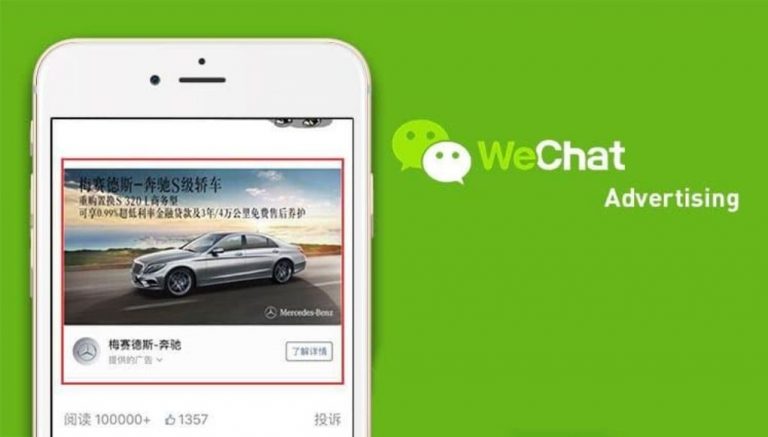

Ad formats, targeting, review rules and the real cost drivers on WeChat, plus the part that catches every foreign brand out: you cannot hold the ad account yourself without a verified Chinese entity. Handy when a supplier quotes WeChat media and you want to know what the service fee on top is actually buying. Platform prices keep moving, so check any figure before you quote it.
Foreign companies cannot open a WeChat ad account directly without a verified Chinese business license.
Read the full article: Advertising on Wechat | How we use Wechat Ads (&Cost)
How Much Does a Small KOL or KOC Cost in China?


Where influencer money goes, and why follower count is the wrong thing to buy. Separates paid reach from borrowed trust, gives the shape of the fee bands from free product upward, and names the three checks to run before booking anyone. The right read if seeding is the biggest single line in your quote. The bands are shapes, not a rate card.
A small KOC with a tight, engaged audience that matches your buyer is worth far more than a bigger one whose followers do not care about your category.
Read the full article: How Much Does a Small KOL or KOC Cost in China?
How to read an agency ranking, a directory listing and a pitch deck
Almost every China agency list online is paid for. So are many of the reviews under them. These two pages are useful for opposite reasons: one explains how the rankings work, the other is our own pitch, which you can treat as a specimen.

Start here if your shortlist came from an online directory. The opening pages explain who pays for those rankings and what the sort order really measures. What follows is a ranked list that puts us first, which you should read as our own argument rather than a verdict. The vetting questions in between are the reusable part. Skip our own entry if it irritates you.
Any agency that cannot show you real campaign data, actual follower growth numbers, real engagement rates, is hiding something.
Read the full article: Top 15 Social Media Agencies in China in 2026
Who We Really Are at SEO Agency China


Our own about page, listed so you can judge the claim instead of taking it. The part worth anything is where it says who we are a poor fit for, since that is the paragraph most agency pages leave out. Read it line by line against the two or three other suppliers you are speaking to. It makes no numeric claims, which is either honest or evasive.
Too many foreign brands are told that China requires enormous budgets and endless complexity, and then handed campaigns that look impressive but do not sell anything.
Read the full article: Who We Really Are at SEO Agency China
What belongs in the brief before anyone quotes you
A vague brief gets you a vague quote and an argument later. Three pages here cover what a China plan is supposed to contain, which consumer shifts your objectives should answer to, and the trap of briefing only for cheap traffic.
China Consumer Goods : Top Digital Marketing Trends


Category data for a consumer goods brief: where retail growth actually sat in 2025, which product traits are pulling spend, and why in-app search on RED and Douyin now decides whether buyers can find you at all. Hand it to whoever writes your objectives so the brief asks for demand you can name. Its numbers are 2025 retail data and still read true in 2026.
The brands winning are the ones putting budget where the consumer already is, not where impressions are cheapest.
Read the full article: China Consumer Goods : Top Digital Marketing Trends
China’s Digital Marketing in 2025: What Changed


A short piece on the move from renting traffic to owning brand equity, told by a brand director rather than by an agency. Opinionated and quick to read. Good as a sanity check when a proposal is built entirely on performance ads and promises cheap clicks for a year. It is dated 2025 and names no sources, so use the argument rather than the detail.
The market has taught us a hard lesson: chasing only performance ads drives up costs and erodes brand value.
Read the full article: China’s Digital Marketing in 2025: What Changed
Top 15 Digital Marketing Strategies in China (Done by Experts) [2025]

Fifteen tactics, from Chinese-language hosting and Baidu keywords through WeChat, KOLs and store-to-shop promotions. Older than the rest of this list and it shows in places, but it still works as a checklist of what a full China plan is meant to contain. Use it to spot what a proposal quietly leaves out. Several of its platform claims have aged badly, so check dates.
It is essential to do your research before getting into the process of implementing your brand in China.
Read the full article: Top 15 Digital Marketing Strategies in China (Done by Experts) [2025]
Which numbers hold up and which ones are decor
Impressions, followers and uplift percentages are easy to produce and hard to verify. Branded search, cost per order and what a buyer finds when they check you are harder to fake. These three pages include two of our own, with their weak spots marked.
Why 95% of Brand Budgets Are Digital in China in 2025


Three hundred words making one argument: offline media returns close to nothing here next to trackable digital. The headline share and the case study percentages carry no source, so treat them as a position rather than a benchmark. Listed because that argument comes up in every budget meeting, usually without the caveat. It is also the thinnest page in this guide.
Physical marketing has almost zero ROI compared to targeted, trackable, and viral digital campaigns.
Read the full article: Why 95% of Brand Budgets Are Digital in China in 2025
Increase your ROI in China with Good Online Reputation Management in China


Reputation work is the cheapest line in most China budgets and the one suppliers quote last. Covers what a Chinese buyer checks before committing, how review culture works on Baidu and RED, and the legal line on paid reviews since October 2025. Read it the moment someone offers to buy you ratings. Parts of the older text ramble, but the legal section is current.
Before anyone buys, they search your name on Baidu and check what people say on Xiaohongshu and Zhihu.
Read the full article: Increase your ROI in China with Good Online Reputation Management in China


Our own paid social pitch, and the loudest page on the site. The team size, the client names and the uplift percentages in it do not match what we say elsewhere, so read it as sales copy and not as data. It is still a fair map of how Douyin and RED ad buying is put together. Listed for completeness, with the warning attached.
Paid social in China isn't spray-and-pray; it's surgical strikes where every yuan counts.
Read the full article: A “Special” Paid Ads Social Media Agency in China
When the job needs a different partner than a marketing agency
Plenty of briefs land on the wrong desk. Content, capital and reputation are three different trades with three different suppliers, and paying a media team to do any of them ends badly. Here is how to tell which one you need.
Native Advertising in China: Earning Attention
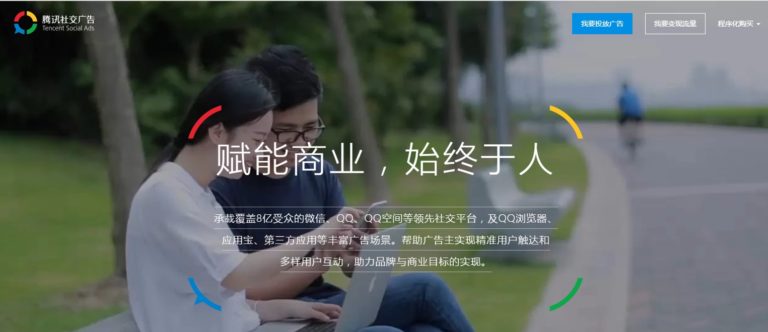

Why content Chinese consumers choose beats advertising pushed at them, and why that favours a focused brand over a big spender. More argument than tactic, and deliberately short. Useful at the point where you are deciding whether to brief a content partner or a media buyer first. There are no prices and no case data in it, so pair it with the budget pages above.
Native advertising suits focused brands, because it rewards genuine creativity and a clear point of view rather than the biggest budget.
Read the full article: Native Advertising in China: Earning Attention
Top Agency for Raise Funding in China


A different trade entirely: advisers who help foreign startups pitch Chinese investors. Covers the structures open to foreign entities, what Chinese money is funding now, and why the legal path matters more than the deck. Here so you do not hire a marketing team for a capital problem. Its 2026 policy section is the part worth reading; some older figures need a check.
Raising capital in China is not the same as raising capital in the US or Europe.
Read the full article: Top Agency for Raise Funding in China
Public Relations in China: Choosing the Right Agency
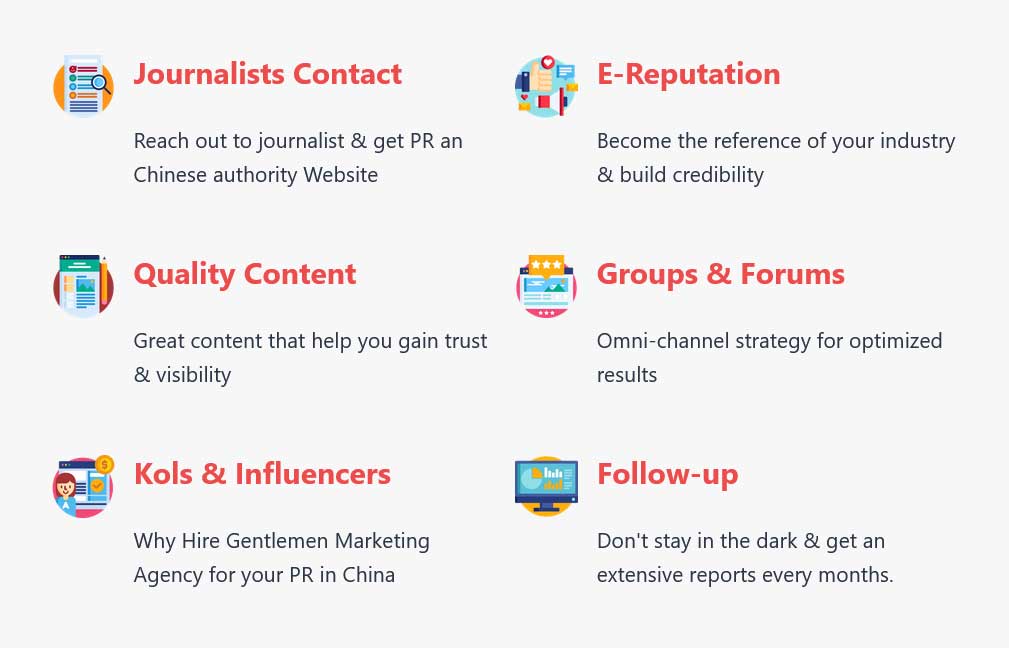
PR here is less about issuing announcements and more about what a buyer finds when they check you. Sets out what separates reputation work that pays from activity that only bills, and how to vet a PR partner. For brands being told that a handful of media hits will fix a thin presence. It names no agencies and quotes no fees, which limits how far it gets you.
Be wary of grand promises with no clear link to outcomes, and favour a partner who is honest about what builds genuine reputation versus what just generates activity.
Read the full article: Public Relations in China: Choosing the Right Agency
Test any supplier against your own category, not their showreel
Showreels are for closing deals. The real test is whether a supplier can tell you the price bands, the seasonal gaps and the buyers in your category before you sign. Two of these pages are deliberately not about agencies, because they show what that homework looks like when it is done properly.
Top 10 China Marketing Trends in 2025

A fast tour of recent trends plus a potted history of how marketing in China changed since the nineties. Thin on detail and some figures are dated, so take it as context rather than data. The line that still holds is about building local culture into a brand voice instead of translating one. Treat the trend list as a prompt for questions, not as research.
Local memes, slang, holidays, and values must be baked into your brand voice.
Read the full article: Top 10 China Marketing Trends in 2025


Listed as a model, not as a berry story. It shows what category homework looks like before anyone writes a plan: price bands by fruit size, calendar gaps, who buys, which retail buyers decide. Ask a supplier to produce this depth on your own category before you approve a budget. If they cannot produce it for your products, that tells you plenty.
The money goes into origin recognition and into the buyer's own search behaviour, not into mass awareness.
Read the full article: Blueberries in China 2026: A Premium Category Under Price Pressure
How to Sell Your Product to Costco China
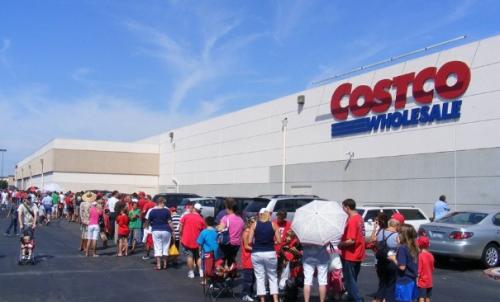

A retail listing is not a marketing plan, and this explains why. Shelf space in a curated warehouse buys trust and footfall but not recognition, and brands with no demand built elsewhere get dropped. Read it if someone is telling you distribution alone will carry the brand in China. It is written for food and household brands, though the lesson holds in any channel.
Costco gives you credibility and traffic, but you still have to be a brand the shopper wants.
Read the full article: How to Sell Your Product to Costco China
Frequently asked questions
How much does a China marketing agency cost per month?
At SEO Agency China, the published ranges start from 500 USD a month for WeChat content or Zhihu work, 800 USD a month for Baidu SEO, 1,000 USD a month for PR and 1,400 USD a month for four Douyin videos. A full launch with KOC and PR runs 4,200 to 8,000 USD a month, after a setup of 4,200 to 8,000 USD. Media budgets are paid to the platform and come on top. Whoever you choose, ask for the fee and the media budget as two separate numbers before you compare quotes.
Local Chinese agency or global network: which should I pick?
If your China budget is under about 20,000 US dollars a month, a network will give you a junior team and a senior invoice. A focused local shop gives you more platform hours per dollar and faster turnaround, at the cost of less process and fewer people to fall back on. Networks earn their fee when you need global brand governance, multi-market consistency and someone a group procurement team will approve. Below that, the trade rarely works in your favour. Ask any network directly who will sit on your account day to day, and for how many hours.
Does it make sense to hire in-house in China instead?
One hire covers one skill. China marketing needs a Baidu side, a social side, a content side and a media buying side, which is three or four people or an agency. For reference, the average pre-tax wage at foreign-invested enterprises in urban China was 164,956 yuan in 2025, before employer social contributions, and digital specialists in Shanghai sit well above that. Many brands land on a mix: one local hire who owns the relationship, plus an agency for the execution.
Can a freelancer handle my China marketing?
For one defined job, yes. Translating and running a WeChat account, writing Chinese product copy, editing short video: a good freelancer does these cheaply and well. What a freelancer cannot do is hold a platform ad account for you, replace a sick colleague, or coordinate four channels while you sleep. The usual failure is hiring one freelancer, calling it a China strategy, and finding out nine months later that nothing was measured. Freelancers also leave, and when they do your accounts, passwords and content often leave with them, so write that down first.
Is the agency fee separate from media spend?
It should be, and a proposal that merges them is the first thing I would push back on. Ask for three lines: the fee for the work, the media budget you will spend on platforms, and any percentage the agency takes on that spend. Many agencies also add a service fee of around ten to fifteen percent when they hold a platform account on your behalf, which is legitimate but should be written down, not discovered on an invoice. If the agency buys media on its own account, ask to see the platform invoice every month.
Who should own my WeChat, Douyin and Tmall accounts?
You should, wherever the platform allows it. Some Chinese platforms require a verified local entity, so without one your supplier or a partner has to register on your behalf. That is normal, but get the arrangement in writing: who holds the login, what happens to the account and its followers if you change supplier, and who owns the content and the customer data. Ask for that clause before you sign, not when the relationship is already ending, and keep your own copy of every login.
How do I verify an agency's China case studies?
Ask for the live account or store, not a slide. A real case has a findable WeChat account, a RED profile with dated posts, or a store you can open. Then ask for one client in your category you can email directly. Ask what the campaign cost, not just what it achieved. If the answer is an uplift percentage with no spend attached, no account to look at and no contact, you are looking at a design exercise. Two verified references from your own category are worth more than ten slides about someone else’s.
Can I trust "top China agency" rankings and directories?
Mostly no. The big agency directories charge a monthly listing fee and sort by a mix of payment tier and review count, so the order tells you who invests in being found. Reviews on those platforms are easy to arrange. Use them to build a long list, then verify every name yourself against live accounts and references. The ranked list on this site puts us first, which is precisely the bias you should allow for everywhere else as well.
Which numbers should I hold an agency to, and which should I ignore?
Hold them to branded search volume on Baidu and inside the apps, cost per qualified lead or per order, repeat purchase rate, and the number of genuine third-party posts about you. Ignore impressions, reach, follower totals and anything described as an uplift without a baseline. One useful test: ask what they would report if the campaign failed. An agency with only vanity metrics on its dashboard has no way of telling you bad news. Agree the reporting template in the contract, before anyone has a reason to change it.
Is it legal for an agency to buy reviews or followers for my brand?
No, and the exposure is yours as well as theirs. China’s revised Anti-Unfair Competition Law took effect on 15 October 2025 and names fake transactions and fake reviews as unlawful conduct, with platforms obliged to act on what they find. Bought followers also wreck your own measurement, because you can no longer tell which content worked. If a supplier offers guaranteed review volumes or follower counts, that is a reason to end the conversation. A handful of genuine buyer reviews moves a Chinese shopper more than a thousand bought ones.
How long before a China campaign shows results?
Plan on three months to see signal and six to twelve to see sales you can attribute. Search visibility on Baidu takes a quarter or more to move. Seeded content on RED keeps working for months after it is posted, which is why early results understate it. Paid media gives you numbers in weeks but tells you little about demand. Any supplier promising sales in the first month is selling you discounting, not marketing. Set a review point at ninety days with agreed numbers, so a slow start is a decision and not an argument.
What should a China marketing contract say?
Six things, at minimum. The scope in deliverables, not adjectives. The fee, the media budget and any percentage on spend, as separate lines. Who owns the accounts, content, creative and customer data. The reporting cadence and the exact metrics. A notice period you can live with, usually one to three months. And a named person who actually does the work, because the senior face in the pitch is often not the one on your account. If a Chinese entity signs, get it in both languages and have someone local read the Chinese.
Working with us on this
We have an office in Jing’an, Shanghai, with a small team that runs China marketing for foreign SMEs and startups, at budgets a global network will not quote for. If you want our prices in writing before you talk to anyone, they are on our marketing packages for China page. If you would rather tell us what you are trying to sell and hear whether we are the right fit, or honestly that we are not, write to us through contact us.
Last updated: October 2026. This guide is reviewed when new articles are published on the topic.