
Chinese Students Abroad: Key Drivers of Choosing Overseas Universities

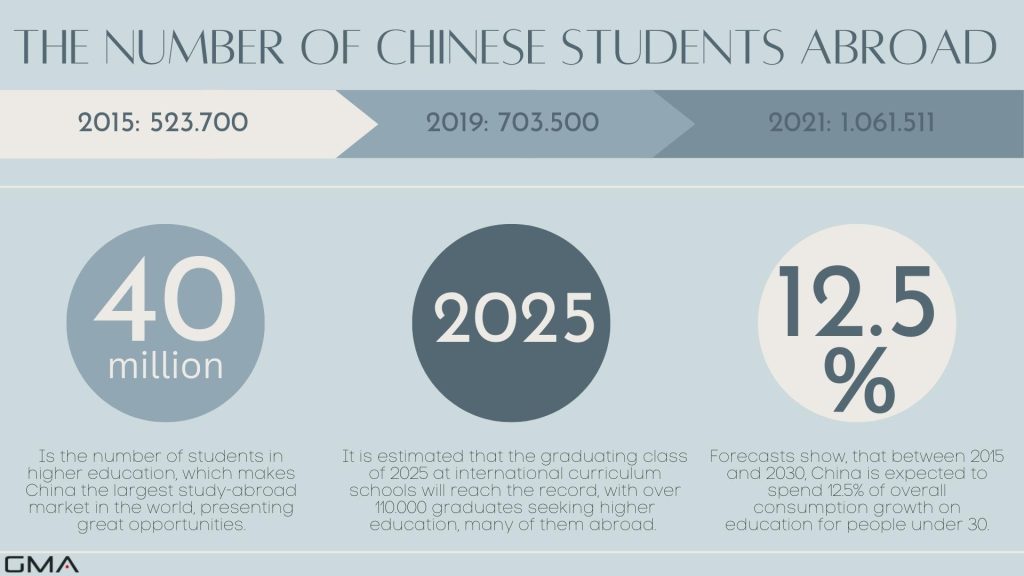
The trend of Chinese students seeking education abroad has been on the rise in recent years. What are the driving forces behind this phenomenon?
In this blog post, we will explore and decode the key drivers that motivate Chinese students to pursue higher education overseas, with a focus on aspects such as international exposure, career prospects, language acquisition, and more.
Cost-Effective Agency
KPI and Results focused. We are the most visible Marketing Agency for China. Not because of huge spending but because of our SMART Strategies. Let us help you with: E-Commerce, Search Engine Optimization, Advertising, Weibo, WeChat, WeChat Store & PR.
By understanding these motivations, institutions can better market themselves to attract prospective students from China.
Key Drivers For Chinese Students To Study Overseas
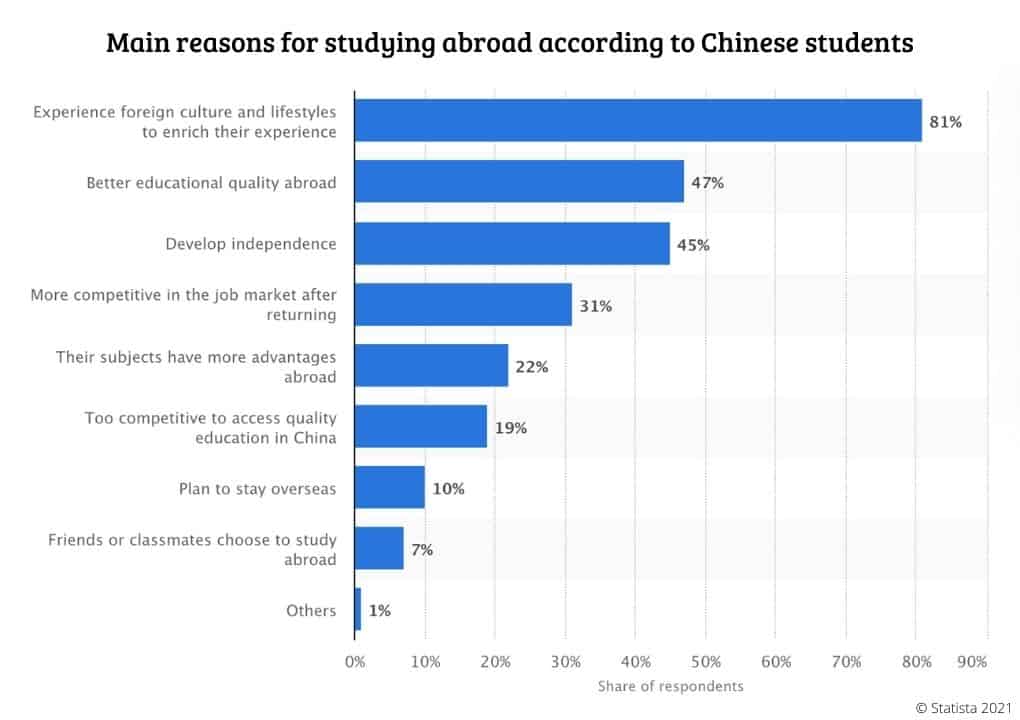
Chinese students go abroad to study for a global perspective, competitiveness, prestige, networking, career prospects, cultural immersion, personal growth, language skills, and diploma recognition.
Global Perspective And Competitiveness
Chinese students recognize the importance of a global perspective for staying competitive and relevant in today’s world. Studying abroad provides them with international experience and adaptability skills, which are increasingly important in industries like finance, technology, and business management.
This trend is fueled by the rapid growth of developing countries like China, which require professionals with international expertise. Ultimately, this knowledge empowers Chinese students personally and contributes to China’s rise on the world stage.
Network Prestige
The reputation of prestigious international educational institutions and their alumni networks, faculty connections, and partnership opportunities are important factors driving Chinese students to study overseas.
They believe that attending such schools will help them establish valuable connections with high-achieving individuals from diverse backgrounds, which can lead to internships, research projects, or job offers across various sectors worldwide.
Student numbers seeking international education are influenced by network prestige.
One striking example is students who have the opportunity to join the vibrant and dynamic international student body at Columbia University. This diverse community of students from around the world brings a wealth of cultural perspectives and experiences to campus.
Columbia University is a prestigious Ivy League institution with a wide range of academic programs. Their famous alumni include prominent business leaders like Elon Musk and Warren Buffett as well as political figures like Barack Obama and Hillary Clinton.
Diploma Recognition
The number of Chinese students studying abroad is concerned about diploma recognition as it is important for potential employers and universities in China.
This is due to the highly competitive job market that often requires degrees from reputable institutions. Without recognition, it can be difficult to get hired in China even with an excellent academic record. Access to education from quality institutions ensures that their investment will pay off in the future.
Better Career Opportunities
One of the main drivers that motivate Chinese students to choose to study abroad is the promise of better career opportunities. Many Chinese students believe that obtaining an international education can give them a competitive advantage in the global job market, as it allows them to acquire cross-cultural experiences and skills.
Moreover, studying abroad provides Chinese students with exposure to different industries and business practices, which expands their networks and knowledge base.

Cultural Immersion And Personal Growth
Living in a foreign country allows students to experience different cultures firsthand and develop a better understanding of both Eastern and Western perspectives.
Moreover, study abroad experience can enable one to improve not only English proficiency but also other language skills such as Spanish and French. Learning new languages has not only enhanced communication abilities but also provided opportunities for cross-cultural exchange.
The most popular abroad destinations for Chinese students are the United States, the United Kingdom, Australia, Canada, Singapore, and New Zealand. These countries are popular because they have highly-ranked universities, offer a variety of programs, and have a welcoming attitude toward international students.
In addition to these popular destinations, Chinese students are also exploring other countries such as Germany, France, Japan, and Korea. These countries offer unique cultural experiences and high-quality education, making them attractive options for Chinese students.

Improved Language Skills
Being multilingual and having cross-cultural communication skills have become increasingly important in today’s globalized world.
Not only does it allow for better social interaction, but it also enhances cognitive development and linguistic proficiency.
Studying abroad provides opportunities for cultural immersion and language acquisition that may not be available in China.
For instance, Li Wei is a Chinese student who has always been interested in learning English. She has been studying the language in China since she was in primary school, but she feels that her English skills are not good enough to communicate effectively with native speakers.
Therefore, she decides to go to study in the UK to improve her English skills. After a few months, Li Wei can communicate with native speakers more easily and feels more comfortable in social situations.
Contact Us If You Want to Attract Chinese Students
Studying abroad is popular among Chinese students because it has many benefits. There are eight main reasons why this trend is growing: gaining a global perspective, getting a recognized diploma, better job opportunities, learning about new cultures, improving language skills, making connections, avoiding entrance exams, and gaining prestige.
By understanding these reasons, marketing campaigns can be created to attract more Chinese students. As education policies change, there is a big chance to market higher education to these students.

Don’t hesitate to leave us a comment or contact us, so that we can schedule a call and present you with the best solutions for your brand in China!






Full Conversation on Facebook on the Group news China
100 comments