“China is Back” Hot Topic at DAVOS Submit
Updated
When Beijing told Davos “China is back” in early 2023, most people heard a one-line headline. Three years on, the reopening is a real, measurable thing. China now runs visa-free entry for travelers from 46 countries, a policy extended to 31 December 2026. In the first quarter of 2026 alone, foreigners made about 8.32 million visa-free entries, close to 78% of all inbound foreign crossings and up roughly 30% year on year. Ctrip expects 38 million foreign visitors across 2026, about 60% of the pre-pandemic 2019 peak. The door is open. The question for brands and destinations is simple: are you visible to the Chinese travelers and overseas buyers who are coming back?

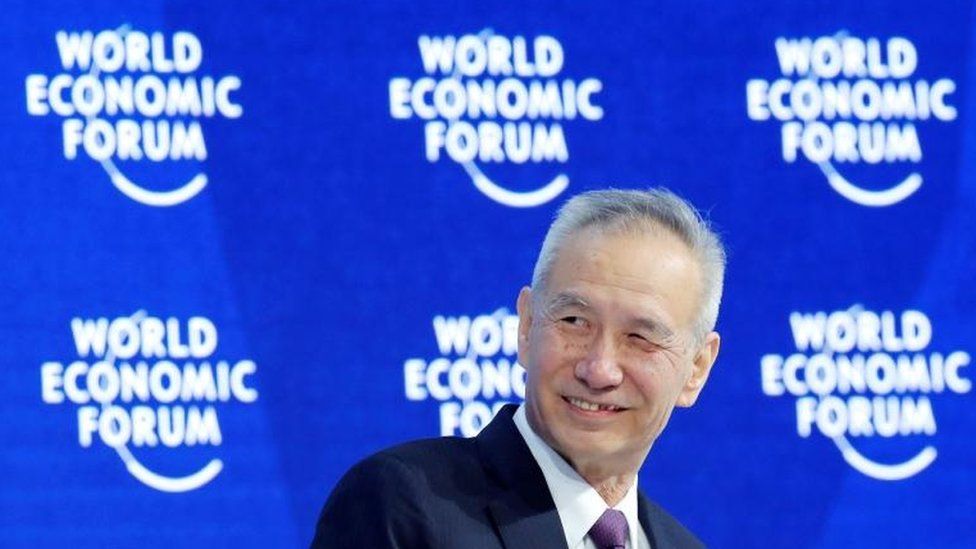
While China’s economic opening might increase global growth, policymakers and business leaders at the World Economic Forum this week are concerned about its potential inflationary effects.
The most talked about topic at the Davos gathering in Switzerland Alps was China’s decision not to accept tourists anymore, but to make it easier to travel abroad.
This is a major economic event in 2023. The business community is excited to make new deals with the second-largest economy in the world.
However, inflation and living costs are still under threat.
China reopened to business and tourism: where things stand in 2026
The story since Davos 2023 is steady recovery, not a sudden boom. On the inbound side, the visa-free scheme covering 46 countries has done the heavy lifting. About 8.32 million foreigners entered visa-free in Q1 2026, and Ctrip forecasts 38 million foreign visitors for the full year. That is still below 2019, but the trend points up, and the spend per visitor is rising as China courts business travel and longer stays.
Here is the part most foreign brands miss. Chinese travelers do not plan trips the way they did before. They research and book through Xiaohongshu and Douyin, not through old-style travel portals. A hotel, a shop, a museum or a tour gets discovered because a real person posted a photo and a few honest lines about it. If your business sits along a route that inbound or domestic Chinese visitors take, you need to be findable on those apps in Chinese. For a practical walk-through of how that discovery works, see our Xiaohongshu marketing guide for 2026.
For startups and smaller brands the good news is cost. You do not need a giant budget to show up here. A handful of well-placed posts, a clear Chinese-language profile and a few partnerships with mid-size creators often beat a slow, expensive campaign. China is back, and for once the small players have a fair shot at the attention.
The Slow Return of Big-Spending Chinese Tourists is Slow.
Prior to the pandemic, Chinese tourists were a major source of tourism revenue worldwide.
Many countries around the globe are welcoming back Chinese tourists. They were once the biggest source of global tourism revenue. The travel industry doesn’t expect things to return to their old state even though China has reopened its borders.
Read more
The 2026 market reality: what the data shows
China’s GDP grew 5% in 2025, hitting the government’s annual target and pushing total output past 140 trillion yuan ($20 trillion) for the first time, according to the National Bureau of Statistics. At Davos in January 2026, Vice Premier He Lifeng told world business leaders that China contributes roughly 30% of global economic growth while accounting for 18% of global GDP. The IMF upgraded its 2026 China growth forecast after the 2025 data landed. That is the headline. The real picture for foreign brands is more specific: FDI in China’s hi-tech sector grew 20.4% in early 2026, even as overall FDI flows declined, meaning capital is selective, not absent, according to China Briefing.
What Chinese consumers actually want in 2026
The Davos narrative of “China is back” lands differently when you look at consumer behavior on the ground. China’s Consumer Confidence Index sat at 90.6 points in January 2026, up from 89.5 in December 2025, but well below the near-200 reading seen in 2021. That gap matters for brands building revenue projections.
Chinese consumers are spending. They are just spending differently. McKinsey’s tracking of Chinese consumption shows a clear shift toward experiences: travel, wellness, dining, and entertainment are taking the budget that used to go to logo-driven goods. This is not a temporary dip. It reflects a structural change in what middle-class Chinese consumers consider worth paying for.
Three priorities now define the typical Chinese consumer decision in 2026. First, value clarity. Consumers want to understand what they are paying for. Opaque luxury mark-ups generate resistance, not aspiration. Second, cultural fit. Brands that adapt messaging and product lines to Chinese cultural moments perform better than those that simply translate global campaigns. Third, platform trust. Xiaohongshu (Little Red Book) has become the dominant discovery channel for lifestyle and beauty categories. A recommendation from a credible creator on Xiaohongshu carries more weight than a banner ad on any other platform.
The shift away from foreign brands is real but not total. In luxury goods, Bain data shows that 56% of mainland consumers planned to buy more Chinese brands in 2025. That said, categories like ultra-premium skincare and fragrances posted growth of 4% to 7% in 2025, according to Bain. Foreign brands that offer genuine differentiation, clear efficacy, and strong storytelling still win. The ones that relied on foreign-brand status alone are losing ground.
One more data point worth noting: 65% of Chinese luxury consumption now happens inside mainland China, up from a lower share in 2022 to 2023 when overseas shopping rebounded post-COVID. The consumer is back at home. The question is whether your brand is present where they shop.
Digital platforms are reshaping how brands reach buyers
China’s e-commerce market is projected to exceed $3 trillion in 2026. Cross-border e-commerce reached $90.85 billion in 2025, up 15.5% year on year, according to market intelligence data cited by ResearchAndMarkets. These are not niche numbers. They define where the market is moving.
The platform logic has changed. The “search and buy” model that built Tmall and JD over the past decade is giving way to “discover and buy” on content-first platforms. Douyin functions as a marketplace, a search engine, a livestream shopping hub, and a brand awareness tool simultaneously. Brands that ignore this shift are invisible to the consumers who matter most: Gen Z and millennials with purchasing power and strong opinions about what they buy.
Xiaohongshu has become particularly important for foreign brands entering or re-entering China. L’Oreal and Coach both use the platform to reach consumers through influencer content and user reviews. The format rewards authenticity. Polished brand ads perform poorly. Real product experiences, honest comparisons, and creator-led storytelling perform well. This means foreign brands need local content teams or local agency partners who understand the platform’s culture, not just its mechanics.
A concrete example: Burberry returned to growth in China for the first time in over 13 months by the end of 2025, posting a 3% comparable store sales increase. The recovery came after the brand repositioned its product range toward quieter, more understated aesthetics and invested in digital content that spoke to Chinese cultural values rather than its British heritage alone. Richemont’s Asia-Pacific sales rose 10% over the same period, with mainland China returning to positive territory. Prada noted that Golden Week 2025 sales exceeded expectations after a similar content-led reset. The common thread across these recoveries: brands that adapted, rather than waited.
Tier-2 cities are also changing the map. Chengdu, Wuhan, and Xi’an are now serious luxury and lifestyle markets. Brands that concentrated exclusively on Beijing and Shanghai are leaving money on the table. Pop-up activations, platform-driven discovery, and localized campaigns in these cities are delivering returns that would have been hard to project three years ago.
What changed between 2024 and 2026
In 2024, China’s luxury goods market fell 18% to 20% year on year, reverting to 2020 levels. That was the floor. By late 2025, major brands across categories reported stabilization. LVMH posted its first quarterly growth in Asia ex-Japan in over a year. The consumer did not disappear: spending patterns shifted.
On the policy side, the Chinese government deployed 62.5 billion yuan in special treasury bond funds in December 2025 to support the 2026 consumer trade-in scheme for appliances and new-energy vehicles. A new five-year consumption stimulus plan covering 2026 to 2030 targets the services sector specifically: cruise tourism, elder care, sports events, and hospitality. These are signals, not guarantees, but they show the government’s direction.
Regulations affecting foreign brands tightened in specific areas. Data localization requirements became stricter. Cross-border data transfers for companies in sensitive sectors now require security assessments. For foreign brands running CRM systems or loyalty programs on China data, this changed the technical infrastructure required to operate. Brands that resolved compliance early in 2024 and 2025 are in better shape going into 2026.
Consumer attitude toward foreign brands also shifted. The patriotic consumption trend that emerged during 2021 and 2022 did not reverse. It matured. Chinese consumers now evaluate foreign brands on quality and relevance, not on foreign origin as a mark of status. That is actually a healthier market condition for brands with genuine differentiation. It is a harder market for brands that relied on country-of-origin cachet alone.
Frequently asked questions
Is China’s economy really recovering in 2026?
China met its 5% GDP growth target in 2025 and crossed 140 trillion yuan in total output for the first time. The IMF upgraded its 2026 forecast following that data. UBS projects 4.5% growth for 2026. That is slower than the post-COVID bounce of 2023, but it is steady. Consumer confidence improved in early 2026, reaching 90.6 points in January. Government stimulus programs targeting services consumption and trade-in schemes for durable goods are active. For foreign brands, the relevant question is not “is China recovering” but “which segments are recovering fastest.” Beauty, fragrances, experiences, and high-tech goods are outperforming. Fashion and leather goods are still under pressure. Recovery is real but uneven across categories.
Should foreign brands re-enter China now or wait?
Waiting has a cost. Brands that stayed present through the 2024 downturn are now positioned to capture the recovery. Brands that exited or reduced investment are rebuilding from a lower base. The platform landscape also rewards established presence: Xiaohongshu and Douyin algorithms favor accounts with history and engagement. Building that from zero in 2026 takes longer than it did in 2021. That said, re-entry without a clear China-specific strategy still fails. The market requires localized content, platform knowledge, and either a local team or a local agency partner. Brands that enter with a global playbook and expect it to translate directly will underperform. The brands winning right now invested in China-specific positioning before the recovery, not after.
Which digital channels matter most for foreign brands in China in 2026?
Douyin and Xiaohongshu are the two platforms that matter most for discovery and purchase intent. Douyin combines short video, livestream commerce, and a full marketplace in one app. It is particularly effective for brands targeting 18 to 35 year olds. Xiaohongshu is stronger for lifestyle, beauty, and premium goods where consumer research and peer review drive the decision. WeChat remains critical for CRM, loyalty programs, and direct communication with existing customers. Tmall and JD remain the primary transaction platforms for established brands with significant volume. Baidu is still relevant for search, particularly for consumers researching high-consideration purchases. A working China digital strategy in 2026 does not pick one channel: it allocates budget across discovery (Douyin, Xiaohongshu), transaction (Tmall, JD, Douyin Shop), and retention (WeChat).
What did Davos 2026 signal for foreign businesses in China?
At the World Economic Forum in Davos in January 2026, Vice Premier He Lifeng positioned China as a source of stability in an uncertain global economy. He emphasized China’s market size, supply chain resilience, and commitment to opening up. The number of newly registered foreign-invested firms in China rose 19.1% in 2025, according to government data. FDI in high-tech sectors grew strongly in early 2026 even as total FDI volumes declined. The Davos message was deliberate: China wants selective foreign capital and expertise, particularly in technology, green energy, and advanced manufacturing. For consumer brands, the signal is that market access remains open, but differentiation is required. China is not offering preference to foreign brands simply because they are foreign. The era of that advantage is gone. What remains is a large, demanding, digitally sophisticated consumer market that rewards brands willing to earn their place.
How to move forward
The market is open. The question is whether your brand is equipped to compete in it.
Start with search visibility. If Chinese consumers cannot find your brand on Baidu or within Xiaohongshu’s internal search, you do not exist to them. A proper China SEO strategy and Baidu advertising presence are the floor, not optional extras.
Build platform presence before you need it. Open your WeChat brand account, get active on Douyin and Xiaohongshu, and set up your e-commerce infrastructure on Tmall or JD. These take time to build. Starting after the recovery is already visible means you are already late.
Localize your content. Work with China-based KOLs and media who understand the current consumer mood. Invest in China-specific brand positioning, not just translated versions of global campaigns.
If you are not sure where to start, talk to a specialist who works in this market daily. The brands winning in 2026 are the ones that planned for this in 2024 and 2025. The next best time to plan is now.
Marcus Zhan is a China marketing specialist based in Shanghai. He covers digital marketing, consumer trends, and brand strategy for the Chinese market. Connect with him on LinkedIn to discuss China market entry and growth strategy.
Sources: National Bureau of Statistics, China 2025 Economic Communique | World Economic Forum, China at Davos 2026 | Bain and Company, China Luxury Market 2025 | China Briefing, FDI in China 2025 | ResearchAndMarkets, China Social Commerce Report 2025 | China Briefing, Luxury Market Outlook 2026

Follow more conversation on linkedin
https://www.linkedin.com/feed/update/urn:li:activity:7020675659844743168/