
China’s New Food Label Rules: What Importers Must Fix Before March 2027
Updated
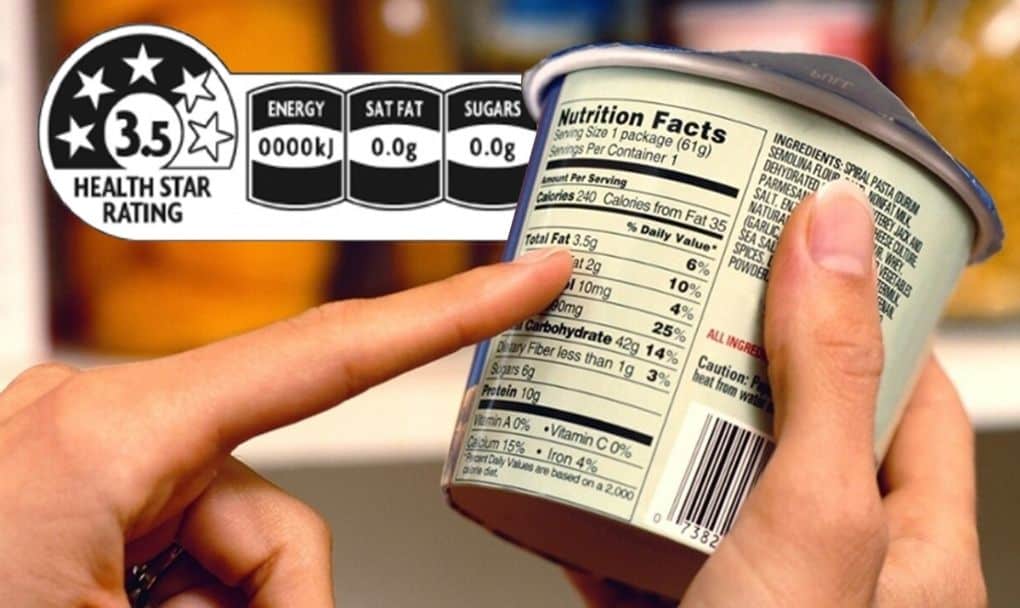
China changed the rules for imported food twice in eighteen months. Most foreign brands have not noticed yet. The registration system was rewritten and took effect on 1 June 2026. The label standard was rewritten and takes effect on 16 March 2027. If you sell food or drink into China, both of them land on your packaging and on your customs file.
I am Jon Wang. I run SEO Agency China from Shanghai, and most of our clients are food and drink brands that are too small to keep a compliance lawyer on retainer. This article is what I would tell you in a meeting: what changed, what it costs you if you ignore it, and what to do in the next six months.
The five numbers that matter
- 96,000 overseas food companies from 178 countries are registered to export to China (General Administration of Customs, via Xinhua, 19 March 2026).
- China’s imported food trade went from 1.05 trillion RMB in 2020 to 1.32 trillion RMB in 2025, around 185 billion USD at 7.1 RMB to the dollar (same source).
- The revised GACC registration rules have been in force since 1 June 2026, replacing the regime that ran from 1 January 2022.
- 95% of already registered companies now renew automatically, with meat, meat products and bird’s nest excluded from that automatic renewal.
- GB 7718-2025, the new prepackaged food label standard, takes effect on 16 March 2027, with a two-year transition and early adoption allowed.
The questions brands actually ask me about this
Does this apply to me if I sell cross-border only?
Partly, and the answer is not the one most brands hope for. Section five covers the split.
How much does a label redesign cost?
Less than you think if you start now, a lot more if you wait until your importer refuses a shipment. The business reminder at the end puts numbers on it.
My registration number is on the customs file. Does it need to be on the pack?
Yes. That is one of the concrete changes. Section three.
Can I still say “no added sugar” on a Chinese label?
Not in the form you use today. This is the change that will annoy marketing teams the most, and it is covered in section four.
Who carries the risk, me or my Chinese importer?
Commercially, you do. Your importer will simply stop buying. That is the part nobody writes down in the contract.
What changed in the registration system on 1 June 2026
The old system, running since January 2022, treated every overseas food manufacturer roughly the same way. Everyone filed, everyone waited, everyone refiled every five years. Customs rebuilt it around risk.
| What | Before (from 1 Jan 2022) | Now (from 1 Jun 2026) |
|---|---|---|
| Registration route | One process for all categories | Risk-graded catalogue, different review path by risk level |
| Renewal | Active refiling before expiry | Automatic renewal for around 95% of registered firms, excluding meat, meat products and bird’s nest |
| Bulk entry | Company by company | “List registration” fast track, based on mutual recognition of food safety systems |
| Packaging | Registration number on the file | Registration number printed on the food packaging itself |
Read that last line twice. The number that used to live in a customs folder now has to appear on the pack, either the China registration number or the number your own national authority assigned. A Chinese consumer can type it into the Customs system and check that your factory is real.
That is not a compliance detail. That is a trust feature handed to you for free, and almost nobody is using it in their marketing yet.

What changes on your label before 16 March 2027
GB 7718-2025 replaces a standard written in 2011. Fourteen years is a long time in a market where half the category did not exist yet. The new text was published in March 2025 and applies from 16 March 2027. You can adopt it early, and for anything you are redesigning anyway, you should.
Allergens stop being optional
Eight categories become mandatory: gluten-containing cereals, crustaceans, fish, eggs, peanuts, soybeans, milk, and tree nuts. They have to be highlighted, in the ingredient list or right next to it, in bold, underlined or boxed. Anything beyond those eight stays voluntary.
If you already sell in the EU you are mostly there. If your Chinese label was a translation done once in 2019 by your importer, you are not.
Dates get stricter, and shorter for some
Production date and expiry date both have to appear, in year-month-day order. Products with a shelf life of six months or more, and packs of 20 square centimetres or less, can drop the production date. The sloppy “see cap” cross-reference that half the imported drinks category uses will not survive an inspection.
“No added” claims are the big one
Claims built on 无 (contains none) or 不含 (does not contain) now require the ingredient to actually be at zero, and they cannot be used about additives, contaminants or substances that were never allowed in the first place. The phrasing 不添加, “not added”, is prohibited outright.
Look at your Chinese pack. If your entire health positioning rests on a “0 added sugar” flash, you have a marketing problem to solve, not a printing problem. You have eighteen months to find a claim that is both true and sellable.
Digital labels arrive, voluntarily
You may add a QR code that opens extended label information. The identifier has to be clearly marked, and the content has to be on the first page, with no advertising in the way. It is optional. For a small brand with a small pack and a long story, it is the most useful line in the whole standard.
Imported labels get their own section
Country of origin is determined by where the goods were wholly obtained, or, when several countries are involved, where the substantial transformation happened. If you fill or repack in a country that is not the country of origin, both have to appear. The foreign-language text and the Chinese text have to correspond one to one, which kills the old habit of a Chinese sticker that says less than the original.
Who this hits hardest, and who it helps
Two regulatory changes in eighteen months sounds like bad news. For some brands it is. For others it is the best thing that happened to their category in years.
| Type of brand | Exposure | What to do first |
|---|---|---|
| General trade, own Chinese label | High. Both changes apply in full. | Audit the label against GB 7718-2025 now, redesign once, print once. |
| Cross-border e-commerce (Tmall Global, JD Worldwide) | Medium. CBEC parcels follow a different labelling route, but your product page claims are read by the same consumer and screenshotted by the same competitor. | Align the product page language with the new claim rules even where the pack is exempt. |
| Selling through a Chinese distributor who owns the label | High and invisible. You will find out when orders stop. | Ask your importer in writing which standard the current artwork follows. |
| Meat, meat products, bird’s nest | Highest. No automatic renewal. | Diarise the registration expiry. Nobody will remind you. |
| Clean-label challengers | Positive. The “no added” crackdown removes competitors who were bluffing. | Build the claim on a number you can prove, then say it louder. |
That last row is the part I would spend my energy on. Chinese consumers in this category have been trained to distrust health claims, and for good reason. A standard that forces everyone to prove the claim is a gift to the brands that were already telling the truth.
We see the same pattern in the categories we work in: the first year of a stricter rule is a mess, and the brands that adapt early take the shelf space of the ones that did not. It happened in infant formula. It happened in health food. It is about to happen here.
A second opinion from the e-commerce side
Labels are a customs and retail question, but in China most first contact with a product happens on a screen, not a shelf. I asked John Parker, E-Commerce Director at E-Commerce China Agency, who handles food and beverage regulations on the marketplace side, what he sees:
Most foreign brands treat the label and the product page as two different projects, run by two different people, six months apart. In China they are read together. A consumer screenshots the pack, compares it to the Tmall detail page, and posts the difference on Xiaohongshu if they do not match. The new claim rules make that gap expensive. Fix the label and the listing in the same sprint, or you are publishing your own negative review.
John Parker, E-Commerce Director, E-Commerce China Agency
That matches what we see from the search side. When a claim on the pack and a claim on the listing disagree, the question ends up in Baidu and in the Chinese AI assistants, phrased as “is this brand lying”. You do not want to be the answer.
What to actually do in the next six months
Three workstreams, in this order. They are not equally urgent and they do not cost the same.
1. Fix the file before you fix the pack
Check that your GACC registration is current and that you know your number. If you are in meat, meat products or bird’s nest, put the expiry date in a calendar with a six-month warning, because automatic renewal does not cover you. Then get the number onto the artwork. It is one line of text and it is now mandatory.
If you do not yet have a Chinese buyer, the registration is still the gate. We wrote the practical side of finding and qualifying one in our guide to finding a reliable Chinese distributor, and the category-level detail for meat is in our list of beef importers in China.
2. Audit the claim, not just the translation
Take your current Chinese label and mark every claim that would fail the new test: any 不添加, any 无 or 不含 attached to something that is not truly at zero, any allergen buried in a nine-point ingredient list. Then decide what replaces it. This is a marketing decision with a legal deadline attached, which is why it takes longer than people budget for.
The replacement claim almost always has to be a number. Grams per 100 millilitres. Percentage of the named ingredient. Origin with a region, not a country. Chinese buyers in imported food are more numerate than most Western marketing teams expect.
3. Make the compliance visible
This is the part we handle. A registration number a consumer can verify, a QR code that opens a real specification, an origin claim with a region behind it: these are answers to the questions Chinese buyers already type into Baidu and into DeepSeek before they buy an imported food brand they have never heard of.
If nothing exists about your brand in Chinese, the search engines and the AI assistants have nothing to return except your competitors. That is the work behind our Baidu SEO and AI search service: putting the verifiable facts about your product into Chinese, with sources, so that a distributor or a consumer looking you up finds something solid. For brands selling through Tmall Global or JD Worldwide, the same facts have to run through the cross-border store as well, because that is where the claim gets compared.

Business reminder: what this costs and what it returns
Strip out the regulation and look at it as a spending decision, because that is what your finance director will do.
The cost of doing it on time. A label audit against GB 7718-2025 is a few days of specialist work. A redesign is a design cost you were probably going to spend within two years anyway, since packaging gets refreshed. The registration number is one line of text. Moving the claim from a slogan to a number is the expensive part, not because of the artwork but because somebody has to decide what the brand now says, and that decision goes up to the marketing director. Budget the decision time, not the printing.
The cost of doing it late. This is where it gets ugly, and it is not a fine. It is a stopped shipment. Your Chinese importer holds the commercial risk on non-compliant stock, so the moment your artwork is doubtful, they stop ordering and they do not explain why. You lose a season. In a category where a distributor carries four competing imported brands and shelf space is allocated annually, losing a season means losing the listing, and getting a listing back costs more than getting it the first time.
Then there is the part that does not appear on any invoice. A product pulled for a label problem produces Chinese-language content about your brand that you do not control. It sits in Baidu results and in the training data of the AI assistants that Chinese buyers now ask before they order. We have cleaned that up for brands and it takes a year, sometimes two.
The return. Two things. First, your importer conversation changes. A brand that arrives with a compliant label, a verifiable registration number and a claim that survives the new test is a brand that costs the importer nothing to defend. That is worth real negotiating power on margin and on exclusivity, more than a price concession is.
Second, the trust gap closes in your favour. Chinese buyers in imported food have been burned often enough to treat every health claim as marketing. When the rule forces everyone to prove the claim, the brands that were already honest stop competing against fiction. If your product genuinely has no added sugar, you will be able to say so and the brand next to you will not. That is a competitive advantage handed to you by a regulator, and it lasts exactly as long as it takes your competitors to reformulate.
Our honest recommendation: treat March 2027 as a deadline for the artwork and treat the next six months as the window to decide what the brand says. The second one is the hard part.
The question worth arguing about
Some brands will do the minimum: change the artwork in early 2027, keep the positioning, hope nobody looks closely. It is cheap and it is defensible.
Others will treat this as the moment to rebuild the claim around something provable, and spend real money making that visible in Chinese. That is more expensive and it only pays if your product actually is better.
Which one is right depends entirely on whether your product survives scrutiny. Tell me which camp you are in, and why. I read every reply.
Sources
- Xinhua, 19 March 2026, on the revised Customs rules for registration of overseas food manufacturers: the 1 June 2026 effective date, the 96,000 registered companies from 178 countries, and the import trade figures for 2020 and 2025.
- Foodmate (食品伙伴网), GB 7718-2025 highlights: the 16 March 2027 effective date, the eight mandatory allergen categories, the date-marking rules and the restriction on “no added” claims.
- Chinese Embassy notice, April 2026, on the revised registration system and the trade facilitation measures that come with it.
- USDA GAIN, full text of GB 7718-2025, useful if you want the standard itself rather than a summary.
- Our own category guide: China, the number one food importer, for the wider picture on what China buys and from whom.
Jon Wang founded SEO Agency China and works mostly with imported food and drink brands, the category where a customs decision can erase a year of commercial work. He has spent more meetings than he would like reading Chinese labels line by line with importers. Connect with Jon on LinkedIn.
Working with us on this
We are a small team in Jing’an, Shanghai, working with food and drink brands that do not have a China office. On this subject we do two things: we turn the compliant facts about your product into Chinese content that Baidu and the Chinese AI assistants can find and cite, and we make sure your marketplace listing says the same thing as your pack. We do not file your registration for you, that is your customs agent’s job, and we will tell you when you need one.
One example from our own work, anonymised because the client did not want the category named. A European dairy brand came to us after their importer paused orders over a claim on the Chinese sticker. The fix was not legal, it was editorial: we rebuilt the Chinese product story around two verifiable numbers, protein per 100 grams and the region of origin, and published it as Chinese content with the sources attached. Orders restarted the following quarter, and the importer asked for the same treatment on two other products. Nothing exotic. It worked because the claim was true and, for the first time, findable in Chinese.
If your label is up for review, send it over and we will tell you what we would change and what we would leave alone.