
45 Articles to Understand Baidu, SEO and PPC in China (2026 Guide)
Updated
This Baidu SEO guide answers one question: how does a foreign brand get found on Chinese search in 2026? Baidu is still the first engine, with 46.65% of all search and 60.15% on mobile in September 2026 (StatCounter). Ranking it takes Chinese content, fast hosting near China and a site Baidu can crawl. Since July 2025 it also takes pages clear enough for Baidu’s AI answer to quote.
I run a small search team in Shanghai, and most of the brands we meet have the same gap. They built for Google, translated the site, and wait. Nothing happens, because Baidu reads Chinese, punishes slow foreign servers and leans on its own properties: Baike, Zhidao, Tieba and Baijiahao.
Search in China is also no longer one box. Baidu turned its results page into an AI answer, WeChat runs its own search, and DeepSeek and Doubao now answer questions buyers used to type into Baidu. Ads still buy speed. SEO still builds the asset. GEO decides whether the AI names you.
Over the years we wrote dozens of pieces on each of these parts. This page puts 45 of them in order, so you can go straight to the one that answers your question.
Jon Wang founded SEO Agency China and runs its small search team in Shanghai. He has set up Baidu webmaster and ad accounts for foreign SMEs for years and rebuilt their pages for Baidu's AI answer.
What this guide covers
- What is Baidu and how big is it in 2026?
- Do other Chinese search engines matter?
- Why should a foreign brand care about Baidu at all?
- How is Baidu SEO different from Google SEO, and where do I start?
- How do I climb the rankings and avoid the classic mistakes?
- How do I build a site and keyword list Baidu can work with?
- How does Baidu advertising (PPC) work?
- How do B2B and industrial companies win on Chinese search?
- How do I get my brand into AI answers (GEO)?
- FAQ
Chinese search in numbers, 2025-2026
| Fact | Source |
|---|---|
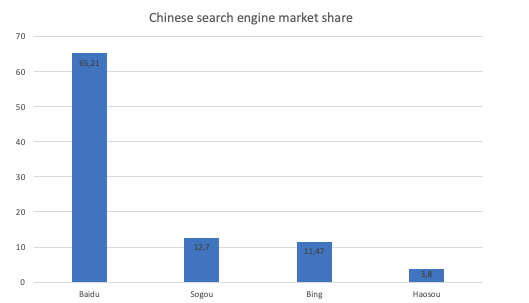
| Baidu held 46.65% of search in China across all platforms in September 2026, ahead of Bing (21.76%) and Haosou (12.26%). | StatCounter Global Stats, China, all platforms |
| On mobile, Baidu's share of search in China was 60.15% in September 2026. | StatCounter Global Stats, China, mobile |
| China had 1.125 billion internet users at the end of 2025 (80.1% of the population) and 602 million generative AI users. | Xinhua, CNNIC 57th Statistical Report (March 2026) |
| On 2 July 2025 Baidu ran its biggest search overhaul in ten years: the search box became a Smart Box that takes text of over 1,000 characters and file uploads. | Science and Technology Daily (2 July 2025) |
| In Q2 2026 Baidu's revenue was RMB 31.3 billion, down 4% year on year, and online marketing revenue fell 19% to RMB 13.1 billion. The Baidu App had 644 million monthly users in June 2026. | Baidu Q2 2026 results (SEC Form 6-K) |
| China's first GEO standard, T/CAPT 026-2026 on trusted information in generative engine optimization, was published on 11 August 2026. | Xinhua (12 August 2026) |
Each section below answers one question a brand asks us before starting in China. Read the section intro, then open the article that fits your case. The quote under each summary is taken word for word from the article, so you know its tone before you click. If you are new to China, read the first four sections in order. If you already rank and want ads or AI visibility, jump to the last three.
What is Baidu and how big is it in 2026?
Start with the numbers and the products. Baidu is a search engine, an encyclopedia, a forum, a Q&A board and a publishing platform, and its results page pulls from all of them. Market share charts disagree, so read them with care.
Baidu, the Largest Chinese Search Engine: What It Does and Why It Matters in 2026

The best starting point if you know Baidu only as the Google of China. It walks through each Baidu product a buyer touches before spending, from Baike to Tieba, then explains why the AI answer page and the drop in ad revenue change how a brand should plan.
A Baike entry is often the first source Baidu's AI summary quotes for a brand name.
Read the full article: Baidu, the Largest Chinese Search Engine: What It Does and Why It Matters in 2026
10 Facts to Understand Baidu, China's Top Search Engine
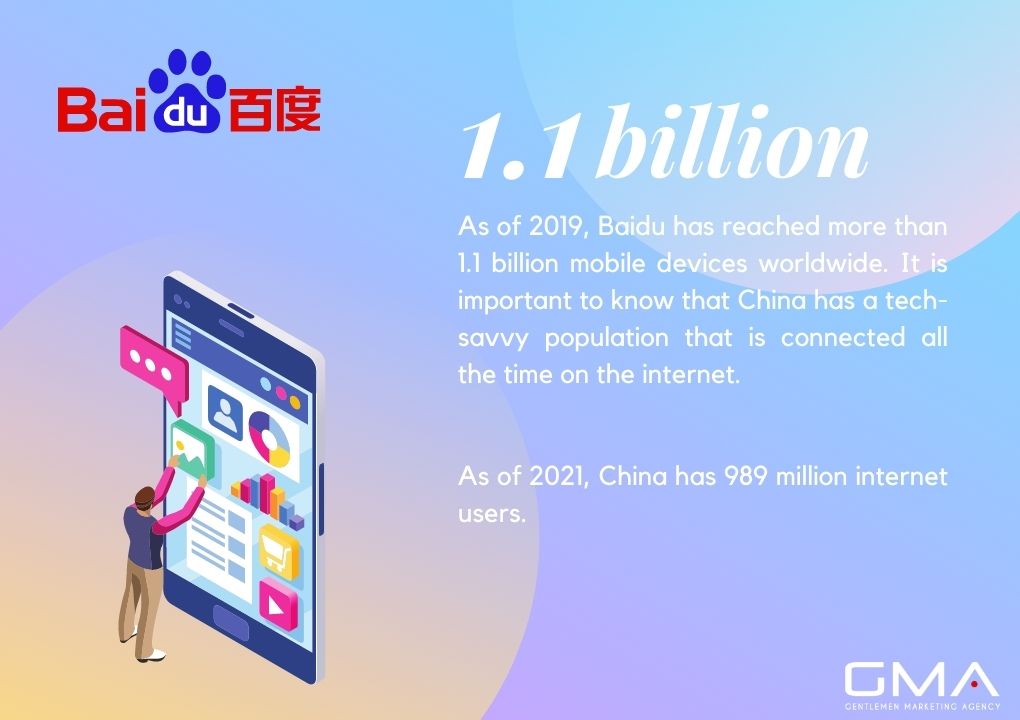
Ten short facts for a manager who has to brief a board on Baidu in ten minutes. Each one ends with what it means in practice: Chinese content, hosting, trust signals and the verification habit of Chinese buyers who look up a brand before paying.
Baidu and Chinese users both respond to real, proper Chinese content that speaks to how Chinese people search and what they want to know.
Read the full article: 10 Facts to Understand Baidu, China's Top Search Engine
Baidu, the leading searching engine in China

A long tour of the classic Baidu results page, its sub-sites and the old Jingjia paid listings. Useful history for marketers who wonder why Baidu ads and organic results look so alike, and why traffic in China often flows to marketplaces instead.
Now, the overall ranking indicator includes not only the price per click, but also the quality of the advertisement.
Read the full article: Baidu, the leading searching engine in China
Search Market In China: Statistics And Key Data


Who else shares the Chinese search market, from Bing and Sogou to Shenma and the search boxes inside apps. Read it for the profile of each engine, and check the shares against the dated table in the key numbers above, because older figures move fast.
Baidu leads, Bing and 360 split the rest, and WeChat and Douyin now have their own search.
Read the full article: Search Market In China: Statistics And Key Data
What Are The Most Popular Chinese Search Engines?
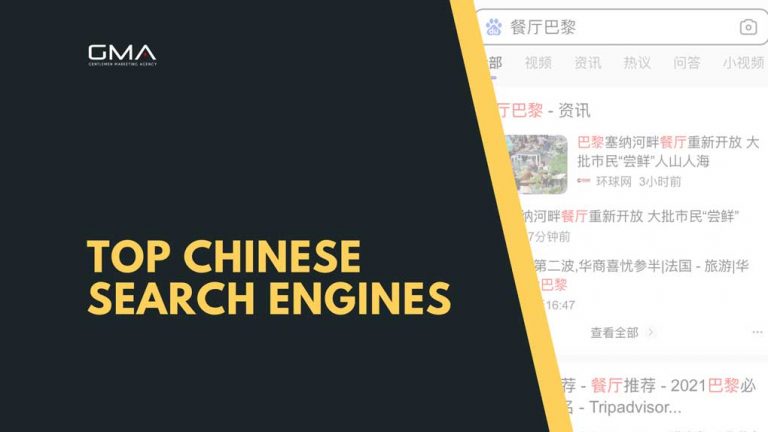

Why does Bing look so big in China? Here is the case for and against, with the reasons professionals and students use it and why Baidu keeps phones. Good reading before anyone on your team suggests moving the SEO budget away from Baidu.
Unlike Google, Bing is still accessible in China because Microsoft complies with China's censorship regulations .
Read the full article: What Are The Most Popular Chinese Search Engines?
Which China Search Site Deserves Your SEO Budget? Only Baidu

My clearest argument for putting the SEO budget on Baidu first. It reads the September 2026 StatCounter table line by line, explains why the Yandex row is a warning sign about the sample, and gives an honest verdict on Bing, 360, Sogou and the new AI search apps.
StatCounter measures page views on sites that carry its tracking code, and that sample is tilted toward foreign-facing and tech sites, plus odd traffic sources.
Read the full article: Which China Search Site Deserves Your SEO Budget? Only Baidu
Do other Chinese search engines matter?
A little, and for specific reasons. 360 lives on office PCs, Sogou now feeds WeChat, and WeChat Search is where people check a name they heard at dinner. None of them replaces Baidu, but two of them deserve a plan.
Chinese Search Engines Beyond Baidu: Do 360, Sogou and Shenma Matter?

A short map of 360, Sogou and Shenma for founders who suspect they are missing traffic. The answer is a clear order of work: win Baidu, then make sure your name looks right inside WeChat search, and treat the rest as a bonus.
It feeds search results inside WeChat, the app more than a billion Chinese people open every day.
Read the full article: Chinese Search Engines Beyond Baidu: Do 360, Sogou and Shenma Matter?


What happened to Sogou after Tencent bought it in 2021, step by step, with the current share figures. If an agency offers you a Sogou SEO package, read this first. It shows where Sogou's index lives now and what that means for WeChat visibility.
It bought the index, the encyclopedia, the engineers and the input method, then moved them where they served WeChat.
Read the full article: Sogou Search Engine in 2026: Tencent Ownership, Real Market Share and SEO
Qihoo SEO in 2026: Is 360 Search Worth It? Lessons from Zhou Hongyi


Is 360 Search worth its own project? For most consumer brands, no. B2B suppliers selling to office buyers are the exception. The piece uses Zhou Hongyi's career to explain where 360's users sit, with 2025 and 2026 company figures.
They should make sure 360 can read the same Chinese site they build for Baidu, then spend the rest of the budget elsewhere.
Read the full article: Qihoo SEO in 2026: Is 360 Search Worth It? Lessons from Zhou Hongyi
WeChat SEO: How To Rank On WeChat Search in 2025?

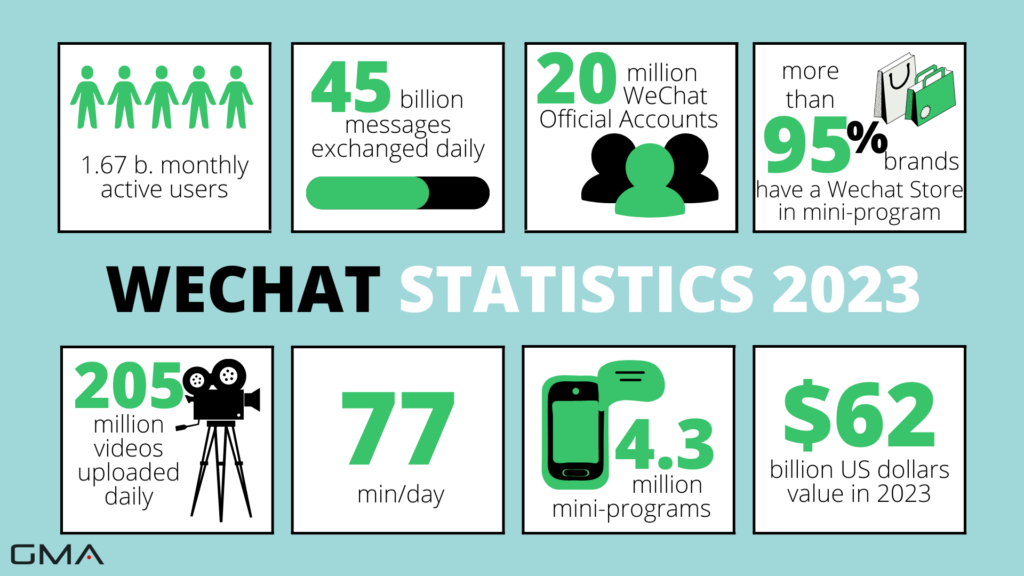
Ten practical WeChat search tips for brands running an Official Account: keywords in titles, Mini Program names, hashtags, Channels videos and steady publishing. Treat the growth percentages in the examples as illustrations. The method is what you should keep.
Optimize your Official Account profile, article tags, and Mini Program descriptions with keywords.
Read the full article: WeChat SEO: How To Rank On WeChat Search in 2025?
The WeChat Guide for Business in China: Setup and WeChat SEO (2026)

Setup order for a small brand on WeChat, and how WeChat Search ranks accounts, articles and mini-programs. It also covers the AI search entry WeChat tested with DeepSeek in 2025. Read it if Chinese buyers already know your name and need somewhere to check it.
When someone hears your brand name at a dinner, sees it on a shelf, or reads it in a group chat, they type it into WeChat, not Baidu.
Read the full article: The WeChat Guide for Business in China: Setup and WeChat SEO (2026)
Why should a foreign brand care about Baidu at all?
Because Chinese buyers search a brand before they trust it. Social platforms create the interest, and Baidu is often where that interest is checked. These articles make the business case, each from a different angle.
How to market your Brand in China with Baidu?
A direct push for the brand that has watched China for three years without moving. It sets out how Baidu works in 2026 and six moves that rank: hosting, native Chinese, answer-first pages, Chinese links, Baidu's own tools and ads while SEO grows.
So when a Chinese buyer wants to check if your brand is real, they do not Google you, they Baidu you.
Read the full article: How to market your Brand in China with Baidu?
5 reasons to do SEO in China


Five reasons to invest in Chinese SEO: visibility, authority, reputation, niche keywords and traffic. The reputation part is the most useful, because a few good pages can push negative results down when Chinese buyers search your name.
Brands and companies should control their reputation online, and act in case of negative comments.
Read the full article: 5 reasons to do SEO in China
What Foreign Brands Need to Know About Search in China

Written for the export manager who assumes the home search presence will carry over. It explains why search is the trust check in China and how it supports discovery on Douyin and research on Xiaohongshu.
Being found credibly in China is about presence and reassurance on the right engines.
Read the full article: What Foreign Brands Need to Know About Search in China
Why Foreign Brands Need a Serious Search Approach in China

Why a one-off SEO sprint fades in China, and what a sustained approach looks like. The argument suits teams that set up a Chinese site once, then left it untouched for two years and wonder why nobody calls.
Search in China also runs on its own engines and its own rules, so a brand that simply hopes its home presence will carry over finds it does not
Read the full article: Why Foreign Brands Need a Serious Search Approach in China
Chinese SEO: How to Get Real Results


Rankings are not the goal, sales are. This piece is for brands that already pay for Chinese SEO and see traffic without leads. It shows how to aim the work at real buyer terms, content that converts and the trust check before purchase.
It is entirely possible to rank for things that bring no business, attract traffic that never converts, and tick every technical box while making no money.
Read the full article: Chinese SEO: How to Get Real Results
The Secrets to Making Baidu Marketing Actually Perform


Four reasons Baidu campaigns underperform, ranked by impact: thin content, poor technical setup, no credibility outside your own site and the wrong keywords. A quick diagnostic for a marketing lead who inherited a Baidu account that produces nothing.
The biggest miss is content: Baidu and Chinese users respond to genuine Chinese-language content built around how Chinese people search, not thin translations of an English site
Read the full article: The Secrets to Making Baidu Marketing Actually Perform
How is Baidu SEO different from Google SEO, and where do I start?
The basics look familiar: titles, content, links, speed. The details are not. Baidu weighs the homepage, reads simplified Chinese, applies daily submission quotas and trusts its own properties. These guides cover the first steps in the right order.
Baidu SEO Guide: How to Start and what to avoid?
Start here if you have never touched Baidu. What to do first, what to avoid, a one-table summary of 2026 and a short FAQ on ICP, timelines and the AI box. Written for founders who need a plan, not a course.
Run your English site through a translator and it ranks like a robot wrote it, because one did.
Read the full article: Baidu SEO Guide: How to Start and what to avoid?
Baidu SEO: The Step-by-Step Guide for Foreign Brands

A plain step-by-step path for a focused brand with a modest budget: Chinese content first, then hosting and structure, then keywords, regular publishing and presence on Chinese platforms. It explains why steady content beats tricks on Baidu.
The single biggest one is real Chinese-language content, written for Chinese readers, not a thin machine translation bolted onto your English site.
Read the full article: Baidu SEO: The Step-by-Step Guide for Foreign Brands
SEODu aka Baidu SEO in 2026: How to Submit Your Site to Baidu and Get Quoted

The practical submission guide: opening a Baidu Search Resource Platform account, verifying the site, pushing URLs through the API and sending sitemaps. It also explains the July 2025 Smart Box, ERNIE 5.0 and a busier Baijiahao, and what each means for a foreign site.
The interface is Chinese only, and in practice you need a Chinese mobile number to register.
Read the full article: SEODu aka Baidu SEO in 2026: How to Submit Your Site to Baidu and Get Quoted
Differences between Chinese and Western SEO
Side by side, the points where Baidu and Google part ways: homepage weight, indexing speed, links, freshness and duplicate content. Some rules have softened over time, so treat it as the old baseline and pair it with the 2026 guides in this section.
Baidu gives a lot of importance to the website homepage, while Google pays more attention to deeper pages.
Read the full article: Differences between Chinese and Western SEO
Baidu Ranking Factors: The 10 SEO Terms to Know in 2026


Ten words you will hear on any Baidu project, from ICP beian and Baidu Spider to the Qingfeng and Lightning algorithms, AIGC labels and Baikan. Each comes with what Baidu or a regulator actually published. Handy for marketing managers reading agency reports in Chinese.
Unlike Google Search Console, it has a daily submission quota: if you exceed it, new pages wait.
Read the full article: Baidu Ranking Factors: The 10 SEO Terms to Know in 2026
5 Tips from Professional SEO company based in China

Five quick tips for a first Chinese site: titles, long-tail keywords, local hosting, Chinese links and fresh content, plus the AI answer. Short enough to hand to a web developer before the build starts.
You also need a fully translated version of the website using simplified Chinese characters and a main page with the most important information available at first glance
Read the full article: 5 Tips from Professional SEO company based in China
SEO tips for Baidu 2024

On-page and technical tips in one list: hosting, flat structure, simplified Chinese, domain choice, subdomains, crawl limits, title separators and backlinks. Useful as a checklist for the developer who builds or audits your Chinese site.
Do not spin up many subdomains, and never duplicate the same content across two of them.
Read the full article: SEO tips for Baidu 2024
5 secrets of Chinese SEO (update 2026)


A guided tour of Baidu's tabs and properties, from News and Zhidao to Baijiahao, Wenku and Baidu B2B, then PPC and Brand Zone. Good for understanding where a brand can appear on Baidu beyond the classic blue link.
Users who are registered in Baidu, can ask questions and other users can answer them and get credits through this platform.
Read the full article: 5 secrets of Chinese SEO (update 2026)
How do I climb the rankings and avoid the classic mistakes?
Most lost rankings come from the same few errors: weak titles, slow pages, no sitemap, stale content and, since 2025, ignoring the AI answer. These pieces cover both the old traps and the new one.
How to get a good ranking on Baidu?


What a good ranking means once Baidu puts an AI answer above the links. Three steps to get quoted, then the classic tips on language, backlinks, original content and authority links. For teams still measuring success only by position one.
So ranking number one is not enough, because many people read the AI answer and never scroll to the links.
Read the full article: How to get a good ranking on Baidu?
5 mistakes you need to avoid when doing SEO on Baidu

Six mistakes that cost Baidu rankings, the last one new for 2026: bad titles, slow loading, too few links, no updates, no sitemap and ignoring the AI answer. A good audit list before you blame the market for poor results.
Through the creation of a clear sitemap and submitting it, Baidu will be able to find all the pages of your website very easily.
Read the full article: 5 mistakes you need to avoid when doing SEO on Baidu
Useful tips for a winning SEO campaign in China !

Campaign tips for brands planning their first China SEO push: a real Chinese site, keyword choice, Baidu Tongji, censorship risk, home page structure and the cost of PPC. It closes with the AI search shift and the three steps to be quoted.
But be careful on the choice of your keywords, some of them could be censored by the government and your website could eventually be banished from Baidu.
Read the full article: Useful tips for a winning SEO campaign in China !
How to be a SEO Champion of Baidu?


An older checklist for brands that want to lead their category on Baidu: human content, Baidu verification, full Chinese, keywords, mobile experience and links. The verification badges have changed since, so check the current rules before paying for one.
When your website is V-ed, it basically means that it has been verified by Baidu search engine.
Read the full article: How to be a SEO Champion of Baidu?
What our SEO Agency can do for you?


What an SEO engagement for China contains, step by step: audit, competitor and keyword analysis, on-page fixes, off-page work and the GEO layer added in 2026. Use it to compare agency proposals line by line before you sign.
build one consistent brand entity across Baidu Baike, Baijiahao and your own site, rewrite key pages answer-first so the AI can lift clean answers
Read the full article: What our SEO Agency can do for you?
How do I build a site and keyword list Baidu can work with?
Rankings start with a site that loads in China and keywords Chinese buyers actually type. Hosting, the ICP filing, blocked scripts and keyword tools are covered here, with the trade-offs for a brand that is not ready to open a Chinese entity.
How to Build a Website That Works in China: Hosting, ICP and Baidu (2026)


The four decisions behind a website that works in China: hosting, ICP filing, a build without blocked scripts and Baidu basics. The hosting table and the plain explanation of ICP filing versus ICP licence answer the question we hear most from foreign brands.
Hong Kong is the popular compromise: it sits outside the firewall delay, loads far better than a western server, and needs no ICP.
Read the full article: How to Build a Website That Works in China: Hosting, ICP and Baidu (2026)
Tips to Optimize Your Chinese Website for Baidu
Six fixes for a site Baidu ignores, written for the brand whose Chinese pages get no traffic at all. It ends with the MIIT domain checks now applied to ICP filings, which catch out companies whose domain owner does not match the filing.
they sit on slow servers far away, they are in English, and they were built for desktop while China lives on the phone
Read the full article: Tips to Optimize Your Chinese Website for Baidu
SEO tips to optimize your Website in China

A compact version of the website checklist with an FAQ on reusing a global site, hosting choices and how fast results come. Hand it to the person who has to decide between a China version and patching the global site.
Submit your site in Baidu's webmaster platform so it gets indexed fast, then keep adding content.
Read the full article: SEO tips to optimize your Website in China
Keyword Research On Baidu: Easy Way To Find Your Chinese Keywords

Keyword research for Baidu from stem words to a final shortlist: expanding the list, checking demand in Baidu Index, judging value and choosing targets. It also explains why long-tail Chinese phrases and careful translation matter more than on Google.
Keyword research is where most China SEO goes wrong: brands translate their English terms and wonder why nobody searches them.
Read the full article: Keyword Research On Baidu: Easy Way To Find Your Chinese Keywords
Top 5 Baidu Keyword Research Tools for Your China SEO Strategy


Which tools to use for Chinese keywords and when: Baidu Keyword Planner, Baidu Index, Baidu Webmaster Tools and a few paid trackers. It adds a five-step workflow, from seed keywords to grouping by intent, that a junior marketer can follow.
To use Baidu's main keyword tools, you often need a Chinese business license or a Baidu advertising account.
Read the full article: Top 5 Baidu Keyword Research Tools for Your China SEO Strategy
How does Baidu advertising (PPC) work?
Baidu ads put you on the first screen within days while SEO builds. They also need a verified account, a landing page that loads in China and patience with smart bidding. Start with these three.
Baidu Advertising for Beginners
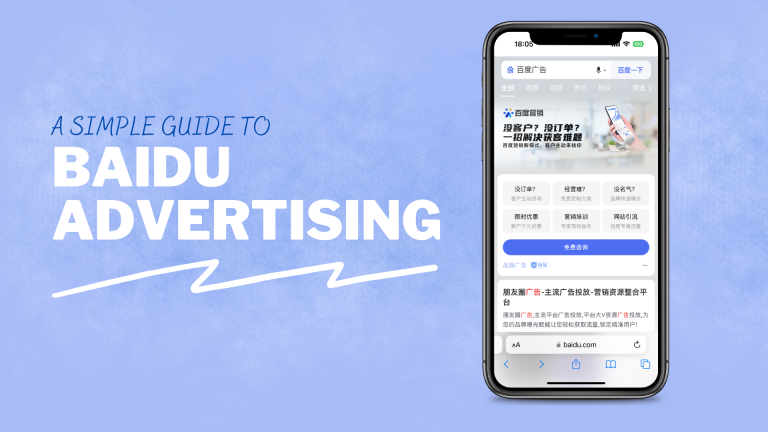
The beginner's path to Baidu ads: account registration through an agency, verification, funding, campaign setup and the main ad formats. It explains how Baidu displays ads differently from Google, which matters for anyone writing ad copy for China.
Instead of clearly separated sections for ads and organic results, you'll find small "promotional" tags on sponsored content within what appears as organic search listings.
Read the full article: Baidu Advertising for Beginners
How to Optimize Your Baidu Ads for Better Results in 2026

The one rule most foreign advertisers break: leaving Baidu's oCPC smart bidding alone while it learns. Add the landing page, tracking and keyword advice and you have a short checklist for any account where cost per lead keeps rising.
Judge results by the week, or after you have collected at least 20 conversions, not day by day.
Read the full article: How to Optimize Your Baidu Ads for Better Results in 2026
How SEO&SEM can boost your Business in China in 2023?


How SEO, paid search and GEO fit together for a smaller budget. It explains pay-per-click basics, why Chinese users trust organic results more, and how the AI answer adds a third job next to ranking and buying clicks.
With PPC, you can select the keywords for the ad and also you can choose the price that you want to pay per click.
Read the full article: How SEO&SEM can boost your Business in China in 2023?
How do B2B and industrial companies win on Chinese search?
Industrial buyers in China research suppliers online, write long specific queries and check a supplier before they ever send an enquiry. The approach differs from consumer brands, and so does the split between SEO and ads.
SEO Baidu is essential to attract Chinese industrial buyers

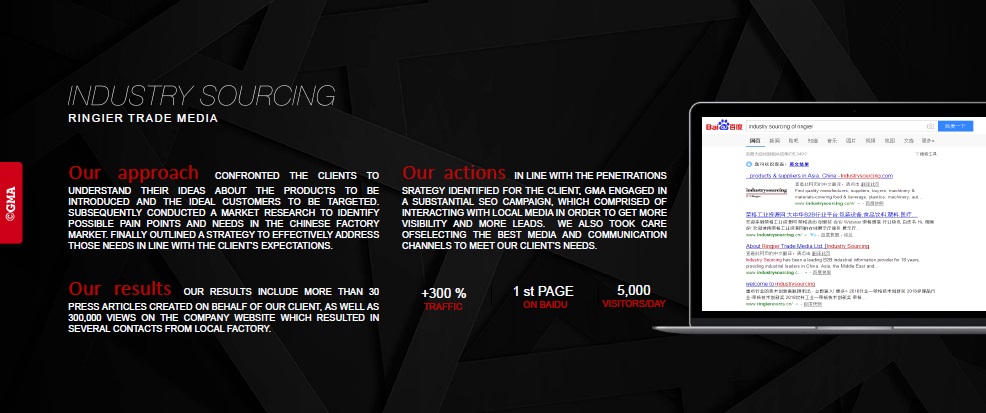
How Chinese industrial buyers search for suppliers, and what a B2B site needs to be found and quoted: one consistent company entity, answer-first pages and solid Baidu basics. Written for export managers in machinery, parts and materials.
They usually write long phrases or sentences where Westerners research with short phrases or one word for example.
Read the full article: SEO Baidu is essential to attract Chinese industrial buyers
Why Industrial Companies in China Cannot Neglect Search


Why engineering firms that rely on reputation lose buyers in China without noticing. The piece explains the silent check that happens before any enquiry and what a technically credible search presence looks like for an industrial supplier.
This research happens quietly, before any enquiry, so a company never even knows how many buyers checked and walked away.
Read the full article: Why Industrial Companies in China Cannot Neglect Search
SEO vs PPC for Industrial Companies in China

SEO or ads for an industrial supplier? A comparison of speed, cost per lead, trust and long-term value, with the 1688 angle most guides skip. The examples are illustrations, but the logic of starting with ads and shifting to SEO holds.
On 1688.com (Alibaba's domestic wholesale king), ads boost listings, but SEO (optimized store pages) drives free traffic from serious wholesalers.
Read the full article: SEO vs PPC for Industrial Companies in China
How do I get my brand into AI answers (GEO)?
Baidu’s AI answer, DeepSeek, Doubao and WeChat’s AI search now give buyers a shortlist instead of ten links. Getting on that list is GEO. These four pieces explain how citation works and where the new Chinese standard draws the line.
AEO in China: 10 Ways to Get Your Brand Cited by DeepSeek


Ten actions to get a brand cited by DeepSeek and other Chinese answer engines, in the order I would do them, from a sourced fact library to a question matrix run every two weeks. For brands that want a method, not a promise of guaranteed citations.
A Baidu results page gives you ten blue links and a second page. An answer engine gives you a shortlist.
Read the full article: AEO in China: 10 Ways to Get Your Brand Cited by DeepSeek
How to Appear in DeepSeek AI Answers: a Practical Guide for Foreign Brands

A short, practical guide for foreign brands invisible in DeepSeek answers: Q&A content, mentions on Zhihu and Baike, schema on the Chinese landing page. It also explains why GEO and Baidu SEO are two separate goals that need both.
A brand can rank well on Baidu and never appear in DeepSeek answers.
Read the full article: How to Appear in DeepSeek AI Answers: a Practical Guide for Foreign Brands
China's First GEO Trust Standard Just Took Effect: What Changes

What China's first GEO standard says, who wrote it and what changes for a brand: a fact library kept apart from marketing copy, graded sources and named black-hat practices. Read it before you hire any GEO provider.
Content poisoning, fabricated consensus, answer manipulation, and prompt injection attacks against AI models are now named and banned, not just frowned upon.
Read the full article: China's First GEO Trust Standard Just Took Effect: What Changes
GPT SEO in 2026: How AI Engines Pick Sources (No Secret Tactics)

How AI engines pick their sources, explained without secret tactics: the search step, the crawlers to allow, which old GPT SEO tricks to keep and which to drop. Useful for any team that tests ChatGPT, Doubao and DeepSeek on the same buyer questions.
If your robots.txt blocks it, your site is left out of ChatGPT search answers.
Read the full article: GPT SEO in 2026: How AI Engines Pick Sources (No Secret Tactics)
Frequently asked questions
Is Baidu SEO different from Google SEO?
Yes. The principles are close, the rules are not. Baidu reads simplified Chinese, favours sites that load fast in mainland China, gives weight to the homepage, applies daily submission quotas and trusts its own properties such as Baike, Zhidao and Baijiahao. Since July 2025 it also shows an AI answer above the links. A translated Google site rarely ranks. Our comparison of Chinese and Western SEO covers the main gaps.
Do I need an ICP licence to rank on Baidu?
Not strictly. Sites hosted in Hong Kong or abroad can rank. But you need an ICP filing to host in mainland China, and mainland hosting gives the best speed, which Baidu rewards. Most brands start in Hong Kong without a filing, then move to the mainland once they commit, usually with a local entity or partner. The filing review takes a few weeks.
Can a foreign website rank on Baidu?
Yes, if it is built for Baidu. That means native simplified Chinese content, fast loading from China, no reliance on blocked scripts such as Google Fonts or reCAPTCHA, clean HTML Baidu Spider can read, and a verified account in Baidu’s webmaster platform. An English site on a European server is the case that fails. Fix hosting and language first, then content.
How long does it take to rank on Baidu?
Expect three to six months for solid organic positions on a new Chinese site, longer in crowded sectors. Technical fixes such as hosting and submission can help within weeks. Baidu indexes new sites slowly, so pushing URLs through the API and publishing regularly matters. If you need leads before that, Baidu ads can put you on the first screen within days while SEO builds.
How do I submit my site to Baidu?
Open an account on Baidu’s Search Resource Platform (ziyuan.baidu.com, still called Baidu Webmaster Tools), verify the site with a file or meta tag, then push new URLs through the API and submit a sitemap for older pages. The interface is in Chinese and a Chinese mobile number is usually needed. Our submission guide lists the steps in order.
How much does Baidu advertising cost?
There is no fixed price. You pay per click in an auction, and costs depend on the keyword and the sector. Foreign advertisers open accounts through an authorised Baidu agency and must pass verification with company documents. Plan enough budget for smart bidding to collect around 20 conversions a week, otherwise oCPC never finishes learning and your cost per lead stays high.
Should I invest in SEO or Baidu ads first?
Both, in that order of time. Ads give speed and data in the first weeks. SEO is the asset that keeps bringing buyers after you stop paying. A common path is to start heavier on ads, learn which keywords convert, then shift budget to SEO around those keywords. For industrial suppliers, our SEO vs PPC comparison goes into detail.
Does Baidu index English content?
It indexes some, but English pages rarely rank for the searches Chinese buyers make, because those searches are in Chinese. Baidu works best with simplified Chinese written by a native speaker for how people actually search. Machine translation reads as machine translation. If your budget is small, translate fewer pages well rather than the whole site badly.
Is Google used in China?
Very little. Google services have been blocked in mainland China for years, and StatCounter gave Google 1.46% of search in China in September 2026, mostly from VPN users. Baidu leads, with Bing, 360 and Sogou behind, plus the search boxes inside WeChat and Douyin. A China plan built on Google rankings reaches almost nobody there.
What is GEO and does it replace Baidu SEO?
GEO, generative engine optimization, means getting your brand named in AI answers from Baidu, DeepSeek, Doubao or WeChat. It does not replace SEO. AI engines search the web first, then cite the pages they find, so you still need indexed, well-ranked pages. GEO adds answer-first writing, sourced facts and consistent mentions on Chinese platforms. China published its first GEO standard in August 2026.
Need help with Baidu?
We have an office in Jing’an, Shanghai, with a small team that handles Baidu SEO, Baidu ads and AI-answer visibility for foreign brands with modest budgets. We start with an audit of what Baidu sees today, then fix hosting, Chinese content and submission before spending on clicks. See our Baidu SEO and PPC service, or tell us about your site and we will tell you what is holding it back.
Last updated: October 2026. This guide is reviewed when new articles are published on the topic.
You should talk about Douyin SEOOO.
Douyin’s commerce engine has turned short video into one of the most efficient sales channels in the world.
SEO on Douyin is crazy high… The conversion rates from live sessions are hard to ignore. SAC Tell me : How much of this success do you think comes from the algorithm vs. the creators themselves?