
Top Baidu SEO Secrets for Advanced Marketers
Any company wishing to set up in China must take into consideration the implementation of a suitable SEO strategy for the Chinese market. With over 900 million Chinese Internet active users fond of e-commerce and the use of social networks, the competition is fierce and it is difficult to find a place in the rankings of the Baidu search engine.
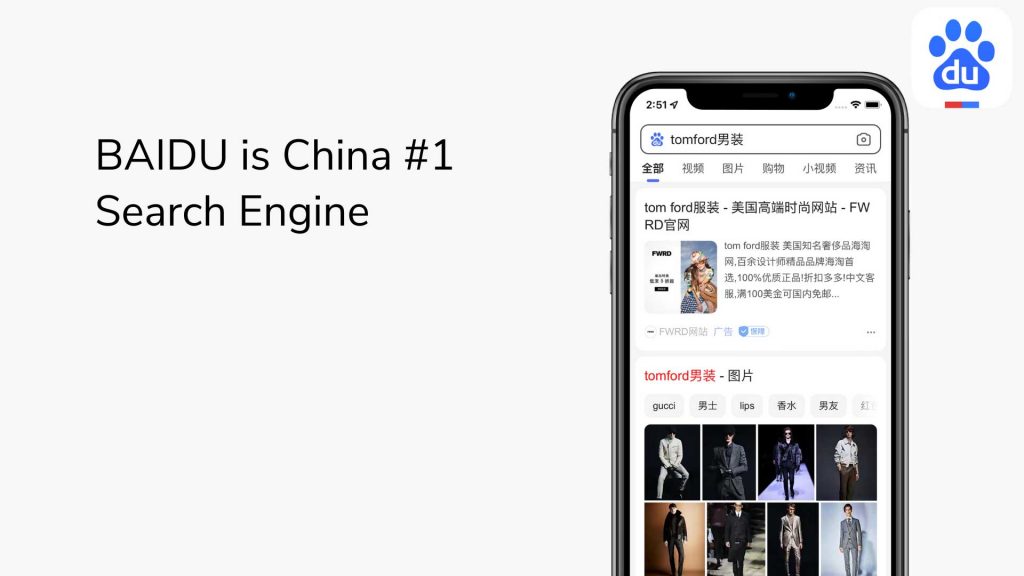
With almost 70% of the market share in 2023 on search engines in China, Baidu is undeniably the most popular search engine among Chinese users. That is the reason why every company that wants to involve in the Chinese market must take into account improving their Baidu SEO strategy. If you’re interested in Baidu SEO, read our Baidu search engine optimization guide below.
Cost-Effective Agency
KPI and Results focused. We are the most visible Marketing Agency for China. Not because of huge spending but because of our SMART Strategies. Let us help you with: E-Commerce, Search Engine Optimization, Advertising, Weibo, WeChat, WeChat Store & PR.
Remember that Baidu is Different from Google
Although Baidu might seem similar to Google in many ways, it’s important to remember that adopting the same SEO strategy for both search engines won’t work and you need to try a different approach to the Chinese search engine to succeed, as there is a lot of key differences to take into account.
After studying different Baidu SEO tools and comparing them to Google SEO tools that are familiar to the West and after analyzing the content and design optimization of both search engines, as well as the factors influencing the algorithm of Baidu we will reveal 20 secrets of the mechanism of Baidu SEO that will be helpful to prepare the perfect Baidu SEO strategy of your brand.
20 Baidu SEO tips and secrets
There’s no doubt that Baidu is a major player in the search engine world. As the largest Chinese search engine, it has a huge user base with different needs and SEO tactics. Here are some secrets and tips to help you optimize your website for Baidu SEO:
1. Hosting in China
The first important thing for a good SEO in China is that your website should be hosted in Mainland China. It will work faster for Chinese internet users and give your domain credibility in China, as China-based websites are generally more trusted among Chinese netizens.
Why host your website in China?
To gain visibility and ranking on the SERP Baidu, it is preferable that the website is hosted in China. Unlike Google, which does not take into account the country of hosting of the website, Baidu as all the other Chinese search engines favors websites hosted in China (due to the Great Firewall).
Moreover, having a website hosted in Mainland China, makes it easier for Baidu to read the pages of the website and thus optimize the user experience (because the website loading time is shorter), which is why these sites are favored. Hosting becomes more and more important for Baidu SEO and hosting in China is definitely an effective marketing tactic.
ICP Licence (better to have one)
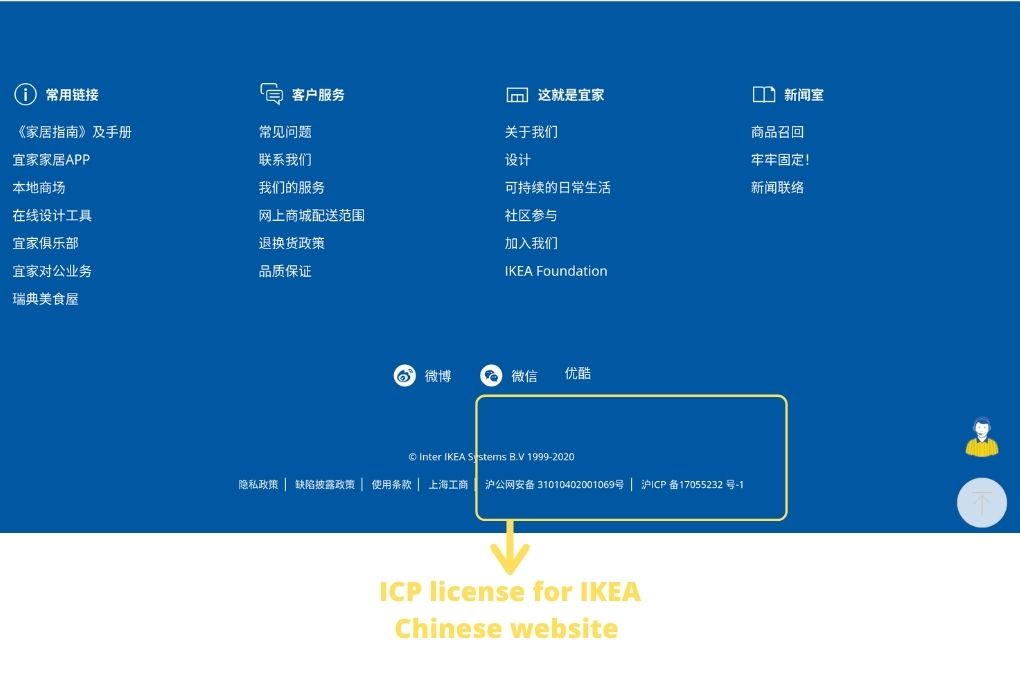
To be able to be hosted in China, you must hold an Internet Content Provider license (ICP) and for that, you must already have a Chinese business license. If you do not have a Chinese business license, a common tactic is hosting the website in locations such as Taiwan, Hong Kong, Macau, etc. Being closer to Mainland China will prevent a big loss in terms of Baidu ranking factors even though the website’s loading speed won’t be as good as in Mainland China.
What should be the domain name for Baidu?
Your domain name should be reflective of your business goals in China. If you want to appeal to a Chinese audience, consider choosing a .cn domain name. These domains are country code specific and will help ensure that your website is accessible in China.
In fact, Baidu used to rank all the .cn websites higher than other ones. Now, this type of domain rating is not the case anymore, but avoid having different domains for the same website as this practice generates Baidu penalties on domain rating.
Having a real presence in China helps to rank higher
Baidu also ranks higher with international businesses that already established « real » contact in China, meaning that they either have an office in China or a contact/ agent that customers can call or meet in the country, and have a Baidu PPC account with verified company/contact.
2. Baidu Webmaster Tools
There are a lot of Baidu SEO tools that can help you optimize your content to rank higher in this search engine. One of them, the Baidu Webmaster is a tool allowing the website designer to manage the presence of their site on the Baidu SERP. This platform gives access to data such as the performance of your site, which helps you optimize your online site better.
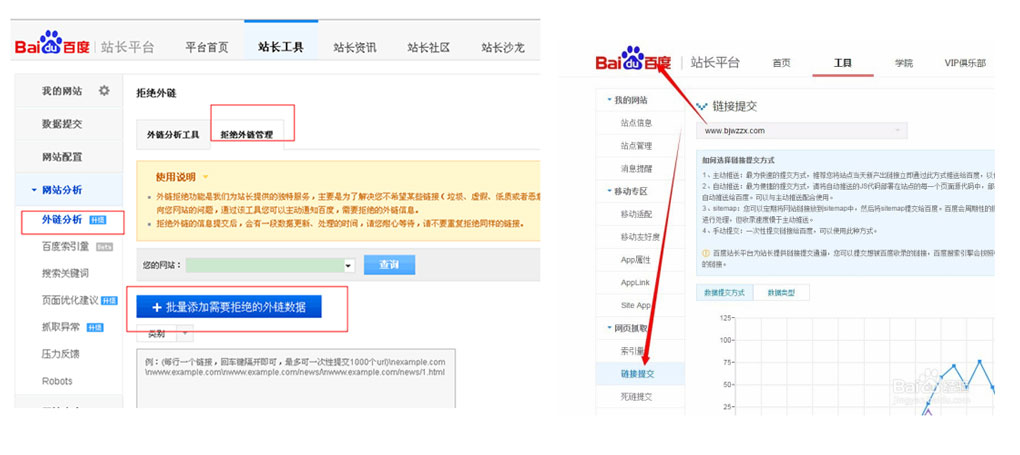
Baidu Webmaster also provides tools such as; submitting your content to Baidu so that it is optimally indexed, Baidu Mobile SEO for all mobile users in China, security tests for the website, and so on. If you want to do successful Baidu SEO, Baidu Webmaster will be a great help for your actions.
3. Baidu Keyword Planner
Baidu Keyword planner is the Chinese version of Google Adwords/Google Ads Keyword Planner. This tool goes together with the Baidu Index, a tool that provides much information on the Chinese keyword system for companies wishing to invest in ads like Baidu PPC (pay-per-click).
The use of Baidu Keyword Planner is rather simple; you type a keyword you’re interested in in the search bar and the tool gives you access to other relevant keyword searches through average daily search volume on computer support as well as mobile support, the competition level of a keyword, and the estimation of a bid price for a top keyword.
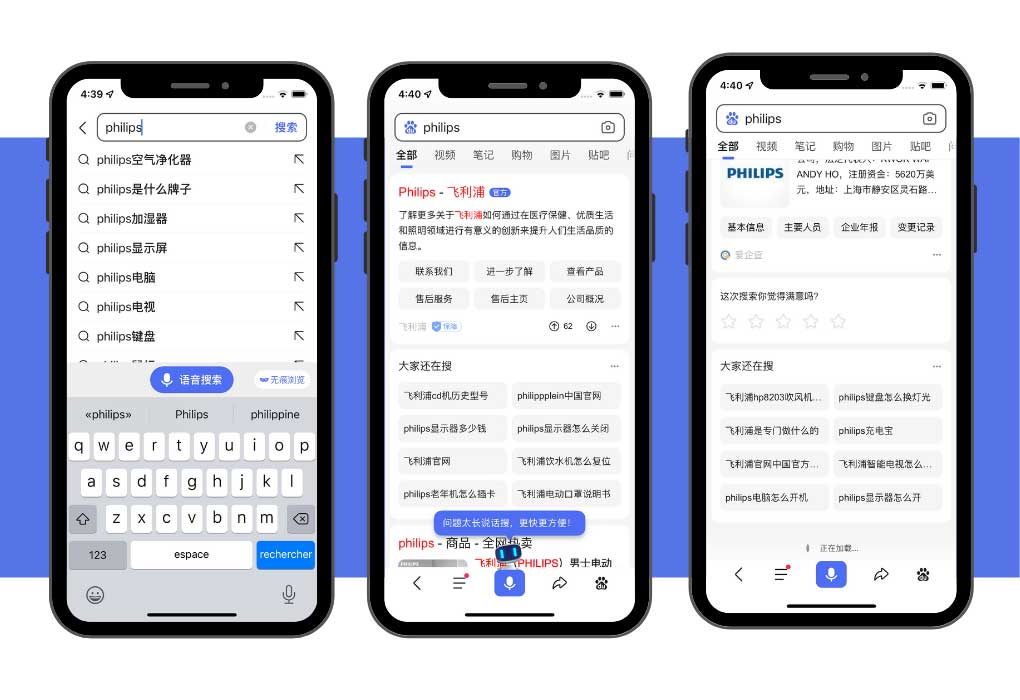
If you don’t want to use the Baidu keyword research tool, you can also try tools like Zhangzhang (meaning « webmaster »), Aizhan (more focused on long-tail keywords), or Ciku (meaning « inventory »). Trying different keyword research tools may also be a smart technique to evaluate keyword popularity and competition on Chinese sites.
4. Baidu Feng Yun Bang
Baidu Feng Yun Bang is the Chinese version of Google Trends, a website that helps the user to check hot topics and Chinese trends among Mainland Chinese users as well as keyword trends popular on the Chinese Internet. This website is basically a window for Western users to check what’s happening in China.
The website shows news from Mainland China according to keyword trends, location, and categories of domains (like fashion, finance, travel, technology etc.) and can be a great help to add content freshness to your Chinese website or social media platform accounts.
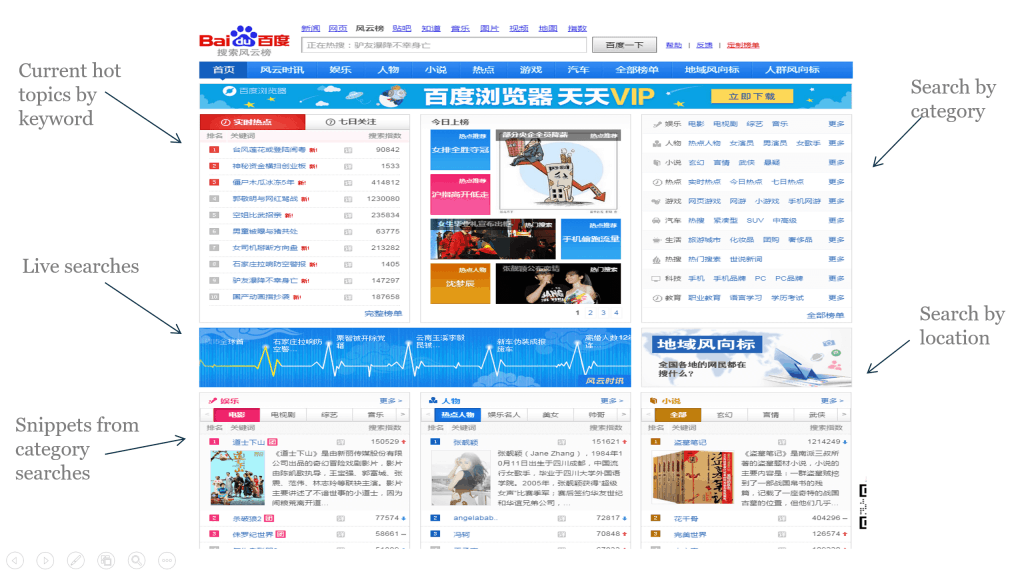
In addition, the website also has a feature of analyzing data by location, which can help you get into details of Chinese trends, hot topics, and events in major cities as well as any of China’s second-tier and third-tier cities.
5. Baidu Index
Baidu Index provides access to very practical tools for search engine optimization including keyword research. It is possible to access a keyword-based search forum with keyword density and popularity search tool, all illustrated by a bubble chart (the size indicating the popularity of the keyword and its color representing the search trend of that word).
Baidu Index also allows you to have access to the searched keywords before the studied keyword, and the sought keywords after the studied keyword (this is what is called respectively the “source keyword” and the “destination keyword” “).
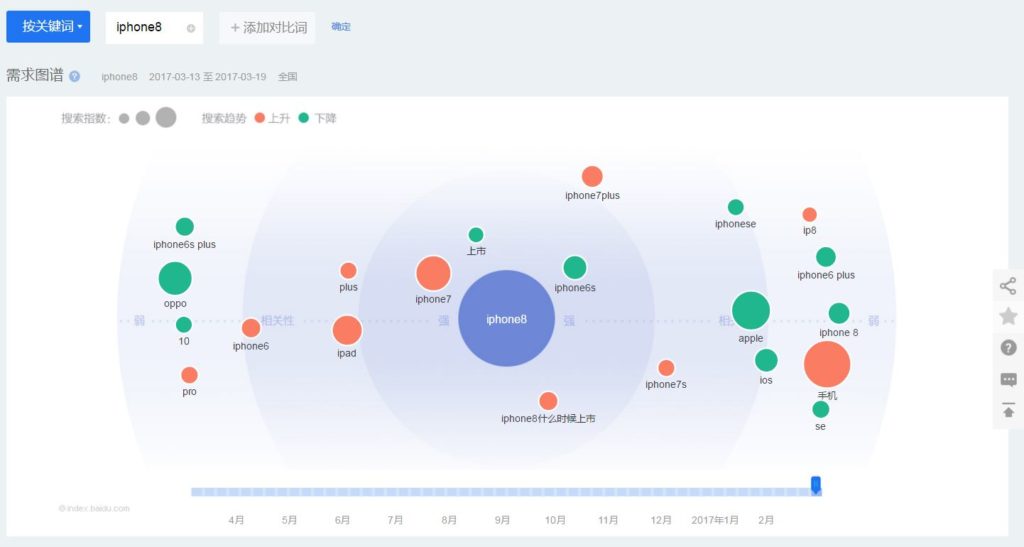
With Baidu Index keyword-based search forum, you also have access to relevant new keyword appearances with your own keyword and track the popularity of these new keywords.
Linked to this, it is also possible to graphically analyze the trend of keywords and compare these trends according to location criteria: provinces or cities in China, or social criteria such as age or gender.
6. Importance of the website’s homepage
The homepage of your website is the first thing anyone sees when they come onto Baidu. You want that content to be eye-catching and provide what customers need so Baidu will rank it high up on their search engine rankings!
We recommend putting lots of external and internal links in both header and footer like most Chinese websites do because this helps improve loading speed and is a ranking signal for Baidu SEO.
Baidu places much more importance on the homepage of the websites than on the internal pages, it is, therefore, essential to optimize the homepage to improve your organic SERP ranking.
7. Use simplified Chinese on your website
Baidu’s biggest attribute and main selling feature are that it can only index simplified Chinese characters. This is why you need to work with a Chinese native speaker so that you’ll have a website available in simplified Chinese. Baidu prefers 100% mandarin websites because it can’t tell different languages apart!
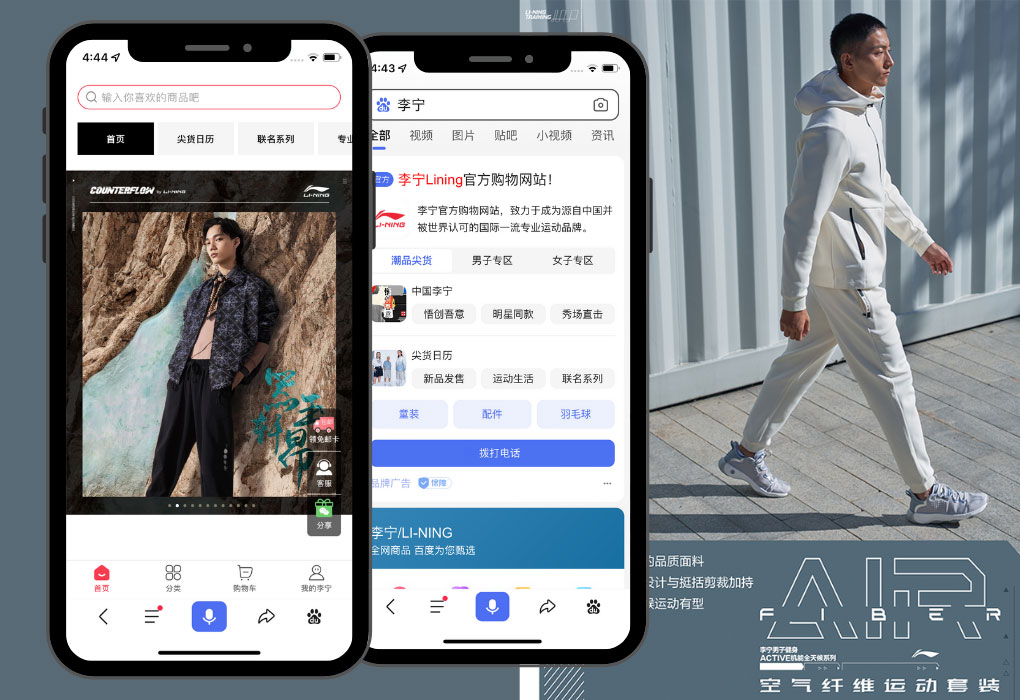
So, if you want your business or blog site to rank higher by appearing first on the Baidu search engine results page (SERP), then making sure all content is translated from foreign languages will help you get ahead of other foreign sites.
The reading of the site by Baidu will be more effective and will generate high-quality content with a better rendering. Having a website in simplified Chinese will also increase organic traffic.
8. Content distribution
Because Baidu indexes web pages quite quickly, it is important that keywords and hot content is placed at the top of the page (home page and internal linking page). It’s better to put bigger importance on the Chinese content, the body of text, and keywords rather than the design of web pages, that take longer to load. Of course, it’s good to have everything correct, but it’s useful to know which aspects are more important for SEO strategy.
9. Baidu likes fresh content
Recent and frequently updated content is the one that generates the most Baidu traffic and is valued by the Chinese Google algorithm.
The more recent your content is, the higher it will rank in search engine results pages (SERPs) like Baidu. Freshness also relies on making sure that you are engaging with users by providing them with the high-quality information they want and need!

10. Beware of China’s censorship
In order to have a high ranking on the Baidu search engine results pages, apart from some tricks we can do, there is nothing more important than the content itself. Apart from the use of useful and trendy keywords and working on content that is up to date, what is also important and unique for the Chinese market is the censorship of what is being published online.
The Chinese government controls the Internet through censorship and Great Firewall, which bans all ‘sensitive’ keywords. Because of that, it’s better to avoid writing anything negative about the government, commenting on political issues like Taiwan or Tibet, or posting inappropriate content, reserved for adult websites.
Baidu ranks higher on websites, that it considers ‘safe’, and bans those with low-quality content or ones that are against Chinese laws. You’ll do far better by writing about engaging, educational and entertainment topics, rather than talking about controversial issues.
11. Make people interested in your content
A key factor for the Baidu algorithm in terms of SEO ranking is the time that each user spends on a singular web page and the conversion rate of this page. It means, that the longer the user stays on the page, the more interesting and engaging the content is.
That is to say that if a user stays only a few seconds on the page, it means that the content does not necessarily correspond to his expectations and this will influence the ranking of the site in the SERP.
Because the number of available websites is constantly increasing, there is more and more information available. An important SEO factor, therefore, is to hold the attention of the visitors to your website. For that, you have to know how to give relevant information in a clear and precise message.

Creating content that people will want to read, watch, or listen to can be a challenge. Focus on finding your niche, figure out what kind of topics or content you excel at creating, and focus on that.
Remember to write in an active voice and use strong verbs. This will make your blog article more concise and easier to read. People usually search just for information and they want to find it in the easiest possible way.
12. Make your content unique
This might be obvious but your content must be yours, original and unique, you can’t duplicate content. It also means that it is important to be responsive to other sites that can do what is called “content scraping” and that may penalize your site if you lack vigilance.
Many people tend to ignore the fact, that content needs to be unique to stand out. But in reality, it’s one of the key factors for improving the website’s search appearance and click-through rate.
If you’re looking to make your content stand out, you need to first start by understanding what makes good content. Great unbiased content is usually:
- well researched
- engaging and interesting to read
- relevant to your audience
- properly formatted and visually appealing
Once you have a grasp on what goes into producing high-quality content, you can then start thinking about ways to make yours unique. Here are a few ideas that play a huge role in making your website go up the organic ranking in Baidu SEO:
- Write on a topic that’s undercovered in your industry. This will help your piece stand out from all the others on the same popular topics. Use tools that we mentioned earlier, like Baidu Keyword Planner, Baidu Feng Yun Bang, or Index, and check what might interest your target audience.
- Write from your unique perspective. Share your personal stories and experiences related to the topic you’re writing about. This will help create a strong connection with your readers and make your content more relatable.
- Use strong visuals. A picture is worth a thousand words, so use compelling images and infographics to break up your text and add visual interest. This will make your content more visually appealing and easy to digest.

13. Pay attention to long tail keywords
For the Chinese search strategy, it is important to be familiar with ‘long-tail keywords’ which, unlike classic keywords, are longer and therefore generate less traffic on the pages. However they can generate quality traffic, and as they are less sought on the search engine, they give more chances to small companies (like startups) that are often very low on the SERP for very popular keywords.
Long-tail keywords are a good way to stand out against the strong competition on highly exploited search engines like Baidu with the biggest level of competition.
Moreover, choosing long-tail keywords for a pay-per-click advertising strategy is a smart move because the costs are obviously more accessible, as those are less exploited words.
14. Meta descriptions and tags on Baidu
Meta descriptions are snippets of text of around 50-60 characters that describe a page’s content. They appear on search engine results pages (SERPs) and help users decide which result to click on.
A good meta description should be concise, accurate, and engaging. It should also contain relevant meta keywords that help users understand what the page is about after putting the keyword in the search query.
Meta descriptions don’t directly affect a page’s ranking in search engines, but they can indirectly influence it by helping search engine users click through to the page. For this reason, it’s important to write interesting and keyword-rich meta descriptions for all your pages.
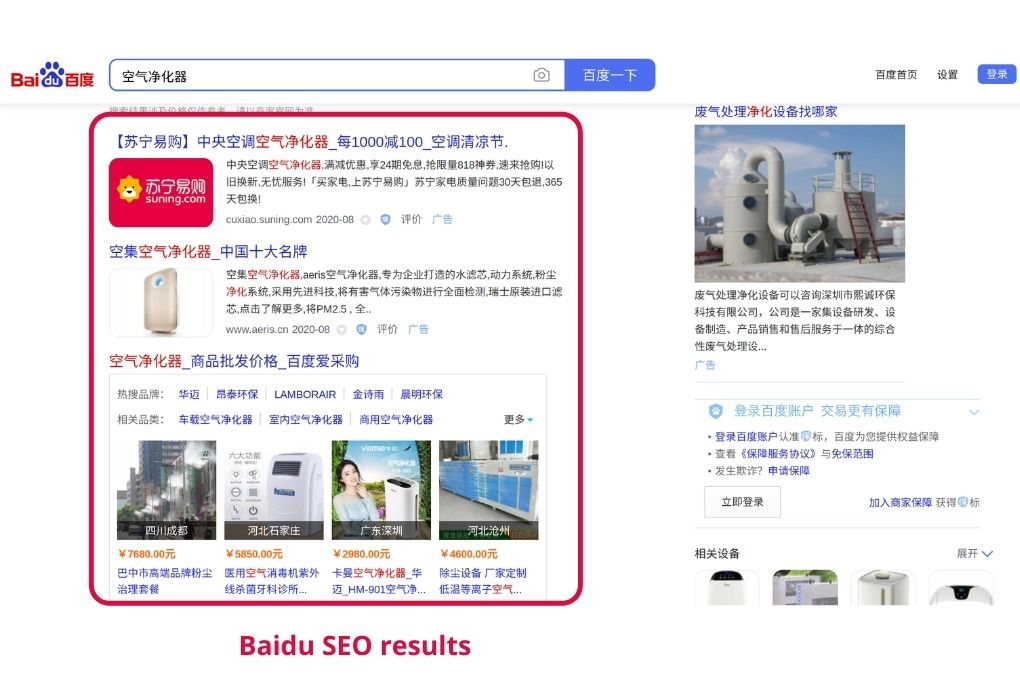
Meta tags are pieces of code that you can add to your website’s HTML that provide information about the page, such as its title, description, and keywords. Proper link-building is a common tactic that can help you rank higher and increase your domain authority.
Meta tags are important for helping search engines understand what your page is about so they can rank it correctly in search results. They’re also used by social media websites like Sina Weibo and Twitter to preview the contents of a web page when it’s shared.
15. Baidu SERP and rich snippets
While Baidu and Google SERPs were rather similar in the past, Baidu has distinguished itself in recent years by adding rich snippets to enrich the search engine ranking pages. These snippets are mostly the property of Baidu and it is not uncommon that the first page mostly constitutes Baidu’s rich snippets. This might be one of the reasons SEO strategies in China must be correctly built.
Baidu’s SERP displays organic results (link and link description or rich snippets), ads, search-related content, links to products, and more.
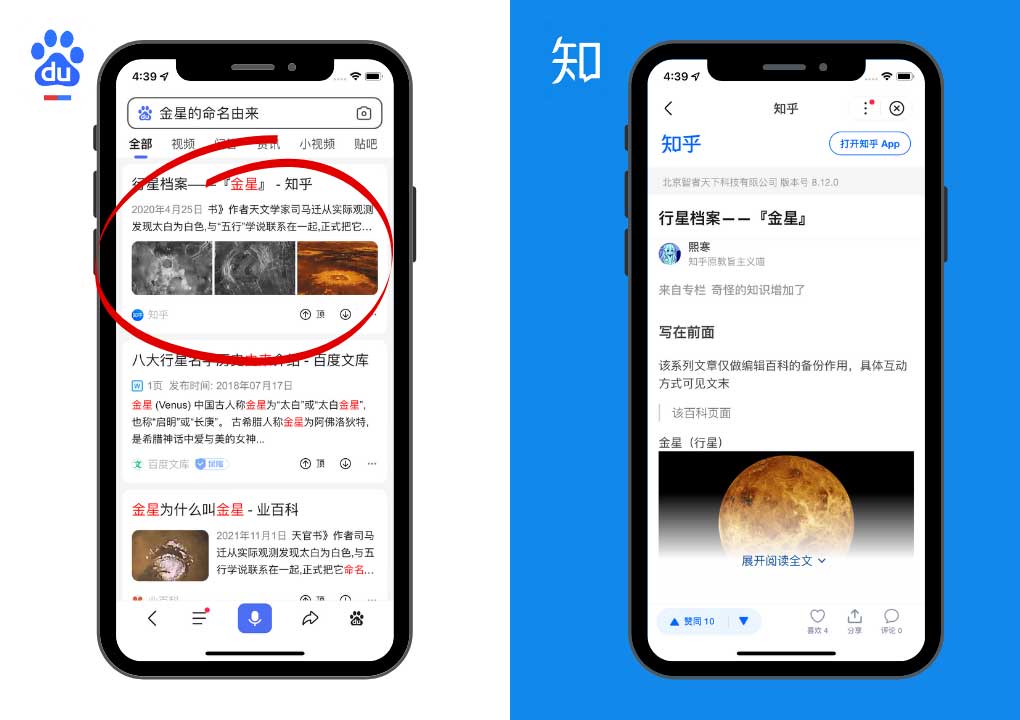
Baidu has different forms of rich snippets. The most commonly used are:
- Baidu News: it’s the information channel of Baidu (it is the Chinese version of Google News). Baidu News uses content from other websites to allow users to find all information in the same place. It’s also a good idea to check Baidu News from time to time to check what’s happening in China, maybe you will find some helpful information for your website as well.
- Baidu Baike: represents the Chinese version of Wikipedia.
- Baidu Music: this allows users to search and listen to music directly from the Baidu search page.
- Baidu Maps: allows direct to have a preview of the location on a map or the desired route. The equivalent of Baidu Maps is simply Google Maps. Baidu Maps are very useful if you’re traveling to China, as Google doesn’t work there, so it’s better to get familiar with this tool.
- Baidu Zhidao: it’s a question/answer site. Baidu Zhidao is a good place to answer questions, so you can also use it to spread the word about your company in form of answers. Baidu Zhidao is also a good tool for optimizing a Baidu SEO strategy.
- Baidu Images: it’s equivalent of Google Images.
- Baidu Tieba: it’s a platform with communities gathered around forums and questions or topics. Baidu Tieba can be compared to Quora or other forums.
- Qunar 2: (Simplified Chinese: 去哪人 meaning “Where to go?”) Allows you to book trips directly from the Baidu result page.
These Baidu properties are very useful for users but they are also part of what makes the Baidu SEO strategy such a challenge. That’s why it’s important to see how these rich snippets can affect internet companies (through your keywords).
For example, a booking service for travel will be impacted differently than a video platform, as they might be using different snippets, like Baidu Maps or Baidu Tieba. So when doing your research about keywords, you should check the space that is still available once the rich snippets are displayed.
16. Baidu Trust (More important than EVER)
Baidu Trust Is a service of Baidu that allows verifying the level of trust and reliability of a website. The service gives different levels ranging from V1 to V3. This is what we call a Blockchain-as-a-service. The level of trust and reliability is one of the most important ranking factors for Baidu SEO.
Foreign sites wishing to benefit from this trust and confidence label must apply to Baidu to have their site verified.
Obtaining this certification improves the ranking on the SERP and the image of the site and also makes it possible to increase the time Internet users spend on your website.
17. Backlinks
A backlink is an external link from another website that points to your website. They’re one of the most important factors in Baidu SEO because they help search engines understand which websites are most authoritative and relevant for a given topic.
The more high-quality backlinks you have, the higher your website will rank in search engine results pages, which means you’ll get more organic traffic and more customers. But building high-quality backlinks can be difficult, time-consuming, and expensive – so it’s important to do it right.
To be effective on Baidu, it is necessary to value the quality backlinks (quality content, unique, entertainment topics, and so on). Of course, the websites most favored by Mainland Chinese people will be the ones that are in Chinese characters.
18. Baidu Money Plant algorithm
Baidu Money Plant algorithm is an artificial intelligence (AI) algorithm used by Baidu to decide which content to promote on its search engine results pages. The algorithm is based on the money plant neural network, a type of AI network that is good at processing images.
It uses features extracted from millions of images crawled from the web to train a deep-learning model that can identify high-quality content. This model is then used to rank results on Baidu’s search engine, with the aim of promoting content that is likely to be of interest to users.
However, this algorithm is aimed at the websites practicing the so-called “link spamming” which consists of posting links to blogs, forums, and websites that have no connection with the content of the web page.
19. Baidu Pomegranate algorithm
Pomegranate Algorithm is one of the reasons why the design of a website needs to be optimized and designed for the customer experience. The algorithm is a Baidu product that is designed to promote websites that are mobile-friendly and provide a good user experience.
In order to rank well under the Pomegranate Algorithm, it is important to have a responsive design that automatically adjusts to the size of the device being used.
You should also focus on delivering fast loading speeds since mobile search volume is nowadays as big as the desktop version and mobile users are often impatient and will abandon slow-loading pages. They prefer dynamic sites with fast loading speeds, that don’t waste their time.
20. Baidu Ice Bucket algorithm and the mobile optimization
Nowadays, one of the main things to consider while optimizing basically anything on the Internet is to have this product optimized for all mobile devices, as Internet users check their phones on regular basis daily.
The Ice Bucket algorithm has been set up in this way, meaning that websites that are too slow for phone use will be penalized in their rankings, and sites that can not be used on the phone will be sanctioned by the algorithm. The algorithm is aimed at pages that are blocked by ads, or that can not open without downloading an application, etc.
Need a competitive Baidu SEO agency?
Baidu SEO is constantly changing, so it’s important to stay up-to-date on the latest tactics. We’ve outlined some of the top Baidu SEO tactics that you can use to improve your website ranking. Have you tried any of these strategies? Let us know in the comments!
We are a China marketing agency that can help you gain great results from the Baidu SEO strategy. Contact us to discuss your project!





Hi
How many backlinks you need to rank on medium competitive keywords on Baidu?
Do you sell Chinese backlink?
yes sure. Send us an email Igor
Baidu stronger than Google for me
Ernie, the text analysis software developed by artificial intelligence researchers in the Chinese search engine, has proven to be more effective than Bert, its American equivalent. Baidu, the Chinese search engine, has just won a small victory on Google in the field of artificial intelligence. Glue’s test, the test considered to be the most effective for evaluating the capabilities of a human language comprehension system, its text analysis software called “Ernie” proved to be more effective than that of its competitor. American. At Google we were however very proud of Bert, a new natural language processing software unveiled last year. With the aim of better handling Internet users’ requests, American researchers have trained neural networks by masking certain words in order to improve their ability to understand the general context. The “MIT Technology Review” explains how their colleagues from Baidu used the same approach by adapting it and hiding several characters at the same time. In Chinese indeed the ideograms can have very different meanings depending on the sentences. And surprisingly, the researchers found that Ernie was also very effective at understanding English. Glue even gave him a score exceeding 90 out of 100 for the first time when the average person gets 87.