
An Influencer (KOL) in China can make $1,000 per Post

Yes, exactly “An Influencer (KOL) in China can make $1,000 per Post”, but even much more money. Do you think Western KOLs are extremely powerful? Then, you need to know what is going on in China to understand how far KOLs can be influent.
What are KOLs?
KOLs are popular social media users who have created viral content and developed a large following on social media platforms. Many are experts in their respective fields who create a personal connection with fans sharing advice, reviews, instructions, or tips regarding products, brands, or other life topics. Chinese KOLs have a much stronger influence on society in comparison to other countries and can have millions of followers who trust their advice and actively engage with the content they create on a regular basis.
Olivier Verot CEO of GMA
Why can Chinese KOLs often make more money than Western Influencers?
We are already saying that China’s KOLs, also known as wanghong 网红, can earn more money than their other western counterparts (read below to know how much they can earn). And this is because they are able to increase sales at a much higher level than any other marketing tool in China.
Cost-Effective Agency
KPI and Results focused. We are the most visible Marketing Agency for China. Not because of huge spending but because of our SMART Strategies. Let us help you with: E-Commerce, Search Engine Optimization, Advertising, Weibo, WeChat, WeChat Store & PR.
Let’s see WHY.
Firstly, in the US or Europe, FB and Google PPC can lead to high conversion rates, whereas in China you cannot get so much high ROI with this kind of investment. Secondly, Chinese people are more tolerant of KOLs advertisements, they love them so much that want to imitate their lifestyle and therefore buy the products they say to use.
Become a KOL: the wish of young customers in China
Most young Chinese want to become influencers to earn a lot of money. Life after their studies becomes stressful. Parents with high expectations and Managers that do not reward their work enough make “the new entrants to the job route” feel invisible.
Their desire to appear therefore came forward setting up social media accounts and trying to be a protagonist in the digital world. However, to do this they need to know how the dream can become possible, and in order to reach such a dream, they become the most active followers of social media stars.
A big Influencer (KOL) in China can make AT LEAST $1,000 per Post
After having explained why the Chinese are so interested in KOLs lives, now we are going to see how much expensive are KOL marketing campaigns in China.
Kols on WeChat

Let’s first introduce WeChat. The app is the eastern version of WhatsApp and Facebook together. You can find anyone and everything on it, but brands have some difficulty reaching a potential clients through it. It takes time and money since it is a closed network, so the best way to reach your followers on it is by using KOL marketing and WeChat groups.
But how much will cost a post of a big KOL in WeChat?
The average cost per post is 0,5-1,5 RMB per view. With this number, WeChat is the most expensive platform considering KOL marketing. However, the return on investment is impressive cause WeChat’s users follow KOL only because they are extremely interested in what they do (not by chance as can happen in many other social media).
Kols on Douyin (Chinese Tiktok)
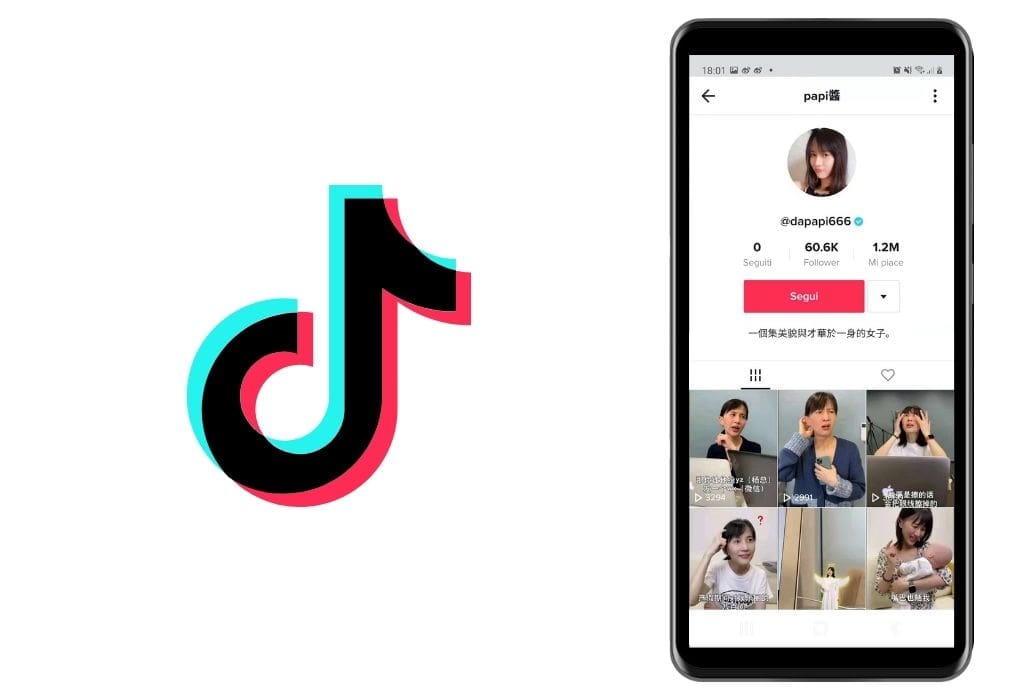
The short video app is already well-known all over the world. And it has recently opened to the company! This means that TikTok is an exceptional marketing tool that cannot be missed. A company should consider two ways to do efficient marketing on TikTok. The first is to use it like a TV Channel, the second is to partner with a TikTok KOL. Yes, it is the best perfect platform for doing KOL marketing.
However, TikTok immediately follows WeChat in the list of the most expensive social media for the KOL marketing campaign.
Kols on Little Red Book (Xiaohongshu/RED)

Little Red Book (LRB) is a UGC app very popular in China, especially among young Chinese. It is also an e-commerce platform that principally sells cosmetics, beauty, and fashion products. Collaborating with KOLs or KOCs (Key Opinion Consumers) is the key to selling your products on LRB.
Influencers on LRB usually create content about testing a company product (that the company gives them for free) and post comments and “shipping notes” about this product.
How much does a KOLs campaign cost on RED?
A KOL campaign on LRB is much cheaper than on the above-mentioned social media. To clarify, with 1 million RMB you can reach 1 million KOL impressions on WeChat, 8,1 million impressions on TikTok, 19 million impressions on LRB, and 55 million impressions on Weibo. Impression obviously does not synonym with conversion.
A so evident difference in price demonstrates how investment on the WeChat platform can have a higher ROI compared to all the other social media.
Weibo Kols
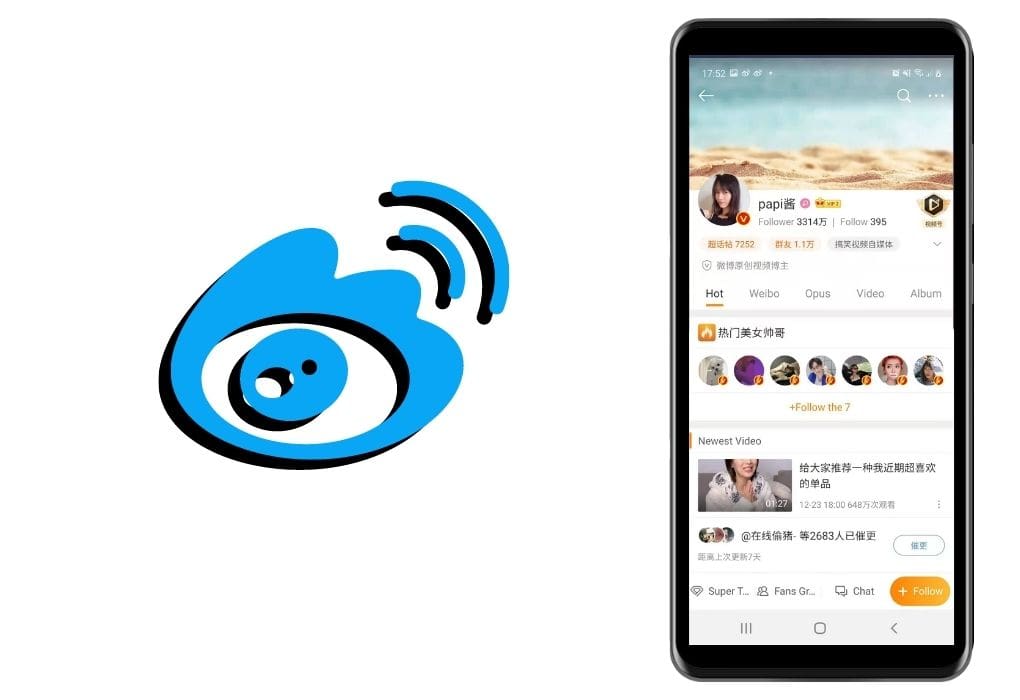
Weibo is a combination of features of different western social media like Facebook, Twitter, and Instagram. On this platform, you can post textual and visual content that can be seen by all Weibo community members, and from a business point of view, our advice is to try to be in line with “hot topics” and work with famous KOLs.
Weibo: A cheaper option for Kols?
KOLs are less expensive than on other social media because Chinese customers are less active on Weibo, by the way, you can be creative and gain the attention of millions of users using the right KOL and a good-looking marketing campaign.
We suggest opening an account on Weibo because it is the best social media to create Brand Awareness (read how Pinduoduo perfectly leverages this platform)
Top 3 richest KOLs in China (what are $1,000 per Post?)
- Li Ziqi
- Li Jiaqi
- Papi酱
Papi酱
In third place is Papi酱, born in Shanghai and formerly named Jiang Yilei. Papi 酱is an actress. Right after becoming famous, a collaboration with her had a value of more than 22 million yuan, but now reaches the value of more than 1 billion yuan. She is known as the most commercialized Internet celebrity and is the ambassador of more than 10 companies at present.

Li Jiaqi
In second place is Li Jiaqi, known as “Lipstick Brother No. 1” 口红一哥. His target is Chinese girls, that compulsively buy products after listening to his recommendations during live streaming. This boy, who graduated from Nanchang University with a major in art and design, took 4 years to become “the first brother of Taobao lipstick”. In 2019, Forbes added him to the “China’s Under 30 Elite List” boasting six figures of his monthly income.

Li Ziqi
Li Ziqi sits at the top. Li Ziqi was born in Sichuan and her family is neither rich nor strong. She has become one of the top ten gourmet Internet celebrities by relying on her own food videos, with an annual income of 160 million yuan.

In conclusion on “Chinese (KOL) that can make $1,000 per Post”
Chinese influencers can bring your company to popularity more quickly than any other marketing tool. They are expensive, we know, but there are also numerous KOCs that can let your company reach the attention and gain the loyalty of many customers, even if in the longer term.
However, it seems that the Chinese very much trust KOCs, so collaborating with many KOCs can lead to higher ROI in the long term than partnering with KOLs.
Do you need any help with your KOL marketing strategy in China?

SEO Agency China is a marketing agency that is always on top of the last trends in China. We develop a customized marketing strategy for our customers, do not hesitate to contact us to get a quote.





One Comment