Skip to content

5 Tips from Professional SEO company based in China

Updated

5 Tips for improving your SEO in China

No market does search like China, and in 2026 it changed again. With 1.125 billion internet users (CNNIC), the web is where most Chinese people find what they need, almost always on mobile. Baidu rebuilt search around AI on 2 July 2025, so good SEO now means two jobs: rank your pages, and get your brand into Baidu’s AI answer. We run this for startups and small budgets, and these are the tips that work today.

Search engine in China !

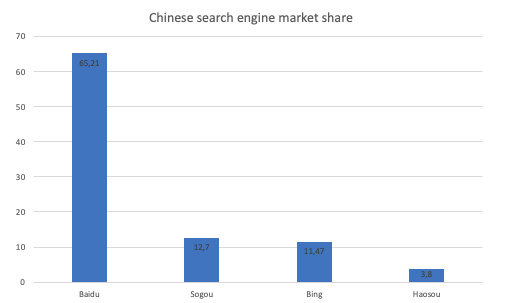
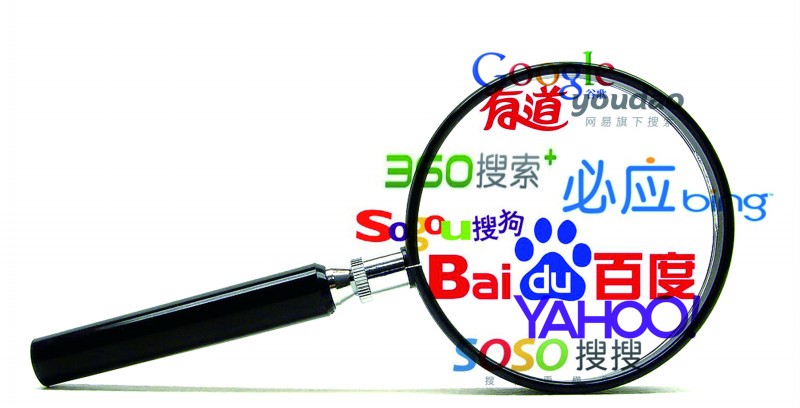
Google, unlike in Europe or America, is by far the least used search engine in China, blocked in this country and redirected towards Hong-Kong. This keeps Baidu, with about 47% of search share in 2026 (Statcounter estimate), the most used search engine in China. Baidu was created by Robin Li and Eric Xu in 2000. There are some search engines in China. Sogou became the main Baidu competitor with a market share in perpetual growth, turning around 13 % now. Bing, and Haosou, in 3rd and 4th position, share 15% of market shares.

Here are 5 quick tips to succeed in the SEO in China:

Choose the right Title!

The Chinese search engines, places high attention on the title of your page, article or website. It’s important to be aware of it. These titles will allow you to be identified and to highlight your articles or pages in search engines. They should be reflected and you don’t just write anything and everything.

Have good Keywords

Keywords have to define your brand, products or services. It must be short sentences or relevant words. These have to appear in your title, contained and in the description (Meta). It’s necessary to find good keywords which will bring you an important traffic. Opt for the long trail keywords instead of the competing keywords (basic, short). The long trail keywords represents the whole of the keywords known as “original” or “rare” leading a site to be found in the search listings. These keywords, taken individually, generate little traffic. However, by cumulating them, they can represent up to 80% of your qualified traffic.

For example, if you wish to create a site or a page which refers to outbound tourism China, these words can be “companies selling high end tourism tours for Chinese tourists China” or “Luxury tourism agencies for Chinese tourists”. These keywords match better your potential customer which means more qualified traffic and ultimately more leads.

Website for Chinese netizens differs from its western version


Baidu put China-localised website first on the Search Engine Result Page (SERP). A website hosted in Mainland China or Hong Kong is a must have if you really want to rank first (and you do, right?) for maximum visibility. You also need a fully translated version of the website using simplified Chinese characters and a main page with the most important information available at first glance (ie : hot deals, flagship products, new product, review from satisfied customers).

Have relevant backlinks
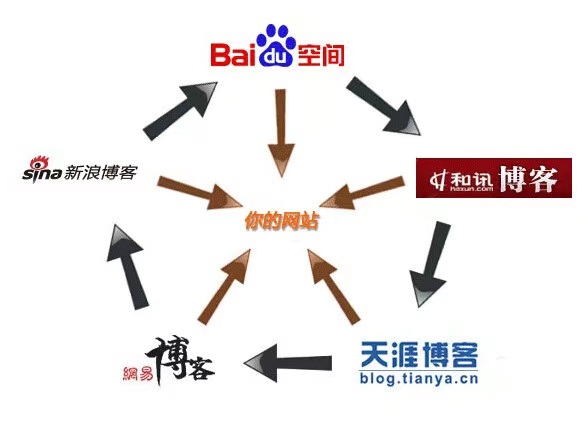

Backlinks enormously influence the ranking on search engines. To be in the top results, you have to put relevant backlinks on your pages and published articles. A good link building strategy is essential on Baidu. This strategy, unlike Google must focus on quantity rather than quality source 

Always updates

Baidu is very sensitive to novelty. It’s necessary to refresh frequently your sites or pages by adding some new contents or update the older. The number of updates is very appreciated by the search engines.

SEO SEM

Win the AI answer (GEO)

This is the tip that matters most in 2026. Since the 2 July 2025 rebuild, Baidu shows an AI answer called Baikan (百看) above the blue links, and its Wenxin Assistant (文心助手) passed 200 million monthly users by January 2026. Many people read that answer and never click a link. So the goal shifts from ranking a page to being the source the AI quotes. This is GEO, Generative Engine Optimization.

Two moves get you there. First, keep one consistent brand entity across Baidu Baike, Baijiahao and your own site, so Baidu trusts who you are. Second, write answer-first: put the clear answer in the first two lines of each page. We explain the full shift in our 2025 Baidu SEO guide.

Conclusion

While the underlying concept remains the same, the methods to rank to the top on a Chinese search engine’s SERP, like Baidu, remain widely different from what SEOs would do on Google. So when you want to enter the Chinese market and need a SEO campaign you need experts.

Created 10 years ago, our agency has a very decicated team of Baidu SEO experts. Starting on Baidu SEO is uneasy, our experts can accompany you on various aspects:

  • Baidu SEO account setting
  • Website localisation
  • Local hosting
  • Keywords strategy

Get in touch with us, one of our consultant will provide a first free 30 min consultation to discuss your SEO project on Baidu, and get a few valuable advice.
The 2026 market reality: what the data shows

China now has 1.125 billion internet users, with a penetration rate of 80.1% as of end-2025. Baidu holds roughly 63% of China’s search market on mobile and processed queries from over 900 million mainland users last year. At the same time, 602 million Chinese users now actively use generative AI tools, a 141.7% jump from 2024. These numbers matter for SEO because Baidu’s own AI engine, ERNIE, now shapes how pages are crawled, scored, and surfaced. Foreign brands that still treat Baidu like Google from 2018 are losing ground fast.

Tip 1: host your site in China and get your ICP filing in order

This is the one step most foreign brands delay, and it costs them every month they wait.

An ICP (Internet Content Provider) filing is issued by China’s Ministry of Industry and Information Technology. Without it, you cannot legally host a website on a mainland Chinese server. Without mainland hosting, your site loads slowly inside China, and Baidu’s crawler sees that. Slow crawl speed means lower rankings, period.

The process takes four to eight weeks on average. You need a registered Chinese legal entity to apply, or a local partner with less than 50% foreign ownership. A professional China SEO agency can guide you through the paperwork, connect you with licensed hosting providers, and prevent the common mistakes that cause rejections or delays.

Once your ICP filing is live, you unlock several ranking signals at once. Baidu’s algorithm rewards sites hosted on Chinese servers with faster indexation. A .cn or .com.cn domain adds a local credibility signal that generic .com domains simply do not carry. You also remove the timeout errors caused by US-based dependencies: Google Fonts, Google Analytics, reCAPTCHA. All of these fail silently inside China’s network and damage your page speed scores.

One more thing most teams miss: remove any third-party scripts linked to blocked services before you go live. A single blocked script can freeze your entire page load on Chinese connections. Your agency should run a full dependency audit before pointing your domain to a mainland server.

The ICP step is not optional. It is the foundation everything else sits on.

Tip 2: write in Simplified Chinese, not translated English

Baidu’s algorithm is built for Simplified Chinese. That is not a preference, it is how the ranking model was trained. Top-ranking pages on Baidu average 4,929 Chinese characters of content, with roughly 85% of that text in Simplified Chinese script. Pages in Traditional Chinese or poorly machine-translated Mandarin rank lower and bounce faster.

Translation is not localization. A direct English-to-Chinese translation keeps English sentence structure, misses local search intent, and uses terms that Chinese consumers do not actually type into search bars. Keyword research for Baidu requires native-speaking analysts who understand how users in Shanghai, Chengdu, or Guangzhou phrase the same question differently.

Take the cosmetics category as a clear example. A brand entering China might translate “anti-aging skincare” directly. But Chinese search behavior on Baidu clusters around terms like 抗衰老护肤 combined with specific ingredient names: 烟酰胺, 视黄醇, 玻尿酸. The search volume and competitive gap between these terms can differ by a factor of ten. An agency without native-level keyword analysis will target the wrong terms and produce content that ranks for nothing.

Localization also means adapting the content tone. Chinese consumers in 2025-2026 respond to content that is specific and fact-based. Vague claims and marketing language perform poorly. The ERNIE AI model that Baidu now uses for content evaluation explicitly rewards declarative statements backed by citable sources. Write like a category expert, not a brand copywriter.

Structure matters too. Use clear H2 and H3 headings in Chinese. Add a table of contents for longer pages. Include numbered lists where appropriate. These signals help both Baidu’s crawler and ERNIE’s AI extraction layer identify your content as authoritative and organized.

One practical rule: never publish a page without a native Chinese speaker reviewing the final copy. Automated translation tools still produce errors that trained readers catch instantly, and those errors damage trust at the moment it matters most.

Tip 3: build your Baidu authority through verified entity signals

In 2025, Baidu updated its ranking model to put more weight on what it calls “verified entity signals.” This means content connected to a registered Chinese company, a credentialed expert, or a government-recognized institution now ranks above equivalent content from unverified foreign sources.

For international brands, this shift has a direct consequence. A brand with no Chinese legal presence, no verified Baidu Business account, and no local backlinks is treated as an unverified source by default. Even high-quality content can lose ground to lower-quality pages that carry verified entity markers.

A professional China SEO agency addresses this in several ways. First, they set up and verify your Baidu Webmaster Tools account and your Baidu Business page. These create an official anchor that tells Baidu you are a real, operating entity. Second, they build backlinks from Chinese domains: local industry directories, Chinese news portals, trade association sites, and Baidu’s own properties like Baijia Hao. Third, they help you get mentions from credentialed experts or partner with local influencers who already carry entity authority on Baidu.

A concrete example: a German industrial equipment brand entered the Chinese market in 2023 relying only on their .com site with Mandarin pages. By 2025, their Baidu rankings had flatlined despite consistent content production. After setting up a WFOE in Shanghai, registering the entity on Baidu, and building citations from Chinese trade media, their average Baidu ranking for core terms improved by 34 positions within six months. The content had not changed. The entity signals had.

The lesson is clear. SEO in China is not just about content. It is about your legal and commercial presence being legible to Baidu’s verification layer. A China SEO agency with local operations can build that presence. A remote agency optimizing from London or New York cannot.

What changed between 2024 and 2026

Two years ago, the standard Baidu SEO playbook focused on keyword density, meta tags, and basic backlink volume. That playbook is now outdated in three specific ways.

First, content freshness became a hard ranking factor. Baidu now evaluates pages on a rolling 90-day cycle. Pages not updated within three months show measurable ranking declines, even when their backlink profiles remain stable. In 2024, a strong evergreen article could hold its position for a year with no changes. In 2026, that same article needs a quarterly refresh to stay competitive.

Second, the rise of DeepSeek and ERNIE changed how Baidu surfaces answers. AI-generated answer boxes now appear for a growing share of commercial queries. Pages with clear structure, cited sources, and specific factual claims get extracted into these boxes. Pages written as generic marketing copy do not. This is a direct shift in what “ranking” means: visibility now includes AI answer placement, not just the ten blue links.

Third, mobile-first is no longer a trend, it is the entire game. As of 2026, 85% of Chinese internet traffic happens on mobile devices. Baidu’s mobile index is now the primary index. Desktop performance matters less each quarter. Any China SEO strategy that is not built around mobile page speed, mobile UX, and mobile keyword behavior is already behind.

The brands that adapted early to these three shifts gained significant ground in 2025. The ones that did not are playing catch-up now.

Frequently asked questions

How long does it take to see SEO results on Baidu?

Most brands see initial ranking movements within three to four months, assuming the technical foundation is in place: ICP filing, mainland hosting, and indexed Simplified Chinese content. Competitive keywords in crowded sectors like finance, health, or consumer electronics can take six to nine months to crack the first page. The most important variable is domain age and authority. A brand-new Chinese domain will take longer than an established .cn domain with existing backlinks. A professional China SEO agency sets realistic timelines based on your current authority, your target keywords, and your competitive landscape. Promises of first-page rankings in thirty days are not credible on Baidu.

Do I need a separate website for China, or can I use my global site?

In most cases, you need a China-specific site or a China-hosted subdomain. Your global site hosted on US or European servers loads too slowly inside China to rank competitively on Baidu. Baidu’s crawler also deprioritizes sites without a valid ICP filing. A separate Chinese website hosted on a mainland server, written in Simplified Chinese, and registered with Baidu Webmaster Tools is the standard approach. Some brands use a subdomain (cn.yourbrand.com) hosted in China while keeping their global domain separate. Either structure works. What does not work is pointing Baidu traffic to a slow-loading global site with translated pages and no local hosting.

Is Baidu the only search engine that matters in China?

Baidu is the dominant platform, holding around 64% of China’s search market on mobile as of late 2025. But it is not the only channel worth optimizing. Sogou, now integrated into WeChat’s search function, indexes content shared within WeChat. This matters if your audience is active on WeChat. Baidu’s own properties, including Baijia Hao (Baijiahao) and Baidu Knows (Zhidao), are also indexed prominently and give brands a way to appear in search results without ranking their own website. A full China SEO strategy accounts for Baidu search, Baidu-owned platforms, and social search on WeChat and Xiaohongshu, depending on your sector and audience.

What makes a China SEO agency better than a general digital agency?

China SEO requires a specific set of local capabilities that general digital agencies do not have. First, native Mandarin content production and keyword research, done by analysts who understand Chinese search intent, not translators. Second, access to Chinese backlink networks: local directories, trade portals, Chinese news media, and Baidu properties. Third, technical knowledge of ICP filings, mainland hosting providers, and Baidu Webmaster Tools. Fourth, understanding of how Baidu’s algorithm differs from Google’s, including the role of meta keywords, entity signals, and the 90-day content freshness window. An agency without these capabilities in-house will outsource the critical parts of your campaign, adding cost and losing quality control at the most important steps.

How to move forward

China SEO is not a one-time project. It is an ongoing operation that requires local expertise, consistent content production, and a technical setup built for the Chinese internet. The five tips above give you the framework, but execution is where brands consistently fall short without the right support.

If you are starting from zero, the first step is a technical audit: hosting, ICP status, site speed inside China, and Baidu indexation. If you already have a Chinese site, the priority is content freshness and entity verification.

For brands looking to build a full China digital presence, you can explore our work across SEO in Shanghai and Baidu advertising, two channels that work best when run together. Social visibility on Xiaohongshu and WeChat also feeds search authority over time, as Baidu increasingly indexes content from these platforms.

If you want a direct assessment of where your brand stands on Baidu today, contact us. We will tell you what the data shows, without the sales pitch.

Marcus Zhan is a China marketing specialist based in Shanghai. He covers digital marketing, consumer trends, and brand strategy for the Chinese market. Connect with him on LinkedIn to discuss Baidu SEO and China digital strategy.

Sources: China State Council: 1.125 billion internet users, CNNIC 2025 | TechNode Global: How DeepSeek changed Baidu SEO rules, May 2026 | ChinaWebSearch: China Search Engine Market Share 2025 | SEO for China: Baidu Ranking Factors 2026

Leave a comment

Your email address will not be published. Required fields are marked *

Let's talk

Discuss your China project

Tell us the goal and we'll send a proposal. No obligation.